The 2022 Tesla Model Y Dual Motor gives me two very different impressions. Under the body, there is some genuinely brilliant engineering. Inside the cabin, there is an excellent screen. Then there is the rest of the car, and that is where I have serious problems.
That might sound contradictory, but it is the most honest way to describe this Tesla. You can admire the technology without liking the vehicle built around it.
After spending a week driving this Model Y, my biggest takeaway is simple: do not confuse an impressive electric vehicle system with a well-rounded automobile. To understand why, we need to start with the part that impressed me most, and it is not the acceleration.
Key Takeaways
- The Model Y’s integrated thermal management is its most impressive engineering achievement.
- The responsive 15-inch touchscreen offers extensive controls and thoughtful software features.
- This 2022 example disappointed with cheap-feeling materials, uneven fit, rattles, and a rough ride.
- Evaluate everyday comfort and assembly quality rather than buying on acceleration and software alone.
Table of Contents
- What Really Makes This Tesla Special: Thermal Management
- The Super Manifold and Octovalve: Clever Hardware, Smarter Integration
- The Components That Make It All Work
- Exterior Review: Aerodynamics Do Not Excuse Poor Fit and Finish
- Interior Review: Minimalism Is Not the Same as Quality
- The 15-Inch Touchscreen Is Genuinely Excellent
- Rear Seat and Cargo Space: Useful Practicality, Disappointing Materials
- Driving Impressions: Very Fast, but Not Refined Enough
- Final Verdict: Brilliant EV Engineering Needs a Better Car Around It
What Really Makes This Tesla Special: Thermal Management
At the most basic level, an electric car follows a straightforward recipe. A large battery supplies power through an inverter to an electric motor, which drives the wheels. This Model Y has two motors for all-wheel drive.
Of course, there is engineering involved in every one of those components. But simply having a big battery and electric motors is not what separates a great electric vehicle from an ordinary one.
The real challenge is managing temperature without using so much energy that you defeat the purpose. This is where Tesla deserves tremendous credit.
Why the battery and cabin create a difficult balancing act
Lithium-ion batteries do not like being too cold or too hot. Charging produces heat. Driving produces heat. Leave the car sitting in cold weather, and now the battery may need warming instead of cooling.
You could install a powerful cooling system and a powerful heating system and call it a day. But both consume energy. In an electric vehicle, that energy comes out of the same battery you need for driving.
Then you have the people inside the car.
A gasoline engine produces an enormous amount of waste heat, some of which can warm the cabin. An electric vehicle does not have that same abundant heat source. It has to keep the passengers comfortable while also keeping the battery, motors, and power electronics within their preferred temperature ranges.
Those requirements do not always agree. The cabin might need heat while another component needs cooling. A good system has to recognize that as an opportunity to move heat around rather than immediately spending more battery energy to make it.
A simple way to understand heat transfer
Bear with me for a little thermodynamics. You do not have to be a scientist to understand the basic principle.
Imagine two frozen apples. One is at 0 degrees, and the other is at minus 30 degrees on the same temperature scale. Both feel cold to us, but the warmer apple can still give up heat to the colder one.
That is the important point: cold outdoor air still contains heat that a colder fluid can absorb.
A heat pump takes advantage of this. Rather than relying only on electrical energy to generate heat directly, it uses a refrigerant cycle to move heat from one place to another. The U.S. Department of Energy’s explanation of how heat pumps work provides useful background on that same principle.
Heat pumps themselves are not exclusive to Tesla. You can find them in homes and in other electrified vehicles, including examples such as the Toyota RAV4 Prime and Prius Prime. What impresses me here is how thoroughly Tesla integrates the heat pump with the rest of the vehicle.
The Super Manifold and Octovalve: Clever Hardware, Smarter Integration
This Model Y’s thermal system has 15 operating modes. Instead of treating cabin heating, cabin cooling, battery conditioning, and drive-unit cooling as unrelated jobs, it coordinates them.
At the center of that coordination is the assembly Tesla calls the Super Manifold, together with the eight-way coolant valve commonly called the Octovalve.
The distinction matters: coolant and refrigerant remain in separate circuits. Heat exchangers allow them to transfer heat between those circuits. The Octovalve changes coolant routing, while the wider thermal system manages the refrigerant side and the different heat-transfer paths.
That arrangement lets the car redirect heat where it is useful without depending on a sprawling collection of individual routing valves. The hardware is clever, but the software deciding what to do with it is just as important.
How it can heat the cabin when it is freezing outside
Consider a cold start at 32°F, or 0°C. The cabin needs warming, and the battery may need warming as well. Where does the heat come from?
One available operating strategy works along these lines:
- The refrigerant system removes heat from coolant through the chiller, bringing that coolant below the outside air temperature.
- The colder coolant travels through the front radiator, where it can absorb heat from the relatively warmer outside air.
- That collected heat transfers into the refrigerant circuit through the heat exchanger.
- The electric compressor raises the refrigerant’s pressure and temperature.
- Hot refrigerant releases heat through the cabin condenser to warm the interior.
So the radiator is not always simply throwing heat away. Under the right conditions, it becomes a way to collect heat.
There is no free energy here. The compressor still uses electricity. But moving available heat can be a much better use of battery energy than relying entirely on direct electric heating.
Recovering heat from the motors and inverters
Once you begin driving, additional heat sources become available. The drive motors and their inverters warm up as they work.
Instead of automatically rejecting that heat outside, the system can change coolant routing and collect it. Through the integrated thermal circuits, that energy can contribute to warming the battery and cabin.
This is the part I find fascinating. Tesla is not looking at each component in isolation. It is looking for every useful bit of heat across the vehicle.
Depending on conditions, the system can also combine heating and cooling functions. It may add heat to the cabin while recovering some heat through another part of the HVAC circuit to support the overall thermal balance. To the occupants, the job is simply maintaining a comfortable temperature. Behind the scenes, the car is managing several competing requirements.
Extreme cold still carries an energy penalty
When conditions become extremely cold, the system needs more electrical energy for heating. Even a very clever thermal-management system cannot make that penalty disappear.
The benefit of this integrated approach is that heat introduced into the system can be routed to more than one useful destination. Cabin comfort and battery conditioning do not have to be handled as entirely separate tasks.
But be realistic: efficient heat management reduces the problem; it does not eliminate cold-weather energy consumption.
The Components That Make It All Work
With that operating strategy in mind, the actual hardware becomes easier to understand. Remove the front storage tub and surrounding covers, and the layout is much less mysterious than the description might suggest.
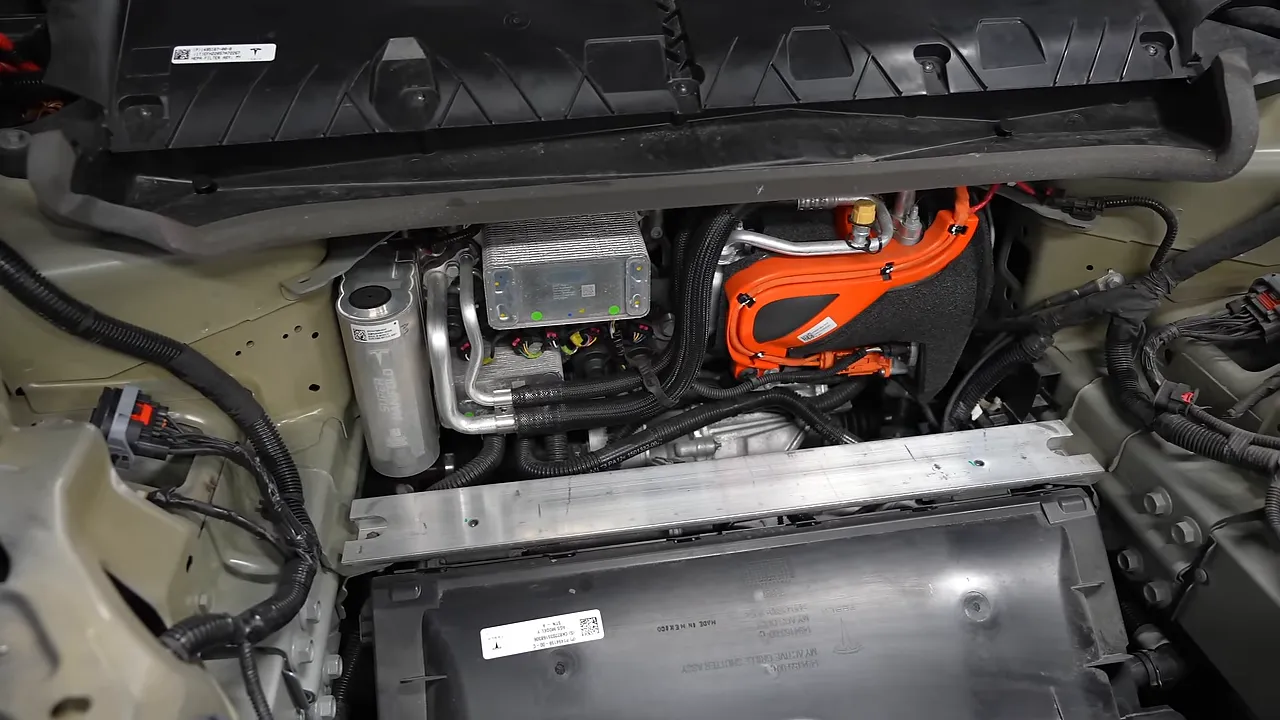
The major components include:
- Super Manifold and Octovalve: The integrated assembly and coolant-routing valve that help coordinate the system’s different operating modes.
- Liquid-cooled condenser: A heat exchanger that transfers heat between refrigerant and coolant.
- Chiller: Another refrigerant-to-coolant heat exchanger, used to remove heat from the coolant side.
- Cabin condenser: The interior heat exchanger used to deliver heat to the cabin.
- Cabin evaporator: The interior heat exchanger used to absorb heat and cool the cabin.
- Front radiator: A large, heavily slanted heat exchanger that transfers heat between coolant and outside air.
- Electric compressor: The component that circulates and compresses refrigerant.
- Electric coolant pumps and plumbing: The pumps, hoses, and lines connecting the battery, front drive unit, rear drive unit, and thermal assembly.
An electric compressor is not magic by itself. Hybrids use them, and so does your refrigerator at home. A pump is a pump. A heat exchanger is a heat exchanger.
What makes this impressive is how those components work together. The physical layout is relatively compact compared with the number of jobs it performs. Much of the real complexity lives in the internal routing, the engineering, and the control software.
From a mechanic’s perspective, this thermal-management integration is the strongest part of the Model Y. It deserves the praise, even if I do not like other parts of the car.
Exterior Review: Aerodynamics Do Not Excuse Poor Fit and Finish
Now we move away from the thermal engineering, and my enthusiasm drops considerably.
To my eye, the Model Y looks like a taller Model 3. Tesla’s broader design family has a strong resemblance across its models, and I find the result bland. If you like the styling, that is perfectly fine. Appearance is a matter of taste.
I also understand that the rounded body and flush details serve aerodynamics. An electric car needs to move through the air efficiently. But that does not mean I have to find the shape attractive.
Yes, an electric car still has a radiator
The closed-off nose can give the impression that there is no cooling hardware up front. There absolutely is, and it is important.
On this Model Y, air enters through the lower opening and reaches the slanted radiator. The lack of a conventional upper grille does not mean the car has no need to exchange heat with outside air.
There is also a small everyday annoyance with the front shape: the angle of the closed nose can leave areas that the brushes in a typical automatic car wash do not clean well.
The bigger concern is assembly quality
Styling is subjective. The uneven fit and finish I found on this particular car is a separate issue.
Panel gaps, trim alignment, lamp fit, and the feel of some exterior plastics did not meet my expectations for an expensive vehicle. Looking closely at the details made the contrast with the thermal engineering even more frustrating.
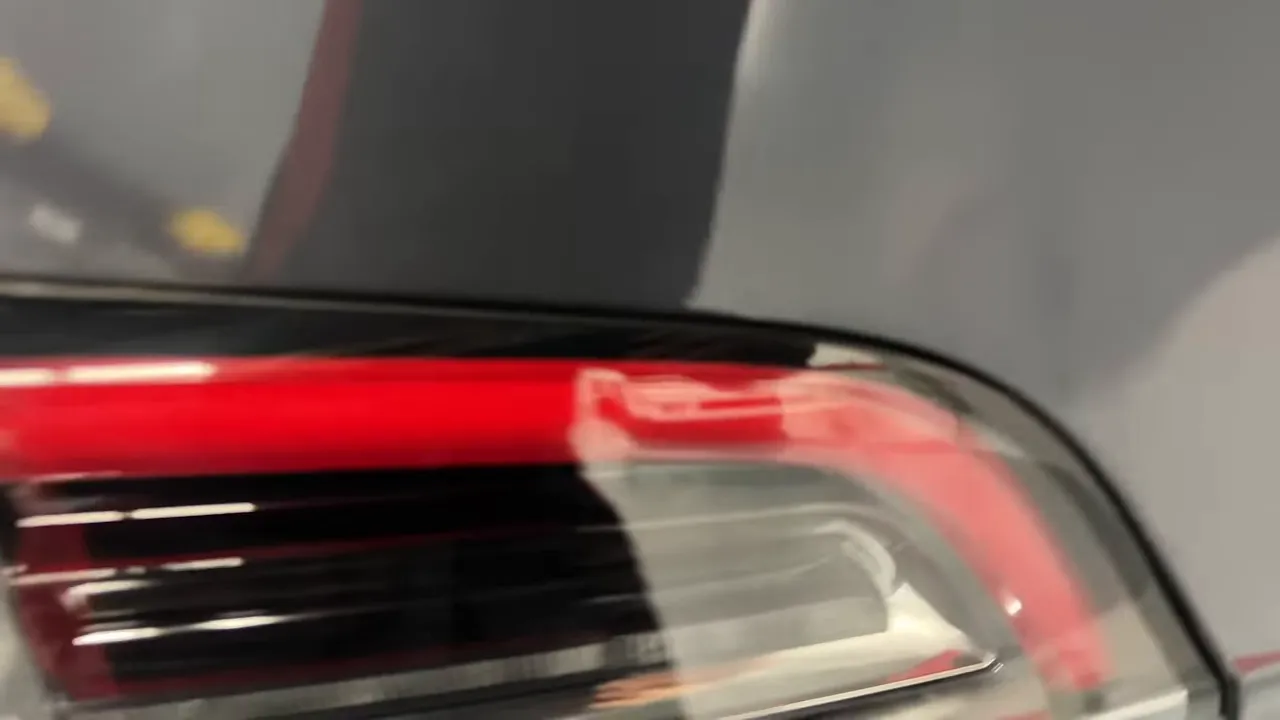
It feels as though the vehicle’s operating systems received an enormous amount of attention, while the surrounding body did not receive the same level of care. That is my impression of the example inspected here, not a measurement of every Tesla ever built.
The flush door handles are awkward in daily use
The flush handles make aerodynamic sense. My problem is the interaction.
You press one end of the handle so the other end pivots outward, then pull to open the door. Unlike the powered presentation associated with the Model S handle, this one requires you to perform the movement yourself. The door’s normal release is electronic.
Once you know the routine, you can use it. But I do not find it natural or particularly pleasant. A simpler button-and-grip arrangement would make more sense to me than making a basic door-opening task feel like a small demonstration.
Interior Review: Minimalism Is Not the Same as Quality
The cabin continues the same split personality. There is very little on the dashboard, very little physical switchgear, and one enormous screen handling nearly everything.
This 2022 car still has a turn-signal stalk and a gear-selection stalk, which I appreciate. There are also two steering-wheel scroll controls, overhead hazard-light control, and map lights. Beyond that, physical controls are scarce.
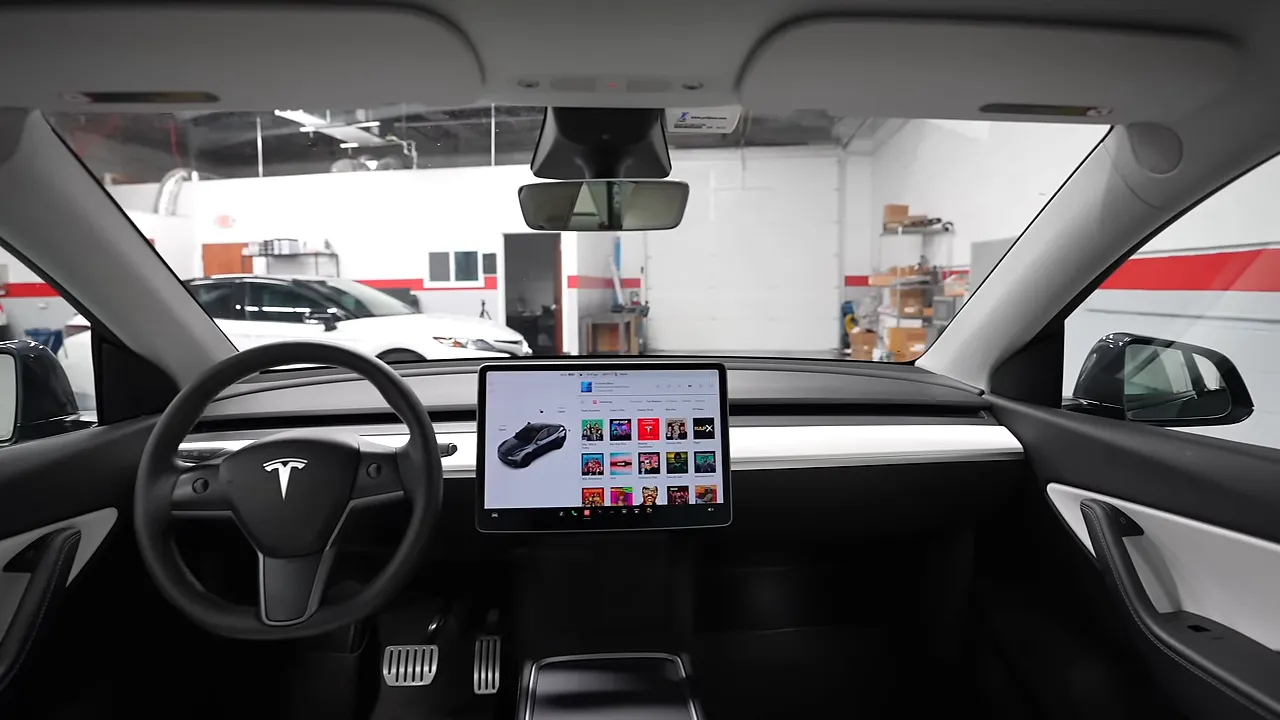
Some people will love the clean appearance. I find it too empty. But the lack of buttons is not my biggest complaint.
My bigger issue is how the interior feels and how it is assembled. The plastics, trim joints, and gaps in this example did not feel appropriate to the price. From the perspective of someone who works on cars, the cabin did not give me confidence in its fit and finish.
Calling it minimalist does not solve that. You can build a simple interior with excellent materials and careful assembly. Here, too many pieces feel inexpensive and insufficiently refined.
The 15-Inch Touchscreen Is Genuinely Excellent
Credit where credit is due: this screen is very good.
The 15-inch display is large, responsive, and supported by software that feels thoroughly developed. The more I used it, the more I appreciated the organization and attention to detail.
It is easy to dismiss the whole interior because I dislike the materials, but that would not be fair. The display and its software are standout strengths.
Nearly every vehicle function lives here
The screen combines navigation, vehicle information, and an extensive set of controls. Among the functions available are:
- Door locking and unlocking, plus front and rear trunk release.
- Glove-box opening, window locks, and child locks.
- Mirror folding, wiper controls, and steering-wheel adjustment settings.
- Climate temperature and airflow-direction controls.
- Autopilot settings and other vehicle preferences.
- Steering effort and acceleration modes, including the displayed Comfort, Sport, and Chill choices where applicable.
- Headlight, parking-light, and front fog-light settings.
The climate interface is a good example of the thought put into the system. You can adjust the direction of airflow through the display rather than moving a conventional front vent by hand.
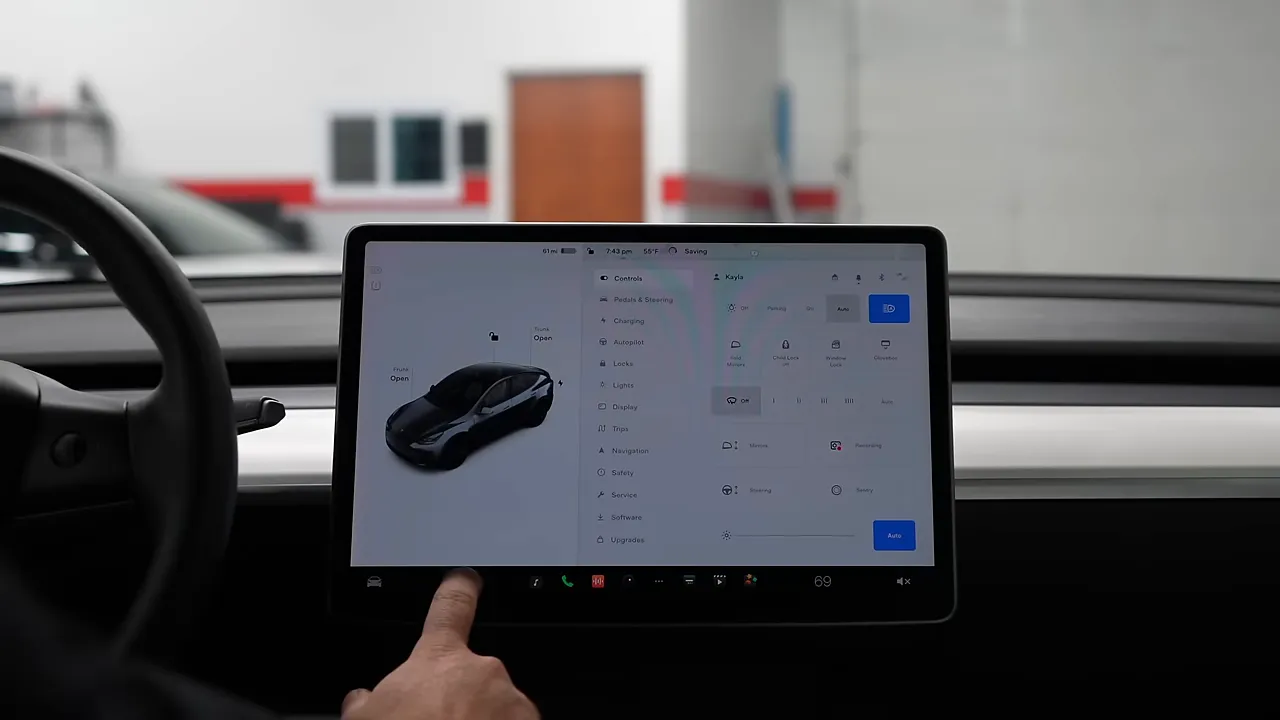
There are also small ideas I genuinely like, such as protecting the glove box with a PIN. That provides a software-based way to restrict access instead of relying on a separate valet-key arrangement.
I can see why consolidating controls into this screen appeals to people. I still prefer more physical controls for everyday functions, but the quality of the interface itself is not the problem.
Phone key and operation without a start button
The key card looks like a small credit card, but using a configured smartphone as the key makes the everyday process more seamless.
Approach the car, open the door, press the brake pedal, and the vehicle is ready to drive. There is no conventional ignition switch or start button.
The display provides driving information, warning indicators, and the selected gear. When you finish, you can get out and walk away, and the car manages its shutdown and power-down behavior.
That is a different way of interacting with a car, and it fits the software-centered approach well.
Rear Seat and Cargo Space: Useful Practicality, Disappointing Materials
The Model Y does have useful passenger space. At 5 feet 7 inches, sitting behind my own driving position, I had decent knee room and very good headroom. The glass roof helps the cabin feel open, although the roof structure still needs to be considered when judging clearance.
Unfortunately, the material concerns follow you into the back seat.
I do not expect every manufacturer to wrap the entire seatback in upholstery. Using plastic there is normal. But the plastic on this car reminded me of the brittle-feeling trim found in some much older economy-minded interiors. It does not feel worthy of the vehicle’s price.
Rear passengers have air vents that can be adjusted by hand, but otherwise the rear compartment continues the sparse theme.
Cargo room is one of the redeeming features
The rear cargo area is generously sized. Buttons in the cargo compartment release the rear seatbacks so they can fold down, making the space more useful.
Those buttons do not power the seats back upright. At this price, that would have been a nice addition.
There is no spare tire, but there is a very deep underfloor storage compartment. Combined with the main cargo area, it makes the Model Y a practical shape and size for carrying things.
So yes, there is real utility here. My concern is not whether the space is usable. It is whether the surrounding materials and assembly feel good enough.
Driving Impressions: Very Fast, but Not Refined Enough
There is no question that this Model Y is fast. The acceleration can push you into the seat with an intensity that makes an immediate impression.
But that first impression is not the whole ownership experience.
Use that performance repeatedly, and energy consumption rises quickly. Under sufficiently demanding conditions, particularly in hot weather, the software can also limit performance when component temperatures become too high. Even an excellent cooling system has limits.
For me, chasing that acceleration works against the efficiency advantage that makes an electric car appealing in the first place. You can enjoy the performance, but you cannot expect it to come without an energy cost.
More importantly, the car I drove felt rough over bumps and suffered from rattles and squeaks. It did not deliver the refinement I expect from a vehicle at this price level.
A quick launch does not compensate for a cabin that disappoints you during every ordinary mile.
Final Verdict: Brilliant EV Engineering Needs a Better Car Around It
Tesla deserves credit for helping put the modern electric car on the map. The integration of the electric drive system, thermal management, and software is impressive. In this Model Y, the thermal system and touchscreen are the two areas I admire most.
But I am buying a complete car, not a thermal-management demonstration with seats.
After the first couple of days, the novelty began to wear off for me. The screen remained excellent, and the engineering remained fascinating. The sparse interior, cheap-feeling trim, assembly concerns, rattles, and rough ride remained as well.
That is why I have such a difficult time with the overall package. My criticism is not that electric cars cannot work. This car demonstrates just how cleverly they can work. My criticism is that the rest of this particular vehicle does not live up to its best technology.
I would love to see this level of electric-system integration paired with a better-finished body, a more substantial interior, and greater everyday refinement. That combination would be much easier for me to recommend.
If you are considering a Model Y, spend time evaluating more than the screen and acceleration. Drive it over imperfect roads. Listen for noises. Inspect the trim and panel alignment. Sit in the back seat and handle the materials you will live with every day.
The technology is impressive. Make sure you also like the car built around it.


