The 2027 Chrysler Pacifica has something that still makes other minivans look inconvenient: second-row seats that disappear into the floor. No wrestling a heavy seat through a sliding door. No finding somewhere in the garage to put it. Just fold it away and use the space.
That is genuinely excellent. But is it enough?
Under the updated front end, this is still a very familiar Pacifica. The 3.6-liter V6 and nine-speed automatic carry on, the interior changes are minimal, and the details underneath leave me asking the same question repeatedly: after roughly a decade, where are the meaningful quality improvements?
Folks, this is frustrating because the basic ingredients could make a very appealing minivan. Here is what works, what concerns me, and why I find the 2027 update difficult to recommend without reservations.
Quick Summary
- Stow ’n Go remains the Pacifica’s standout advantage for switching between passenger seating and cargo space.
- The familiar V6 offers appealing simplicity, but its age does not resolve concerns about quality.
- The 2027 update concentrates on front styling while leaving the cabin and mechanical package largely familiar.
- Comfortable seating and strong Uconnect infotainment are offset by noisy bumps and occasional powertrain jolts.
Table of Contents
- Under the Hood: A Familiar V6 and No More Plug-In Hybrid
- Underneath the Pacifica: Good Materials, Awkward Packaging, and Uneven Execution
- Exterior Changes: A New Face, but Little Change Elsewhere
- Stow ’n Go Is Still the Pacifica’s Best Feature
- Interior: Comfortable, Familiar, and Barely Updated
- Reliability and Value: The Opportunity Chrysler Missed
- Should You Buy the 2027 Chrysler Pacifica?
Under the Hood: A Familiar V6 and No More Plug-In Hybrid
The biggest powertrain change for 2027 is a subtraction: the plug-in hybrid is gone.
Some people will see that as a step backward while the industry moves toward electrification. Personally, I am not sorry to see that particular system leave. I considered it overly complicated and not a particularly good execution of a plug-in hybrid. That is a criticism of this application, not an argument against hybrids in general.
What remains is the familiar 3.6-liter Pentastar V6, an engine that has been in the Pacifica since 2017.

The Engine’s Basic Design
In an era of turbocharged four-cylinder engines, there is something appealing about this layout:
- A naturally aspirated, 60-degree V6 with no turbocharger.
- Port fuel injection rather than direct injection.
- Dual overhead camshafts, giving it four camshafts in total.
- Oil-controlled variable valve timing, with two oil-control valves on each bank.
- Plastic valve covers over single-piece cylinder heads.
- A chain-drive arrangement serving the camshafts, intermediate shaft, and oil pump.
- A conventional cooling system with a belt-driven mechanical water pump and thermostat.
There is also a reasonable amount of room around the engine. On paper, this is exactly the kind of older, relatively straightforward powertrain that ought to become more attractive as newer alternatives grow more complicated.
The engine has enough power and generally runs smoothly. The nine-speed automatic can also operate quite smoothly. The question is not whether the Pacifica can drive nicely. It can. The question is how much confidence the construction and long-term track record inspire.
Simple Architecture Does Not Automatically Mean Good Quality
This is where the missed opportunity becomes obvious to me. Chrysler has had years to refine this combination, yet I still see materials and construction details that do not inspire the confidence I want from a mature design.
Start with service access. The intake plenum stretches over one bank of the engine, covering the valve cover. A routine spark plug replacement requires removing that plenum. So yes, there is space in the engine compartment, but that does not mean every maintenance job is conveniently accessible.
Then there is the extensive use of plastic: the plenum, the lower intake manifold, the oil-filter housing, and other underhood components. Plastic itself is not proof that a component will fail. My concern is the quality of the pieces I can see and handle, particularly on a powertrain whose history already leaves me cautious.
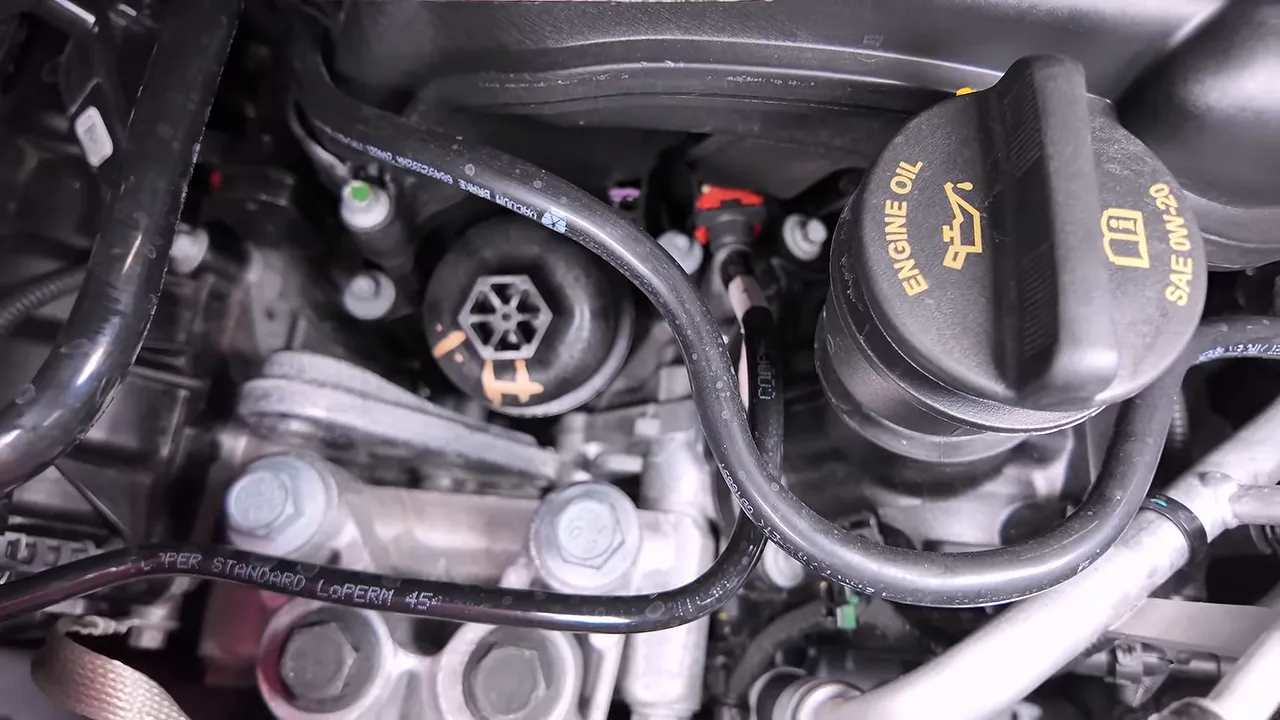
Some pieces feel less substantial than I would like on a brand-new vehicle. Even details that initially look useful lose some of their appeal when the attachment or finish feels poorly executed.
An old engine earns a recommendation through proven durability and continued improvement, not simply by remaining in production. That is my problem here. This V6 has the right basic formula to stand out, but I do not see enough evidence in the inspected hardware that Chrysler has used the time to address the quality concerns.
Underneath the Pacifica: Good Materials, Awkward Packaging, and Uneven Execution
The vehicle inspected here is an all-wheel-drive model. Underneath, there is a mixture of sensible engineering, some welcome material choices, and several details that make me think about future repair work.
Front Suspension, Brakes, and Underbody Covers
The front suspension uses aluminum lower control arms with integrated ball joints, aluminum steering knuckles, and MacPherson struts. The front brakes have dual-piston calipers.
The front sway bar looks surprisingly small for a vehicle this large. That is an observation about the hardware, not a handling measurement, but it stands out during an inspection.
A large cover shields much of the front underside. There is a small access opening for oil service, along with a larger opening around the V6’s exhaust Y-pipe. The engine also has an aluminum oil pan, which I am happy to see rather than a plastic one.
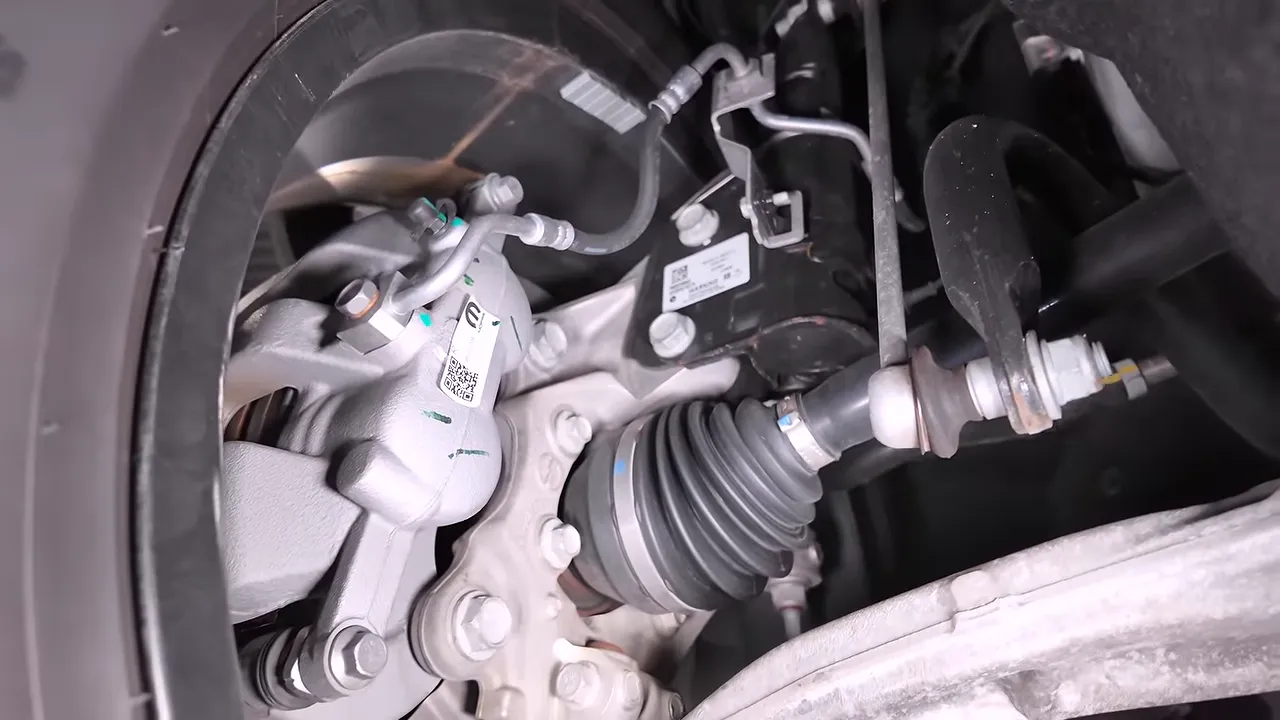
AWD Hardware and Steering Access
The front transfer-case assembly appears to sit quite low. Nearby, there is an additional stabilizing mount arrangement, the sort of detail that tells me managing powertrain movement and vibration required attention.
The subframe combines steel with an attached aluminum section. Tucked into that area is a very large electric power-steering assist motor.
My immediate concern is replacement access. Looking at the size of that motor and the openings around the steering rack, I suspect the subframe would need to come down to remove the assembly. That is an inspection-based concern, not a confirmed repair procedure, but there does not appear to be much room to maneuver it out.
A driveshaft runs to the rear through the covered center section, supported by a center bearing. At the rear is a compact differential assembly with its disconnect mechanism and actuator packaged closely together. The rounded shape of the housing is unusual compared with what I normally see.
The Exhaust Quality Is Not Consistent
Some of the forward exhaust sections look nicely made. The pipework and welds are respectable. But farther back, the apparent quality changes noticeably.
There are joints, pipe transitions, and bends that do not look nearly as carefully executed as the forward sections. The large central muffler and the exhaust routing also reflect the packaging demands of the cabin floor, particularly the Stow ’n Go compartments.
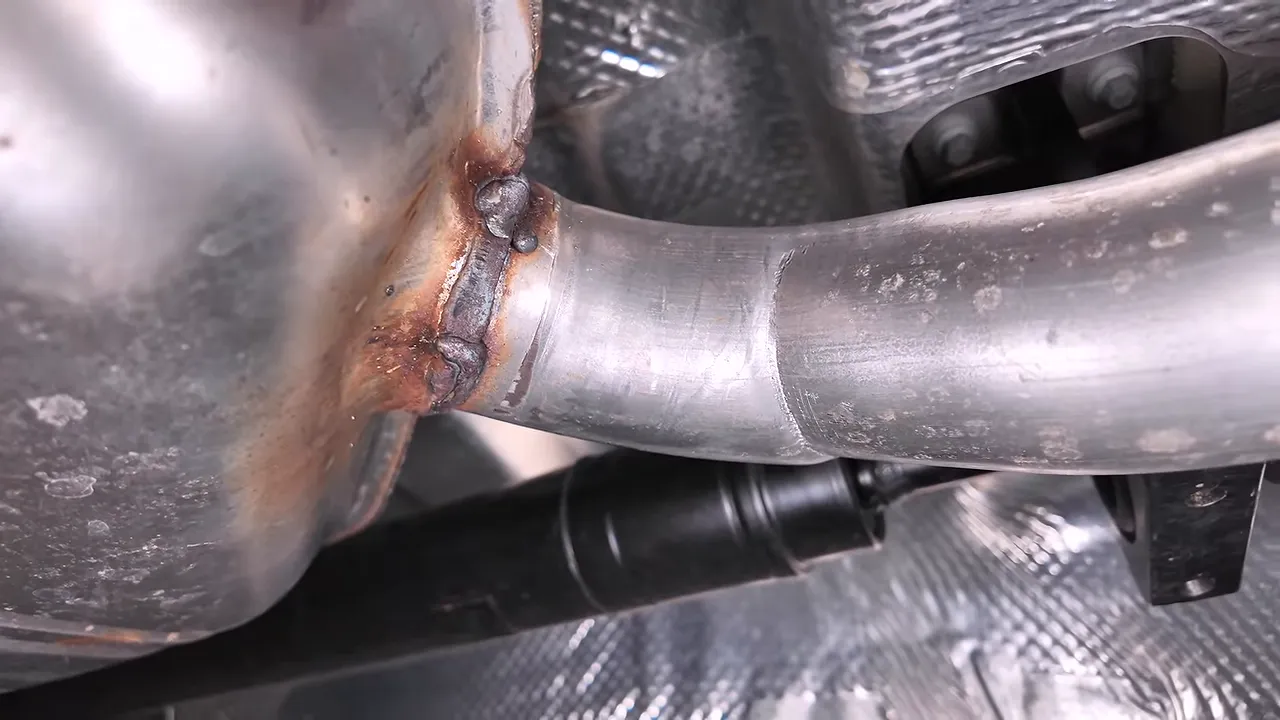
I also dislike the insulated sleeves around portions of the front exhaust. They have an insulating layer inside that resembles a small blanket around the pipe. My concern in a road-salt climate is that salt and moisture can collect there and encourage corrosion. The insulation may serve a useful purpose, but its long-term exposure deserves consideration.
At the rear, another muffler or resonator sits partly behind the bumper, with a noticeable portion visible from underneath. The opposite side is more completely covered. None of this alone determines whether the van is good or bad, but the inconsistencies add up.
Rear Suspension and Climate-Control Lines
The rear suspension is relatively straightforward:
- A trailing-arm arrangement with steel control arms.
- Aluminum knuckles.
- Separate springs and shock absorbers.
- A sway bar that follows an unusual route around the exhaust.
The rear brakes use single-piston calipers with integrated electric parking-brake motors. The aluminum backing plates are a nice detail.
Less welcome, from a long-term service perspective, are the rear air-conditioning and heater lines running underneath the van. This is a familiar minivan concern, not something unique to Chrysler. Long plumbing runs to rear climate-control equipment create more components and connections to inspect as a vehicle ages.
At least these lines appear reasonably accessible once the covers are removed. Still, they belong on the inspection list, especially on a van that spends its life in a salty environment.
Exterior Changes: A New Face, but Little Change Elsewhere
The front styling is the most obvious part of the 2027 Chrysler Pacifica update. On upper trims, there is a new fascia with a broad LED lighting treatment across the front, lower-mounted headlights, and a simplified Chrysler emblem.
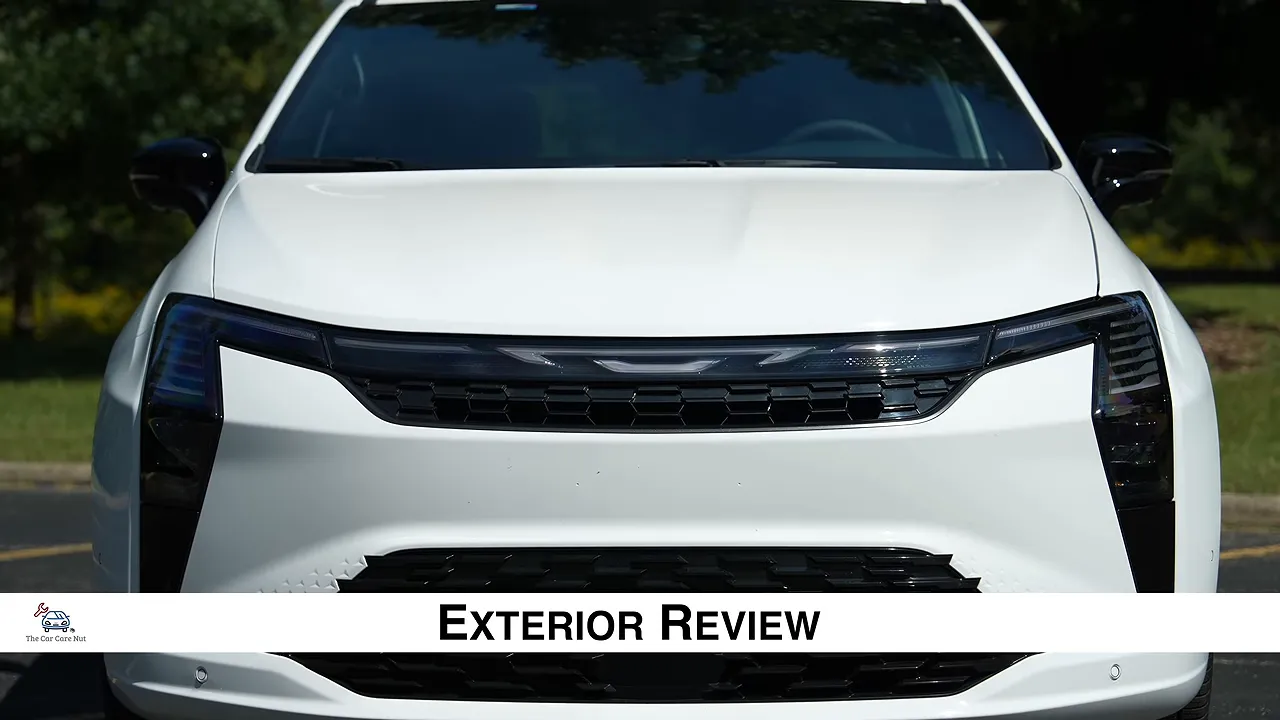
Does it look good? In isolation, yes, I think it does. But to my eye, it also looks more like something from a Korean minivan than an unmistakably Chrysler design.
That is a subjective styling criticism, not a claim that Chrysler literally used another manufacturer’s parts. The disappointment is that a brand with such a long history of distinctive ideas has produced a face that does not feel particularly its own.
The radar sensor and front camera sit low in the front fascia. The new upper-trim face is also not universal: the base LX receives different treatment rather than this same redesign.
Walk around the side and the Pacifica looks essentially unchanged, apart from the edge of the new front lighting. At the rear, the simplified emblem is the main visible difference. The familiar shape and lighting remain.
The power sliding doors are still a useful everyday convenience. But the most compelling reason to open them has nothing to do with the exterior update.
Stow ’n Go Is Still the Pacifica’s Best Feature
If there is one feature that makes a strong case for buying this minivan, it is Stow ’n Go.
In many competing minivans, opening up the full cargo area means removing the second-row seats. Some newer designs do not even offer that option; the seats fold or slide forward but continue occupying a meaningful amount of space.
The Pacifica’s solution is much better for someone who regularly switches between carrying people and carrying bulky items.
Second-Row Seats That Disappear into the Floor
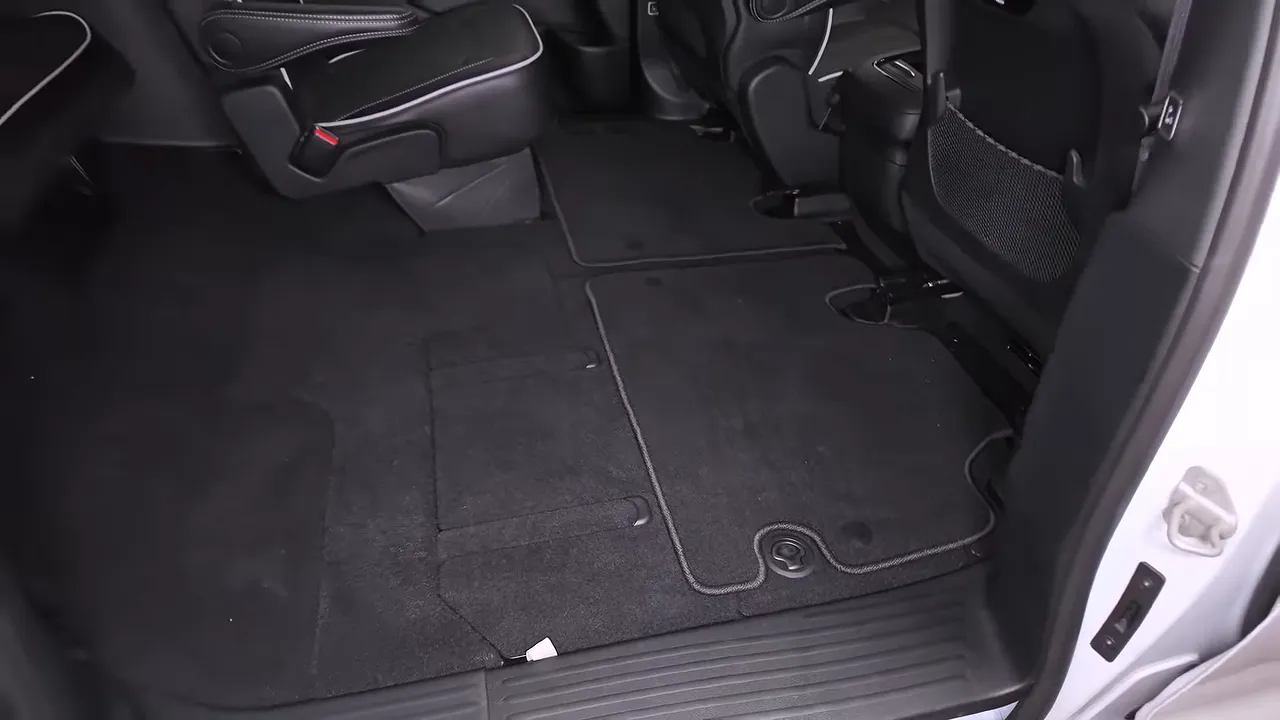
Each second-row seat has a compartment in the floor ahead of it. With the seat upright, that compartment provides useful storage. When you need cargo room, it becomes the space that holds the folded seat.
The basic sequence is simple:
- Open the floor compartment ahead of the seat.
- Release and fold the seat into the recessed storage area.
- Close the floor panel over it.
- Repeat on the other side if you need the additional space.
The result is an open floor without removing either seat from the vehicle. That is the important distinction. You do not need somewhere else to store the seats, and they are still with you when you need passenger capacity again.
The third row is also large and comfortable, including for adults. That is worth acknowledging. This is not simply a cargo box with an occasional-use bench at the back.
The Third Row Folds Away Too
The third-row seats also fold into the floor, creating a substantial cargo area. Combine that with the second-row system and the Pacifica’s versatility becomes obvious.
I do have a small complaint: folding the third row is a two-step operation. You release one part, then operate another to complete the fold. It works, but after so many years, I would have liked Chrysler to simplify it into a single-release process.
That does not take away the usefulness of the result. It just feels like another detail that could have benefited from attention during the update.
The inspected trim also has a power liftgate with dual powered supports. I like that its visible wiring route does not have to travel through the headliner. What I like less is the low placement of the close button inside the cargo opening. I would prefer a button on the liftgate itself rather than reaching inside and then stepping away as it closes.
Interior: Comfortable, Familiar, and Barely Updated
The 2027 interior changes amount mainly to the new steering-wheel emblem and some color choices. The basic dashboard and control layout remain familiar.
There are two ways to look at that. The original interior design was good enough to age reasonably well. On the other hand, if Chrysler is investing in an update, why not make some meaningful improvements inside?
Analog Gauges Still Work Well
The instrument cluster has two physical gauges with a screen between them. I like it.
The blue accents and traditional dial design are a welcome change from the giant screens taking over so many dashboards. A conventional gauge cluster is not automatically outdated just because another vehicle has a larger display.
This is one area where leaving the design alone does not bother me.
Uconnect Remains a Strong Point
The Uconnect infotainment system is one of my favorite parts of the cabin. It responds quickly, works well, and provides a good overall experience. In my experience, bugs and operational issues are relatively few.
The system also sounds good. There is no need to replace something that works simply to make it look different.
But the physical controls underneath it illustrate the interior’s inconsistent decisions.
Good Buttons, Odd Exceptions
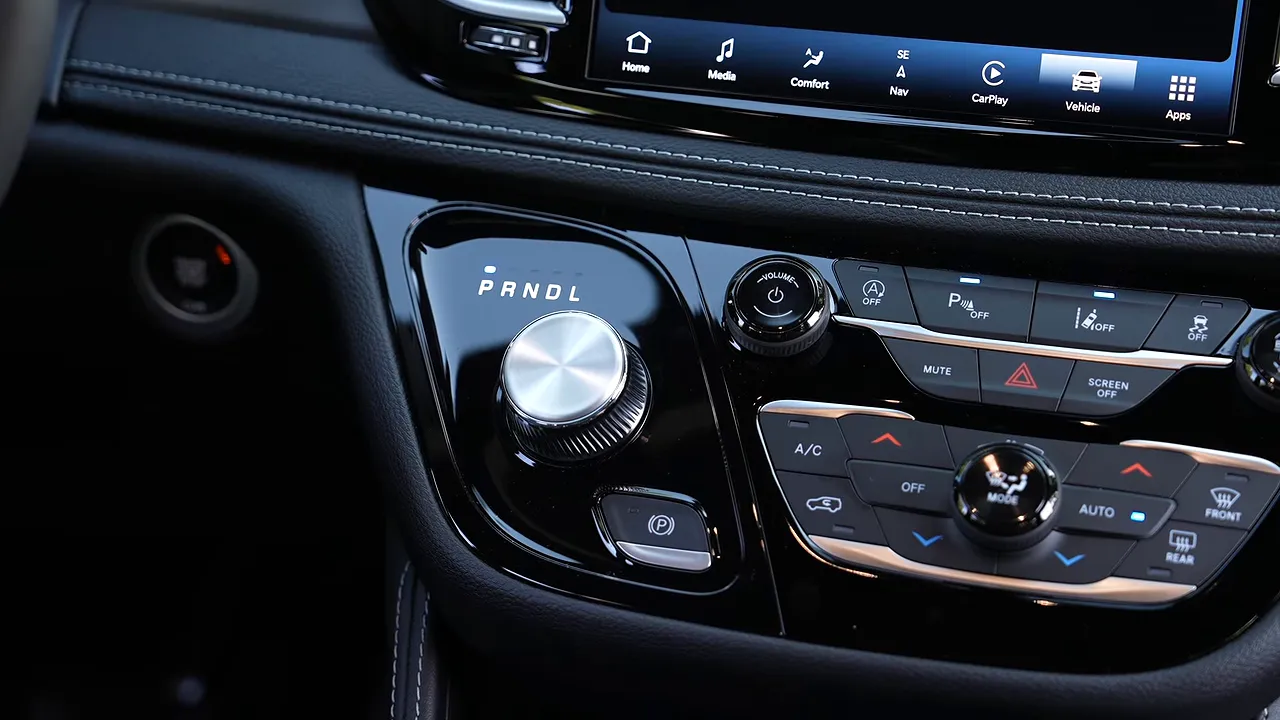
Most of the heating and air-conditioning controls are physical buttons. There are physical audio controls too, including a volume knob. Good. Those are things people use repeatedly, and straightforward controls make sense.
Then the heated and ventilated seat controls live in the touchscreen. Why? Chrysler already has a physical climate-control panel. Dedicated seat buttons would have been a useful improvement.
I am also not a fan of the rotary gear selector. Beside it, the parking brake uses a simple push-button action rather than the more familiar pull-to-apply, push-to-release style of switch. These controls function, but the choices are not my preference.
Comfort Is Better Than the Bump Refinement
The Pacifica is very comfortable. The seats are pleasant, the cabin is relatively quiet for a minivan, and the higher-trim materials are nice. The steering wheel feels particularly good.
But comfort and refinement are not exactly the same thing.
Over bumps, this van makes noticeably more noise than I expect. Some impacts sound harsh enough to give the impression that something is loose or broken, even though that sound alone is not a diagnosis of a failed component.
The powertrain is generally smooth, but it occasionally delivers an odd jolt. Those moments interrupt what can otherwise be a pleasant, relaxed driving experience.
The original interior was ahead of its time when this generation arrived. That is why it still looks respectable. But a design aging well does not excuse an update that changes so little.
Reliability and Value: The Opportunity Chrysler Missed
My concern with the Pacifica is not that it lacks every desirable quality. It has comfortable seating, a good infotainment system, useful physical controls, and outstanding seat-storage flexibility.
The problem is what surrounds those strengths.
An established naturally aspirated V6 could be a major selling point against increasingly complicated alternatives. But this engine and transmission are not unknown quantities waiting to establish a reputation. They have been around for years, and their history does not give me the confidence I would want before recommending them primarily for durability.
That is my assessment of the powertrain’s record and the inspected construction, not a prediction that every 2027 Pacifica will fail.
For anyone evaluating a specific vehicle, a model review should sit alongside the vehicle’s own service information and safety status. The NHTSA recall lookup is a useful independent resource for checking a VIN.
What I wanted from this update was not necessarily an entirely new engine or a dashboard covered in screens. Chrysler could have kept the basic design and concentrated on better materials, better execution, and improved refinement.
That would have been a meaningful story: familiar hardware, but made better.
Instead, the most visible investment is a different face, while many of the details that concern me remain familiar.
Should You Buy the 2027 Chrysler Pacifica?
Stow ’n Go is the strongest reason to put the Pacifica on your shopping list. It is not, by itself, enough for me to give the entire van an enthusiastic recommendation.
If you frequently need to turn a passenger van into a large cargo carrier, the ability to hide the second-row seats in the floor is a real advantage. It is not a gimmick. It solves a practical problem better than lifting seats out and leaving them behind.
Beyond that standout feature, I find the overall value harder to defend at pricing comparable with its rivals. In my judgment, the Pacifica has not kept up well enough in efficiency, technology, refinement, and confidence in long-term quality.
The new front styling does not solve those concerns. Neither does a simplified badge or another interior color.
There is a larger disappointment here too. With the Pacifica carrying Chrysler’s lineup, this feels like more than an underwhelming update to one minivan. It feels like a missed chance for a historic American brand to demonstrate that it is investing seriously in its future.
I am not predicting Chrysler’s closure. I hope the brand proves that concern wrong. But this update does not give me the reassurance I wanted.
The Pacifica still contains a genuinely innovative idea. I just wish Chrysler had put the same care into improving the rest of the vehicle that it once put into making those seats disappear.


