The 2027 Infiniti QX65 makes a very good first impression. The styling is sharp, the Autograph interior is beautiful, and a close inspection underneath reveals some genuinely nice construction quality. This is not a vehicle that falls apart under scrutiny everywhere you look.
But a luxury car has to do more than look expensive while parked. Start the engine and drive it, and the QX65’s biggest problem becomes difficult to ignore: the powertrain does not deliver the refinement the rest of the vehicle promises.
Mechanically, think of this as a QX60 with a different rear profile and no third row. That gives it some appealing qualities, but it also brings over the QX60’s most significant weakness.
Quick Summary
- The QX65 combines QX60 mechanicals with coupe-like styling and eliminates the third row.
- The Autograph cabin impresses, while underhood and underbody construction show many high-quality details.
- Engine noise, vibration, and uneven powertrain responses undermine the luxury driving experience.
- Variable-compression complexity and limited internal serviceability add concerns beyond the lack of refinement.
Table of Contents
- Under the Hood: Clever Engineering, Questionable Trade-Offs
- Underneath the QX65: Better Quality Than the Powertrain Suggests
- Exterior Design: A Coupe-Like SUV That Gets the Shape Right
- Interior: Beautiful Autograph Trim, Familiar Nissan Hardware
- Rear-Seat Comfort: Cushy Seats, With Some Compromises
- How It Drives: Power Is Not the Problem
- Should You Buy the 2027 Infiniti QX65?
Under the Hood: Clever Engineering, Questionable Trade-Offs
The QX65’s only powertrain option is a 2.0-liter turbocharged four-cylinder with Infiniti’s variable-compression technology, paired with a nine-speed automatic transmission. There is no CVT here, which I appreciate. The automatic itself is a decent transmission, but the complete powertrain is another story.
Cylinder Head, Valve Timing, and Timing Chains
At the top of the engine is a plastic valve cover. Underneath it is an unusual two-piece cylinder-head arrangement. The lower portion contains the valves, springs, and camshaft support surfaces, while the upper section ties the camshaft caps together. Think of the general idea behind a bottom-end bearing cradle, applied to the camshafts.
It is an interesting design, not automatically a bad one. It simply is not how most manufacturers approach this area.
The engine uses dual overhead camshafts and variable timing on both sides, but the actuation differs:
- Intake camshaft: An electric motor adjusts the timing.
- Exhaust camshaft: An oil-control valve and hydraulic pressure adjust the timing.
- Main timing chain: Connects the crankshaft and camshafts, with a hydraulic tensioner.
- Oil-pump chain: Uses a simpler spring-loaded tensioning arm or guide.
What Variable Compression Actually Changes
Variable valve timing changes when the valves open. Variable valve lift, used in some other engines but not this one, changes how far a valve opens. Variable compression goes further: it mechanically changes the engine’s compression ratio while it operates.
The system uses a moving linkage to alter the piston’s position and travel geometry. On paper, it is an engineering marvel. Study how it works and you cannot help appreciating the effort involved.
But, folks, engineering complexity needs to earn its place. My concern is that this system adds substantial mechanical complication without delivering an equally extraordinary real-world result. Other manufacturers produce competitive turbocharged 2.0-liter engines that meet emissions requirements without changing the compression ratio mechanically.
The two issues that concern me most are vibration and long-term repairability. The VC-Turbo design’s real-world reliability history does not give me confidence that this added complexity is a worthwhile trade-off.
There is also a serviceability concern. My understanding is that the variable-compression block assembly is essentially treated as a replacement unit, rather than something with a full range of internal repair parts. The large actuator motor that changes the compression setting can be serviced, but that is very different from being able to repair the mechanism inside the block.
From a mechanic’s perspective, that matters. An expensive mechanical assembly should ideally be repairable, not treated like a disposable component.
Fuel, Cooling, and Turbo Systems Have Some Good Details
Move away from the variable-compression mechanism, and several choices deserve credit.
The cooling system uses a mechanical water pump and a coolant-distribution valve to direct coolant where needed and help the engine warm up faster. That is a relatively straightforward arrangement.
I particularly like the dual fuel-injection system. It has both port injection and direct injection, with the engine able to use either system or both as operating conditions require. The direct injectors sit beneath the intake manifold, while the port-injection rail is more readily visible.
The high-pressure fuel pump also sits on its own housing instead of being mounted directly through the valve cover. That is a thoughtful service detail because removing the valve cover does not require disturbing the pump in the same way.
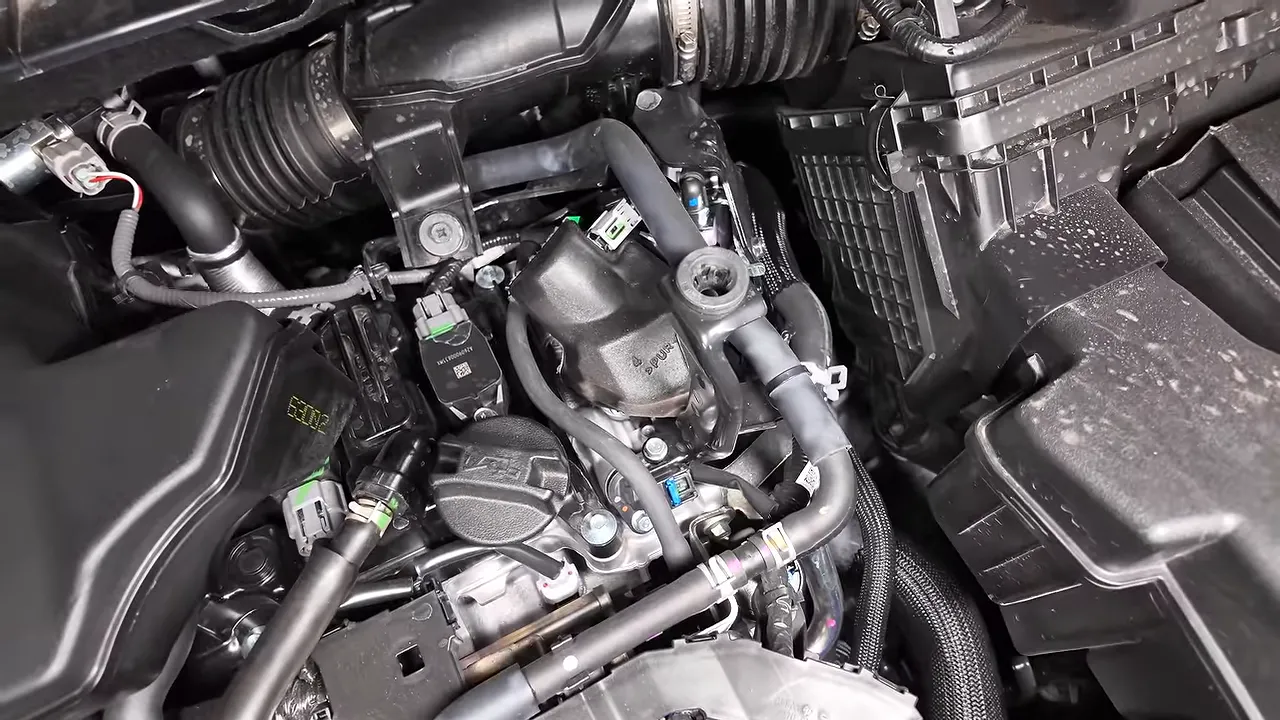
A single turbocharger sits toward the rear of the engine. It uses oil and coolant cooling, an electronic wastegate, and a front-mounted air-to-air intercooler. The intercooler is visible through the lower front opening. Nothing overly exotic there, and I like that simplicity.
The Engine Mounts Tell Part of the Story
Most engines have a conventional side mount. This one has additional mounting hardware, including a substantial electronically controlled mount intended to counter vibration.

Active vibration control is clever, but it does not change my experience in this car. The engine is unusually loud, its sound is not particularly pleasant, and too much vibration still makes its way into the luxury-car experience.
That is frustrating because the surrounding underhood quality is good. The hoses, fittings, and general presentation feel nicely executed, without an excessive amount of flimsy plastic hardware. This is a USA-built vehicle, and much of the physical construction makes a positive impression.
There is even a little insulating blanket around the battery. I found myself wishing some of that attention had gone toward making the engine less noticeable.
Underneath the QX65: Better Quality Than the Powertrain Suggests
Underneath, there is quite a bit to like. The front suspension uses an aluminum lower control arm with an integrated ball joint, an aluminum knuckle, and a MacPherson strut arrangement. Front braking is handled by dual-piston calipers.
The underbody covers are also notably good quality. These are not the sort of thin, flimsy panels that immediately leave a poor impression.
A Nicely Made Exhaust With One Winter-Climate Concern
The exhaust system is one of the strongest parts of the underbody inspection. The pipes, joints, and overall construction look very nicely made. A large muffler sits farther back, and the exhaust eventually splits into two outlets.
My reservation is the insulation and outer covering around part of the exhaust pipe. The exposed edge creates an area where salty water could collect. In a region that uses road salt, I would be concerned about moisture and salt getting trapped against an otherwise very nice pipe.
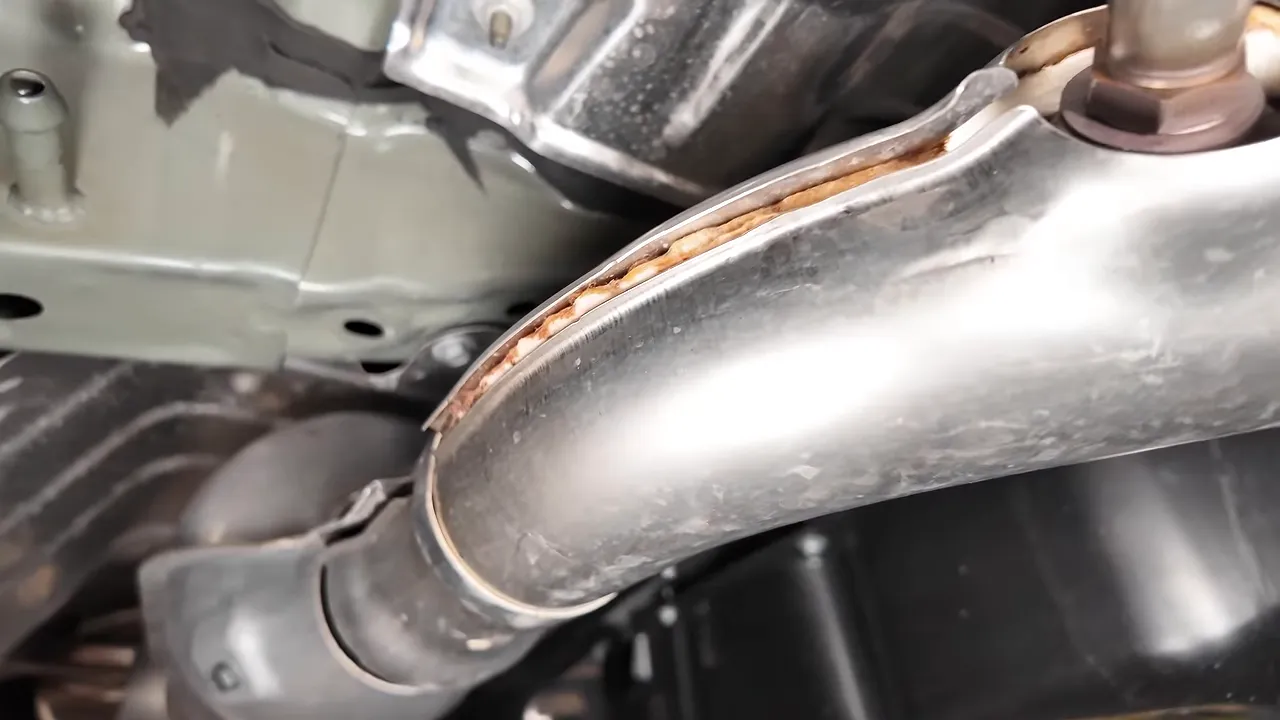
That is a potential corrosion concern, not evidence that this particular vehicle has already developed a problem. I would simply prefer not to create that pocket in the first place.
All-Wheel Drive, Rear Suspension, and a Real Spare Tire
The inspected QX65 has all-wheel drive, with a nicely painted driveshaft running to a compact rear differential equipped with a disconnect mechanism. This is an arrangement for everyday traction and poor-weather driving, not an indication that the QX65 is an off-road vehicle.
The rear axles look good quality, although their painted finish is not consistent from one end to the other. Rear suspension construction combines steel lower control arms with aluminum upper arms and aluminum knuckles. The rear brakes use single-piston calipers with integrated electric parking-brake motors.
And underneath the back is something I am always happy to find: a spare tire.
There are a few less impressive finishing details, including an area where the underbody coating coverage could be better and a rear cover that leaves its end fairly open. Still, the overall impression underneath is positive.
The integrated trailer hitch and wiring also look substantial. I would not personally choose this vehicle primarily for towing, but the installed hardware is more serious than its stylish appearance might suggest. That observation is not a substitute for checking the vehicle’s actual tow rating and equipment requirements.
Exterior Design: A Coupe-Like SUV That Gets the Shape Right
From the front, the QX65 is very much a QX60. That is not a complaint. Infiniti’s newer fascia, which also shares a family resemblance with the QX80, looks sharp.
The large grille has an interesting pattern, and the hood keeps things relatively simple. Its central detailing draws attention toward the Infiniti emblem. The lighting follows the split arrangement that has become fashionable, with slim upper LED elements and the main headlights positioned lower.
One practical concern is the radar sensor’s low placement in the front bumper. It sits in an area exposed to impacts from low obstacles or road debris.
The Roofline Uses a Useful Visual Trick
I usually do not care for coupe-like SUVs. Too often, they sacrifice useful space for a shape that does not improve the vehicle enough to justify it. This one is different.
The QX65’s profile reminds me of the Infiniti FX, one of the brand’s most memorable designs. More importantly, the roof itself does not plunge downward as dramatically as the contrasting color treatment makes it appear.
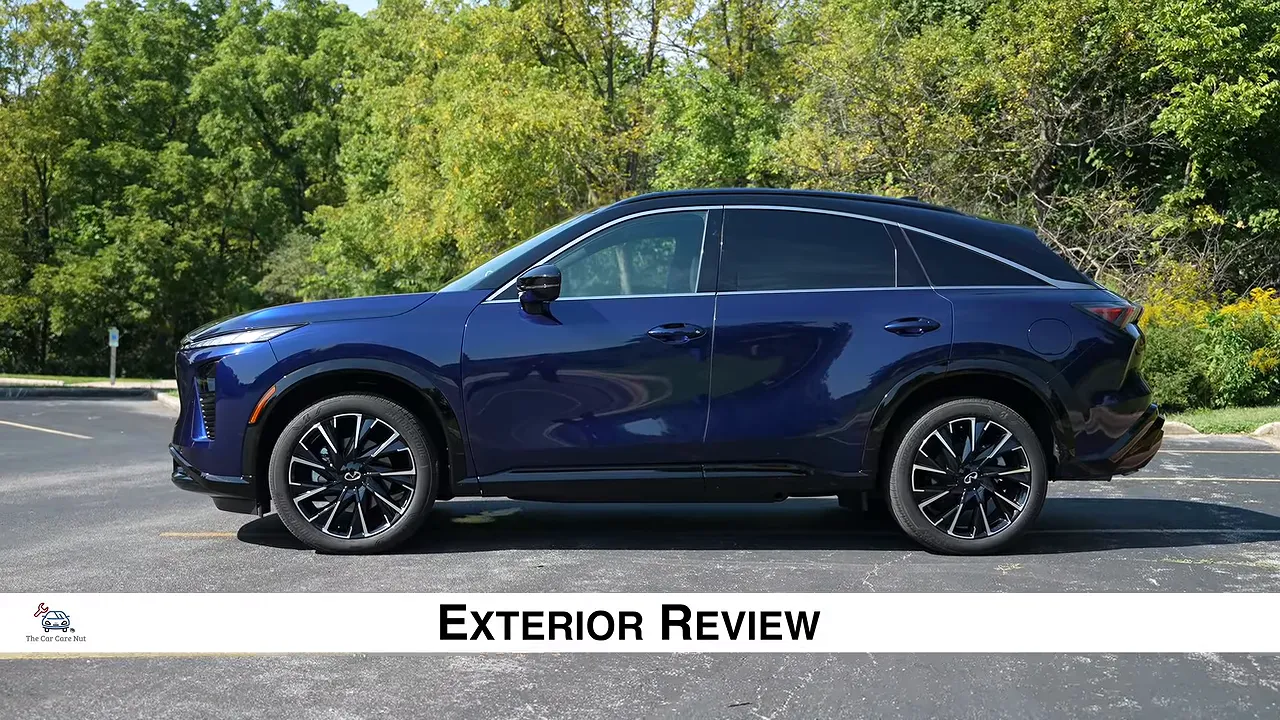
That visual trick delivers the coupe-like appearance while preserving more rear-seat space than a heavily sloped roof would. There is still a headroom compromise, but it is not as severe as in some vehicles of this style.
The rear design works well, too. The taillight shape, body lines, spelled-out Infiniti lettering, and blue paint all come together nicely. I do not usually praise this body style, but this is a good-looking vehicle.
Cargo-Area Luxury and a Missed Storage Opportunity
The power liftgate uses two motors, with the operating hardware extending through the headliner area. Once it is open, the cargo-area materials and sliding load-sill details feel appropriately upscale. These are the small touches that help explain why someone would choose an Infiniti over a Nissan.
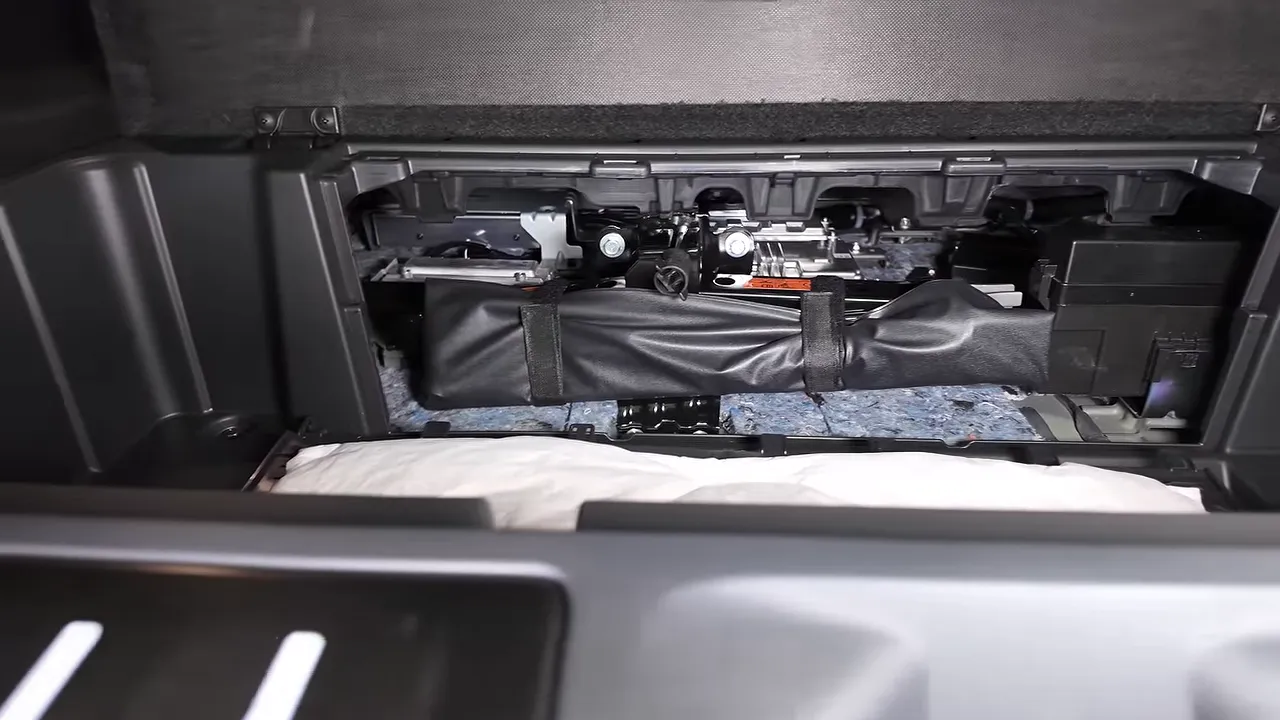
There is some underfloor storage, but the bigger opportunity has been missed. The QX65 does away with the QX60’s third row, yet the space beneath the cargo floor has not been fully developed into a useful storage compartment.
Lift the panels and you find the spare-tire tools, electronic modules, and unused space. I would have liked to see the modules packaged farther to the sides and a proper storage bin fitted in the middle.
There are two more exterior details worth mentioning. First, this car has two shark-fin roof antennas. I am not a fan. Roof-mounted fins can create roof damage and potential water leaks if struck, and doubling them does not make me like the idea any more.
Second, the rear doors open almost 90 degrees. That is excellent. A little extra opening angle makes a meaningful difference when getting into and out of the back seat.
Interior: Beautiful Autograph Trim, Familiar Nissan Hardware
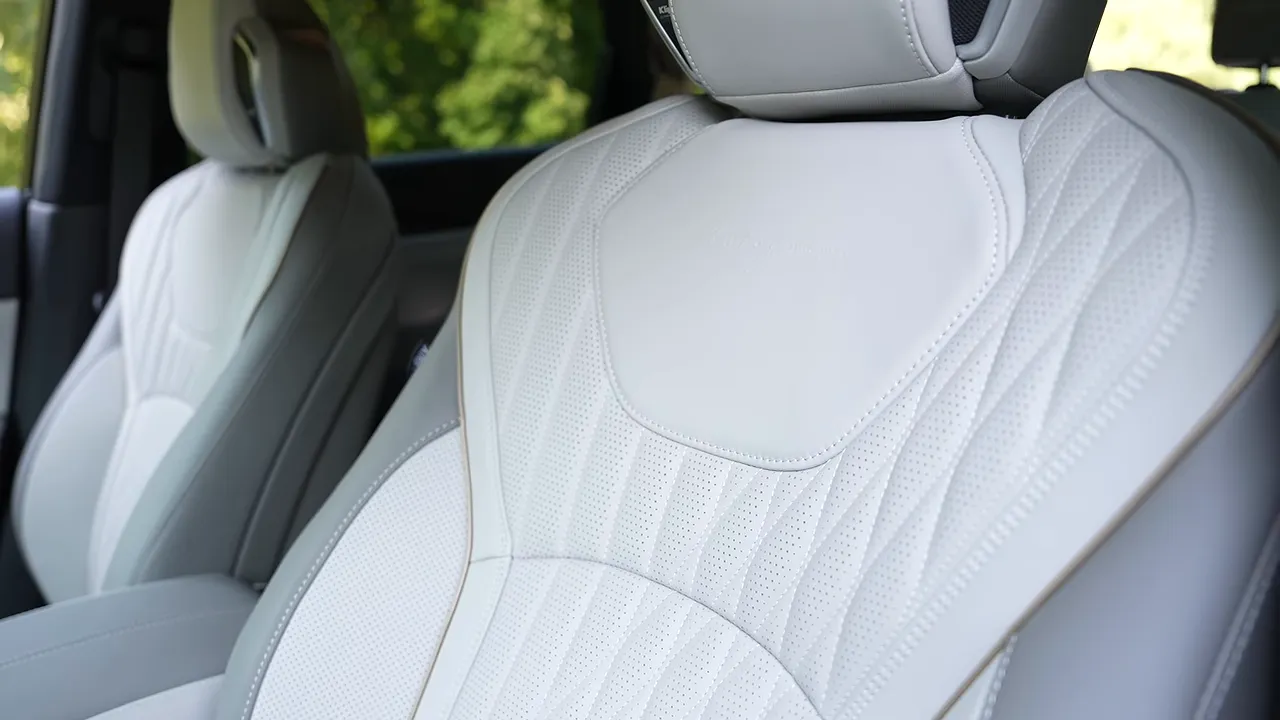
Open the door of this Autograph-trim QX65 and the initial impression is genuinely impressive. The quilted seats, gold piping, and dashboard materials deliver the kind of visual warmth I associate with old-school luxury.
The front layout is essentially the same as the QX60’s, although this particular interior does not have the passenger-side decorative white-line treatment I liked in that vehicle.
Screens and Controls Mostly Work Well
The infotainment display is relatively small by current luxury-car standards, but it responds quickly and works well. It is a touchscreen, although reaching it from the driving position is a bit of a stretch. A rotary controller and shortcut buttons on the console provide an alternative.
The shifter has an interesting combination of controls. Park is selected with a button, Drive is a downward movement, and Reverse requires pressing a mechanical lockout button. The start button sits in a slightly unusual location on the console, but it is something you can get used to.
The digital instrument cluster looks good, particularly the typeface. Infiniti has long done an attractive job with gauge lettering, and that continues here. The steering wheel is also refreshingly straightforward: simple, functional, and pleasant to use.
I also like the driver-monitoring system’s behavior. It does its job without constantly sounding off over normal steering-wheel movements. Some systems become so aggressive that they make routine driving irritating. This one strikes a better balance in my experience.
Dedicated Climate Controls and Properly Positioned Vents
The climate controls have their own panel rather than being buried in the infotainment display. They are largely touch-capacitive rather than conventional physical buttons, but I can live with that when they remain dedicated and accessible.
The problem is differentiation. This area looks very familiar from Nissan products. Even a different font or some unique detailing would help it feel less like the same panel fitted to a more expensive vehicle.
The smaller screen does bring a useful benefit: the air vents remain high enough to aim air where you actually need it. They are not pushed down into an awkward position to make room for an enormous display. Their horizontal design also maintains a clean visual line as they are adjusted.
Another nice detail is the center-console lid. Press its release button and it opens on its own. It is a small convenience, but luxury is partly about getting those small things right.
The Initial Wow Does Not Hide Every Shortcut
Spend more time inside and you begin noticing where the luxury treatment stops. The quilting that looks so good on the seats and dashboard does not continue onto the door panels. The door material is still nice, but carrying that pattern through would have made the cabin feel more cohesive.
The Autograph’s sound system is another highlight, including speakers integrated into the headrests. Are those a little gimmicky? Absolutely. But they are also a fun detail, and the overall system is very nice.
Keep in mind that much of the visual appeal belongs to this upper trim. Lower trims cost substantially less, but they do not give you the same richly finished interior. As those special materials disappear, the relationship to the much less expensive Nissan Pathfinder becomes harder to overlook.
Rear-Seat Comfort: Cushy Seats, With Some Compromises
At 5 feet 7 inches tall, sitting behind my own driving position, I have decent knee room. Headroom is more limited, particularly for someone taller. The coupe-like shape does impose a penalty, just not as aggressively as some alternatives.
The seat itself is excellent. It is genuinely cushy, with a very comfortable thigh-support angle. It has been a while since I sat in a rear seat that felt this welcoming.
Rear passengers also get:
- Dedicated climate controls.
- USB-C connections.
- Roof-mounted air vents.
- A completely flat floor, without a center tunnel intruding on the middle passenger’s foot space.
What they do not get is a rear-window sunshade. At the approximate price of this Autograph model, even a manual shade would have been a welcome addition.
Overall, this is a comfortable second row. Just remember that it is the only rear row: the QX65 does not offer the QX60’s third-row seating.
How It Drives: Power Is Not the Problem
The engine makes plenty of power. That is not the issue. The problem is how that power arrives, how the powertrain responds, and how much noise and vibration accompany it.
Press the accelerator and there is a delay before the vehicle responds. Lift off and the powertrain can feel as though it needs another moment to decide what to do. The transitions are not smooth or linear, and the overall interaction can feel clunky.
Then there is the engine itself. Starting it introduces vibration into a cabin that looked so peaceful a moment earlier. Under operation, it is loud, with a sound I do not find appropriate for this class of vehicle.
A beautiful cabin cannot compensate for an unrefined powertrain every time you drive. You did not buy the car simply to sit in it and admire the stitching.
This is why I separate the transmission’s basic design from the complete driving experience. A conventional nine-speed automatic is a welcome choice, but the engine and transmission together still need to behave like a polished luxury-car powertrain. Here, they do not.
Should You Buy the 2027 Infiniti QX65?
Pricing needs a qualification. I did not have an exact price for this particular test vehicle. My assessment uses an approximate figure of $70,000 for the Autograph, with a starting price of roughly $53,000 for the range. Those are estimates, not a confirmed sticker for this car.
The lower starting price compared with the QX60 is a point in the QX65’s favor. But at the base level, you also lose much of the interior finish that makes the Autograph so appealing.
At approximately $70,000, the argument becomes much harder. You have plenty of alternatives, and refinement should not feel optional. The extensive Nissan parts sharing becomes more noticeable, while the same engine vibration, noise, and uneven responses remain.
The frustrating part is that there is a very good vehicle here:
- The exterior design is attractive, even to someone who generally dislikes coupe-like SUVs.
- The Autograph cabin makes a strong luxury impression.
- The rear seat is unusually comfortable.
- Much of the underhood and underbody construction looks high quality.
- The USA-built vehicle shows real attention to detail in several important areas.
But the powertrain is central to the ownership experience, and it is the weakest part of the package. The variable-compression engine also adds reliability and repairability concerns that make the compromise harder to accept.
Meanwhile, the less expensive Pathfinder still has a V6. I would much rather see a smooth V6 in the QX65 and QX60. That does not mean every V6 is perfect or trouble-free. It means this particular luxury SUV needs a smoother, more natural-feeling powertrain to match its otherwise appealing character.
For anyone researching a purchase, the NHTSA recall lookup is also a useful place to check an individual vehicle’s VIN. That is separate from judging refinement or predicting long-term reliability.
My verdict: the QX65 is good-looking and nicely made in many areas, but I have a hard time recommending it with this powertrain, especially in the higher trims. Give it a smooth engine and well-integrated transmission behavior, and Infiniti would be onto something. As it stands, the same problem that holds back the QX60 follows it here.


