The 2026 Jeep Grand Wagoneer gets several changes that make a lot of sense: a lower price, a simpler lineup, wider availability of two-wheel drive, and one engine instead of a choice that this SUV never really needed.
But the important question is not simply whether Jeep made it a better deal. What are you actually buying underneath that enormous body? How serviceable is the Hurricane inline-six? Does the interior justify the size? And would I want to own one after the warranty expires?
There is a lot to like here, folks. This is an elegant, comfortable, genuinely useful family SUV. My hesitation comes down to build quality and long-term ownership, not its ability to do the job it was designed to do.
Table of Contents
- Key Takeaways
- What Changed for the 2026 Grand Wagoneer?
- Under the Hood: The 3.0-Liter Hurricane Inline-Six
- The Eight-Speed Transmission and Four-Wheel-Drive Hardware
- Underneath: Substantial Hardware, but Exposed Areas
- Exterior Design: Big Without Looking Overstyled
- Cargo Space: This Is Why You Buy Something This Large
- Interior: The Layout Is Better Than the Materials
- Second and Third Rows: The Real Reason to Consider It
- Build Quality and Long-Term Reliability: My Main Reservations
- Should You Buy the 2026 Jeep Grand Wagoneer?
Key Takeaways
- Lower pricing and a simpler lineup make the 2026 Grand Wagoneer a more sensible family-SUV proposition.
- The standard-output Hurricane inline-six delivers ample performance, though its turbocharging and cooling systems add complexity.
- Exceptional third-row comfort and useful cargo space are the long-wheelbase model’s strongest reasons to buy.
- Build quality and long-term reliability concerns make shorter ownership more appealing than keeping it indefinitely.
What Changed for the 2026 Grand Wagoneer?
Jeep has cleaned up a lineup that used to be unnecessarily confusing. Previously, buyers had to sort through Wagoneer and Grand Wagoneer names, followed by Series I, Series II, and Series III designations. For 2026, everything falls under the Grand Wagoneer name, with short-wheelbase and long-wheelbase versions and a more conventional trim structure.
That is a good move. Buying a family SUV should not require decoding the badge first.
- Lower pricing: The entry point is now around the mid-$60,000 range, making this a more accessible proposition than before.
- One engine output: The high-output Hurricane is gone from the Grand Wagoneer lineup. The standard-output version remains.
- More two-wheel-drive choices: Both body lengths offer two-wheel-drive or four-wheel-drive configurations across much of the range, although some trims remain four-wheel drive only.
- Updated styling: The front receives a noticeable refresh, with smaller changes to the rear lighting.
The four-wheel-drive system is capable, but this does not strike me primarily as an off-road vehicle. It is a massive family hauler. Giving buyers who do not need four-wheel drive more choices is perfectly reasonable.
Under the Hood: The 3.0-Liter Hurricane Inline-Six
The V8 is long gone. The engine here is a twin-turbocharged 3.0-liter inline-six, and I do not miss the high-output version in this application.
Some people will focus on the horsepower that disappeared. I would rather focus on what the remaining engine actually does. It moves this giant SUV easily, without sounding strained or constantly reminding you how hard it is working. The standard-output Hurricane is more than sufficient for this vehicle.
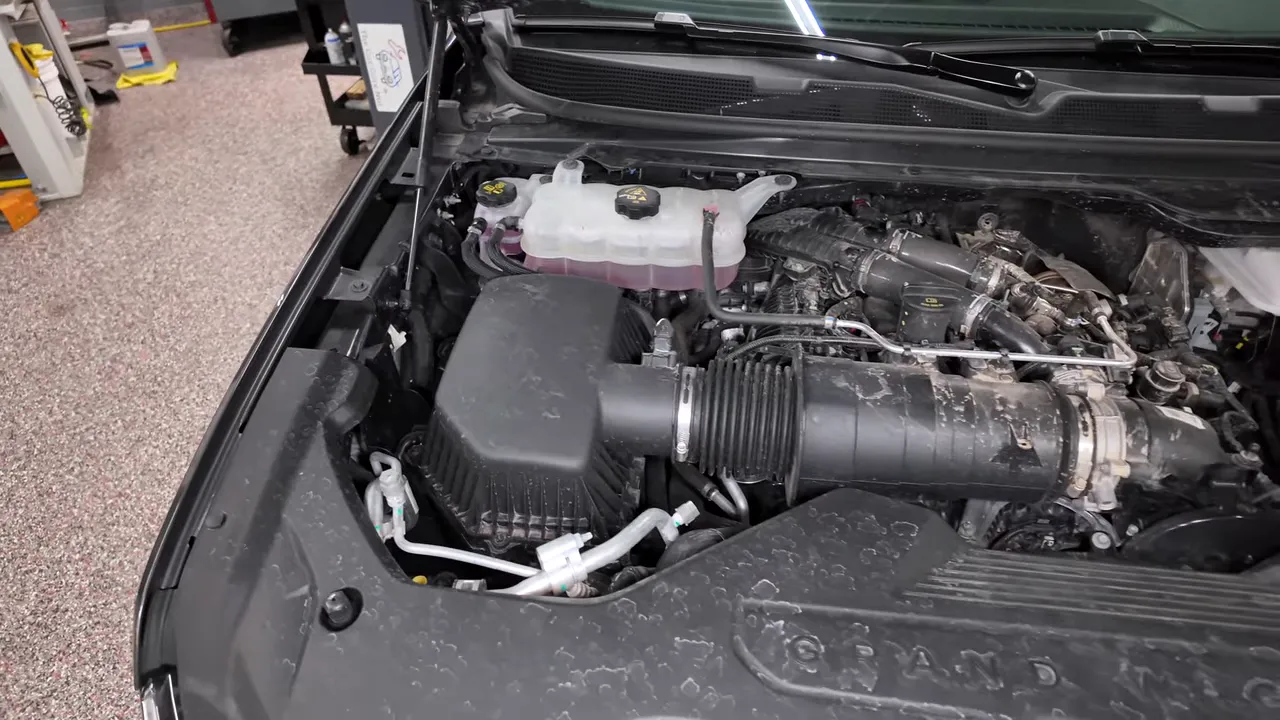
Cylinder Head, Timing Chains, and Fuel Injection
Under the plumbing is an aluminum block and a single aluminum cylinder head. The head uses dual overhead camshafts, hydraulic lash adjustment, and roller rockers. Both camshafts have oil-controlled variable valve timing.
The timing arrangement is where things become more involved than I would like. Along with the two camshafts that operate the valves, there is a separate shaft whose job is to drive the high-pressure fuel pump. The chain drive connects the camshafts through that shaft’s sprocket and then to the crankshaft.
There may be engineering reasons for doing it this way, but from a mechanic’s perspective, it adds complication. This standard-output engine uses one high-pressure fuel pump.
The fuel system is direct injection only, with six injectors located at the top of the engine around the plastic valve cover. That arrangement adds work around the valve-cover area. It is not my favorite packaging decision.
Another unusual detail is the placement of the variable valve timing actuators. They mount at the valve cover rather than in a taller front timing cover. Removing the valve cover exposes more of the timing-gear area than you might expect. That does not automatically mean the gears can be removed without taking off the front cover, so I would not confuse visibility with a shortcut in the repair procedure.
Down below, the variable-displacement oil pump is driven gear-to-gear from the crankshaft. That part is relatively straightforward.
Two Turbos and Two Cooling Systems
The two turbochargers have electronic wastegates, oil lines, and coolant lines. Once the surrounding intake pipes are removed, access to them is actually fairly good.
Charge cooling comes from a liquid-to-air intercooler rather than a conventional front-mounted air-to-air unit. The compressed air leaving the turbos merges and passes through the intercooler before entering the engine.
That gives this SUV two separate cooling circuits:
- Engine cooling: A conventional system with a belt-driven mechanical water pump, thermostat, and the larger coolant reservoir.
- Low-temperature cooling: A separate circuit with an electric coolant pump and its own heat exchangers to remove heat from the intake charge.
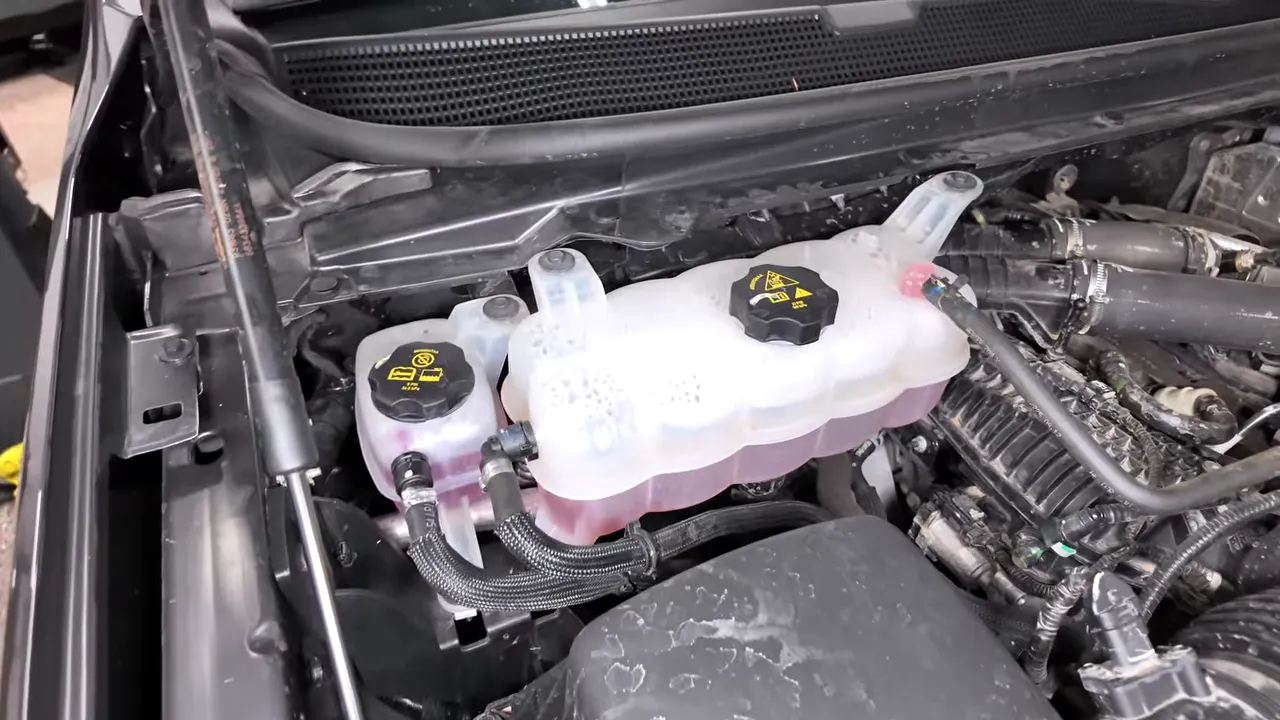
The liquid-to-air setup reduces the need to route large charge pipes all the way to a front-mounted intercooler and back. It is an effective arrangement, but the trade-off is a second pump, more coolant plumbing, and additional heat exchangers.
One feature I particularly like is that the low-temperature circuit also cools the turbochargers. Because its pump is electric, it can continue circulating coolant after the engine shuts down. That is a useful piece of engineering.
The accessory belt itself is simple. It runs the alternator, air-conditioning compressor, and mechanical water pump. Steering assistance is electric, so there is no hydraulic power-steering pump.
Service Access Is Better Than the First Impression
Open the hood and your first reaction might be, “There is an engine somewhere under all of this.” The large air-intake assembly blocks much of the view.
But that assembly is just intake plumbing. Remove it, and there is meaningful working room at the front and along the sides of the engine. The timing chains are at the front, where they belong, and there is enough room to service that area without removing the entire engine.
The rear is a different story. Jeep positioned the engine well back in the bay, which leaves more room in front but buries the rear portion under the cowl. Some cowl components can come off, but that does not make everything back there easy to reach.
Overall, I do not mind the layout. It is a complicated modern turbocharged engine, but it is not hopelessly packed in. I also prefer this inline-six approach to replacing a V8 with a twin-turbo V6. You still have complexity, but one cylinder head and a straight engine layout make more sense to me here.
There is one unavoidable service challenge: the height. This is a very tall truck to lean over.
The Eight-Speed Transmission and Four-Wheel-Drive Hardware
The only transmission is a ZF eight-speed automatic. It shifts smoothly and suits the engine well. There are a couple of technical details worth understanding, however.
First, the transmission control computer is inside the transmission rather than mounted separately outside it.
Second, the parking mechanism depends on hydraulic pressure to remain released. Once that pressure is lost, the transmission defaults to Park. After an engine shutdown or failure, there can be a limited window, described here as up to about half an hour, before the remaining pressure depletes.
There is a mechanical cable-operated park release, which is important if the vehicle needs to be moved with the engine inoperative. Do not assume selecting Neutral will keep a disabled vehicle movable indefinitely. For the correct release and towing procedure, consult the vehicle-specific instructions through Mopar’s owner’s manual resource.
Underneath, the transmission has an interesting pan design and a single-use drain plug. On the four-wheel-drive example inspected here, the transfer case attaches behind the transmission, with a front driveshaft on the driver’s side and a large driveshaft running rearward.
Underneath: Substantial Hardware, but Exposed Areas
The Grand Wagoneer uses body-on-frame construction. There is no shortage of substantial hardware underneath it, and the overall component quality is better than some people might expect.
Front Suspension, Brakes, and Cooling Access
The air-suspension reservoir sits near the front and has an accessible fitting. Nearby, the low-temperature cooling system’s connected heat exchangers are visible from below.
I wish there were more protection around that cooling hardware. Some areas have a metal shield, but others are more exposed than I would like.
The front differential has an aluminum housing, and the axle shafts have a painted finish. The suspension uses a very large aluminum lower control arm with an integrated ball joint. The upper arm appears to be a composite component and also has an integrated ball joint.
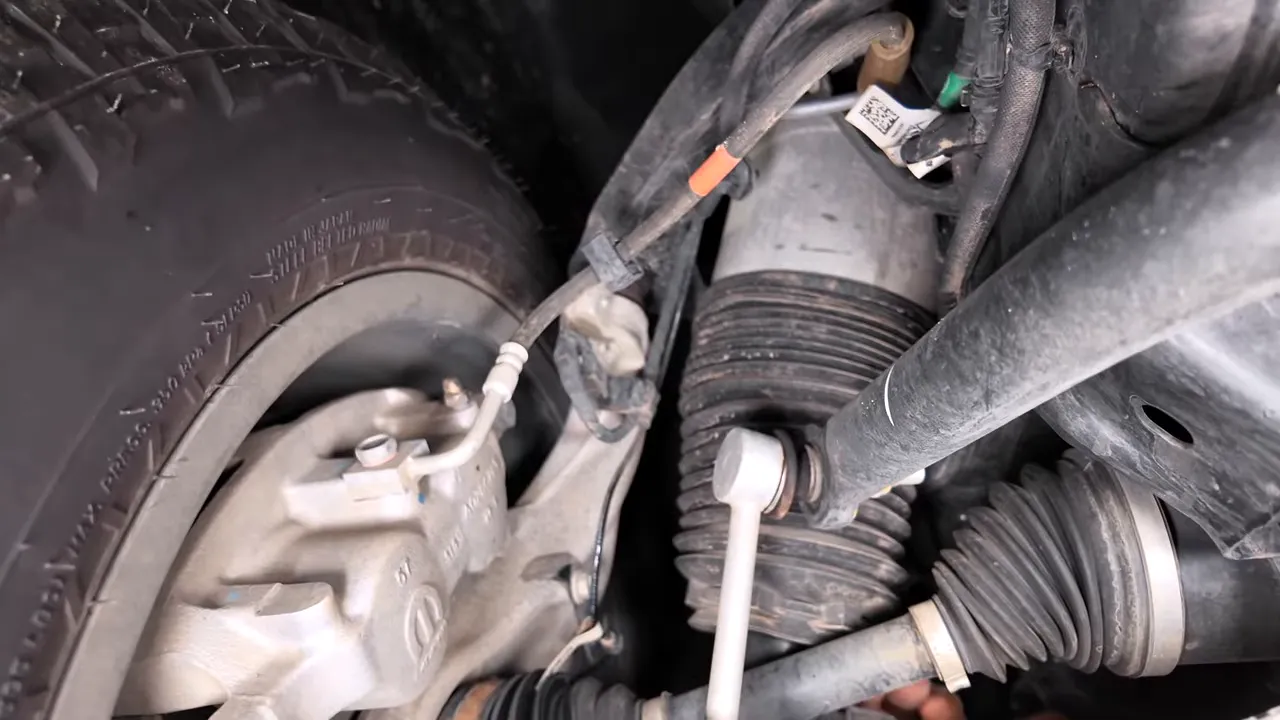
This example has air suspension with electronically adjustable damping. The front brakes use large two-piston calipers, and the front anti-roll bar is substantial. Its links have an unusual mounting orientation, but they still use articulated joints.
Frame, Exhaust, and Fuel Tank
The exhaust is one of the nicer things underneath this SUV. There are two catalytic converters, large-diameter pipes, and routing that takes a few interesting turns around the drivetrain. The construction quality looks good.
The fuel tank is also enormous, which is hardly surprising given the vehicle wrapped around it.
The frame rails are tall, but many of their openings are left uncovered. I would prefer more attention to closing off exposed areas or providing additional protective treatment underneath. That concern continues toward the back, where some cavities are simply wide open.
Independent Rear Suspension
There is no solid rear axle here. The Grand Wagoneer has fully independent rear suspension, with a large differential and half-shafts that pass through openings in the frame.
The frame rails curve inward and then outward again around this section. The multilink suspension combines aluminum and steel arms with aluminum knuckles.
At the rear wheels, there are single-piston brake calipers with integrated electric parking-brake motors. The rear suspension also has air springs and electronically adjustable damping. A spare tire is mounted underneath, which I am glad to see.
My overall impression underneath is mixed, but not overwhelmingly negative. The exhaust and several major components look quite good. The missing covers and exposed spaces are where I would like Jeep to do better.
Exterior Design: Big Without Looking Overstyled
Making a vehicle this large look elegant is not easy. Most of these land yachts look exactly like what they are: a giant box on wheels.
The Grand Wagoneer does a better job than most because it does not try too hard. The updated front lighting and grille reinterpret the familiar Jeep appearance without covering the body in unnecessary shapes.
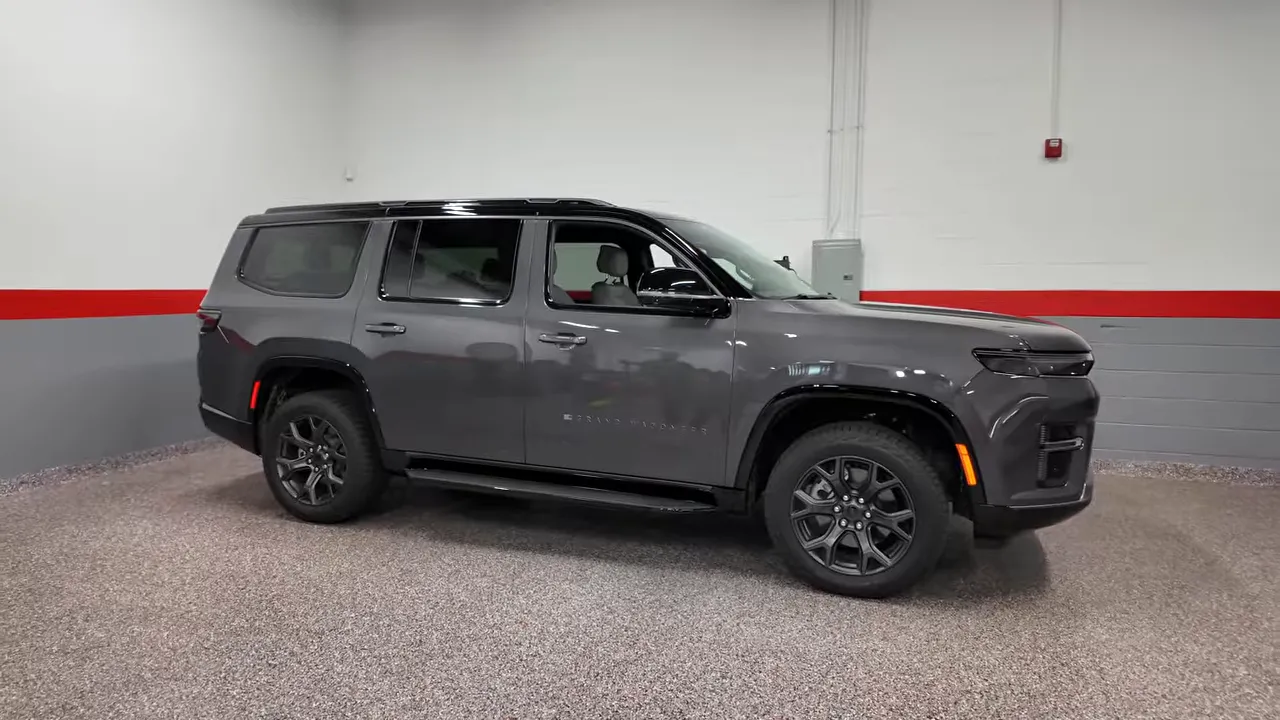
Look at the hood. There are a few clear lines and a modest raised section, not a collection of competing creases. That restraint is why I think the design will age well.
There are proper front tow hooks, with the radar sensor mounted low in the front fascia. Along the sides, a small detail around the window pillars visually extends the glass. The Grand Wagoneer lettering has an attractive font, and the American flag detail acknowledges its Michigan manufacturing roots.
More importantly, the styling serves a purpose:
- The front side-window line drops slightly to improve outward visibility.
- The large mirrors include a useful supplementary blind-spot section.
- The rear side windows are genuinely large rather than squeezed down for appearance.
- The nearly vertical tail maximizes space inside.
The rear lighting changes work well, too. My small complaint is the badging: the tailgate says Jeep, while the Grand Wagoneer name appears on the doors. I would have liked that distinctive Grand Wagoneer lettering across the back.
Cargo Space: This Is Why You Buy Something This Large
The long-wheelbase model reviewed here has useful cargo room even with the third row upright. That matters. Seating for a large family is only half the job if there is nowhere to put their belongings.
The power liftgate uses two motors. Their wiring runs near the sides of the opening rather than disappearing entirely through the headliner, which I prefer from a service-access standpoint. Routing it through the door would be better still.
The close button is mounted inside the cargo opening rather than on the liftgate. It works, but the placement makes you want to press it and get out of the way.
The seating controls are more convincing. The third row folds electrically, and it moves quickly enough to be genuinely useful rather than a slow demonstration of how many motors the SUV has.
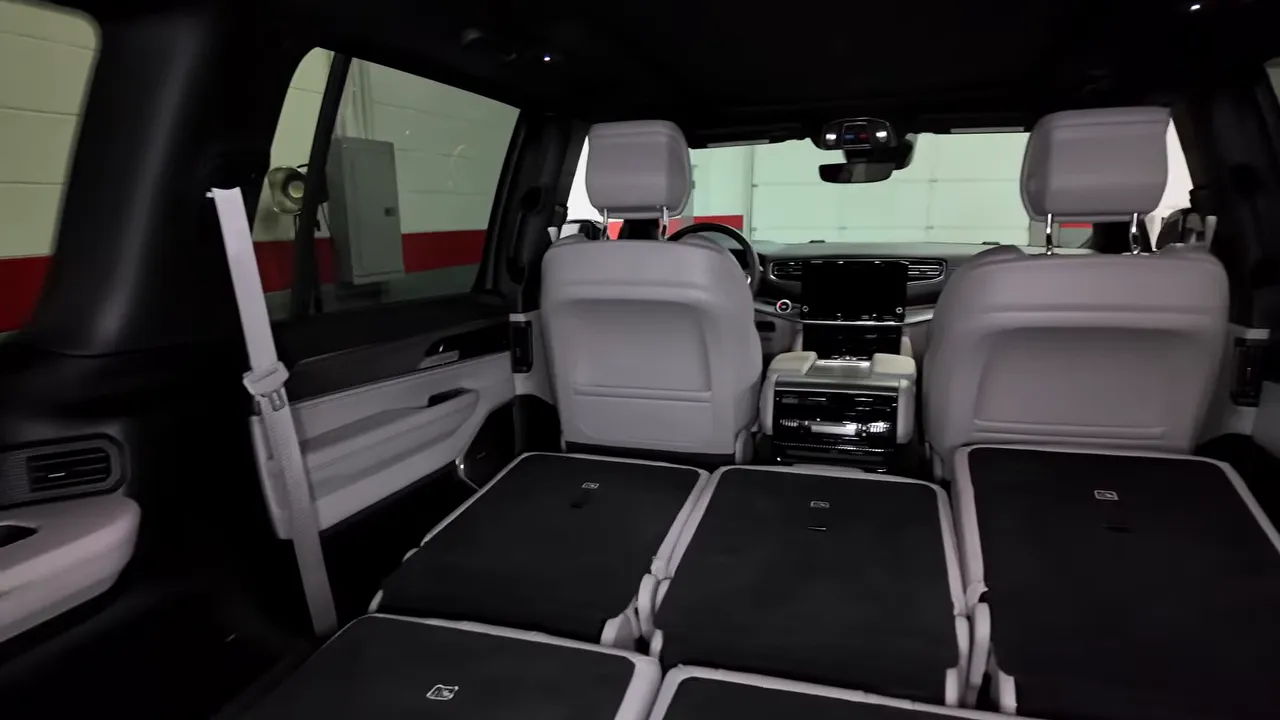
Fold the third row and you get a very large load area. Release and fold the second row as well, and the available space becomes enormous. This is where the giant-couch joke starts to feel less like a joke.
The distinction is that the second-row buttons release the seats; they do not power them back upright. The second row must be returned manually. The third row powers both down and up.
Interior: The Layout Is Better Than the Materials
The cabin is one of this SUV’s strongest points, but not because every surface is expensive or beautifully finished.
Some materials look nicer than they feel, and the finish is not the best in the class. What Jeep got right is the execution. The interior is functional, comfortable, and thoughtfully arranged.
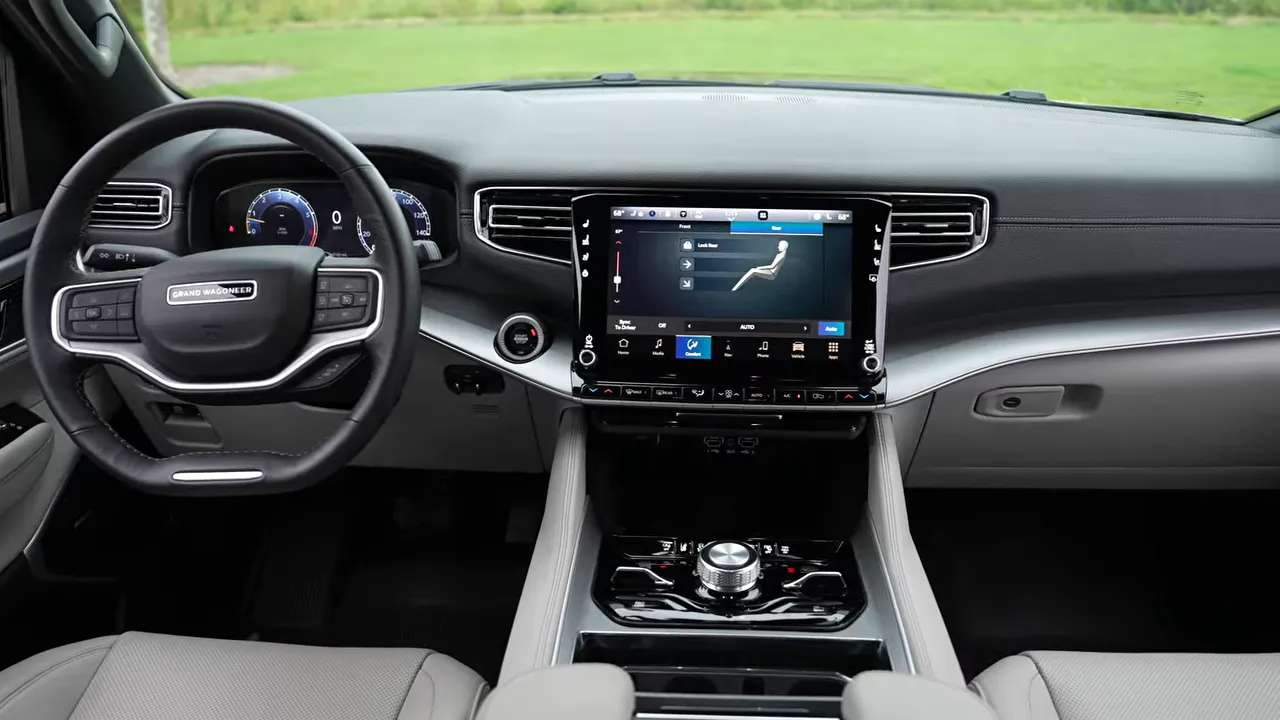
The steering wheel is straightforward, and its controls work well. The digital instrument cluster in this trim is relatively modest, but it gives you what you need without unnecessary drama.
I particularly like the integration of the center display and air vents. In a cabin this wide, vent placement matters. Jeep has not sacrificed airflow just to create a fashionable dashboard.
The Uconnect infotainment system is fast and has plenty of features. It is one of the better systems to use. Physical temperature toggles and other readily accessible climate controls are another welcome choice.
The center console has useful storage, including a concealed compartment. It feels designed around daily use rather than a photo opportunity.
My least favorite control is the rotary gear selector. The dial itself feels nice, but it is still a rotary shifter. I would prefer something more conventional.
How It Drives
You do not forget how large this vehicle is, especially in long-wheelbase form. You feel the mass, and you feel the length.
But that wheelbase also contributes to a very smooth ride. The air suspension works well, the cabin feels insulated, and the overall experience is comfortable.
The engine is a big part of that. It stays in the background, pulls without fuss, and does not sound labored. It simply gets on with moving this behemoth.
There are useful family-oriented features as well. The Family Cam system lets the driver or front passenger check on the rear seats through the center display. That is the kind of technology that fits the purpose of the vehicle.
Second and Third Rows: The Real Reason to Consider It
The second row is huge. At 5 feet 7 inches, I feel small sitting back there, which is exactly what you would expect in a vehicle this size.
Rear passengers have climate controls, a household-style power outlet, USB-A and USB-C connections, and vents both at the console and on the pillars. It is a very comfortable place to sit.
But the third row is what really separates this SUV from many others.
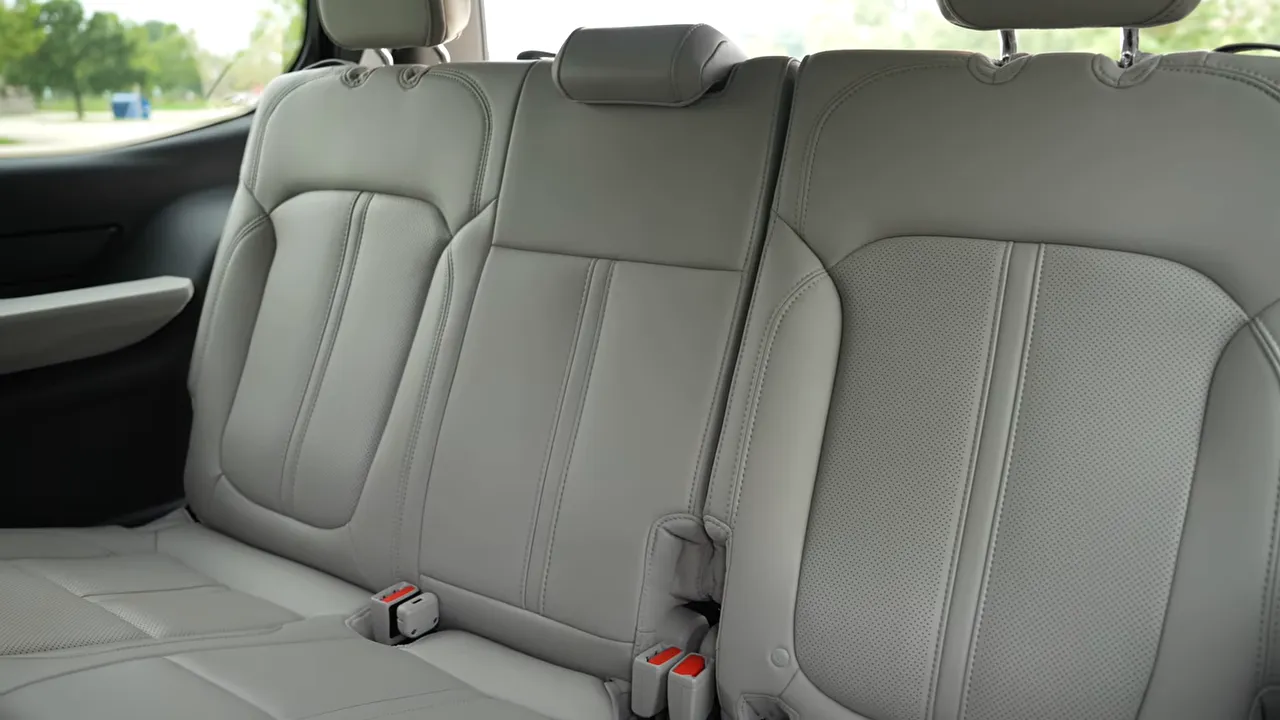
This is one of the most comfortable third rows I have experienced in an SUV. In my assessment, it has room for three people comfortably, and the seat itself is better than the second row in quite a few smaller SUVs.
The cushion sits high enough that you are not forced into an uncomfortable knees-up position. There are air vents, USB-A and USB-C ports, power-adjustable seatbacks, and a small sunroof overhead.
This eight-seat configuration can carry a large family while retaining room behind the third row for their things. That is the point of a vehicle like this. Minivans come close in practical terms, but for seating comfort, this Grand Wagoneer is particularly impressive.
Build Quality and Long-Term Reliability: My Main Reservations
For all the things Jeep got right, build quality and long-term reliability remain my biggest concerns.
That does not mean every component underneath it is poor. In fact, several areas look better than expected, and I like the engine’s operation and much of its service layout. But a good drive and an appealing inspection do not establish long-term durability.
I wish Jeep had put the same obvious effort into resolving those ownership concerns that it put into the cabin, styling, and pricing. If it did, this would become a much easier recommendation.
My ideal buyer is someone with a large family who genuinely needs this much SUV and expects to own it for roughly three to five years, with close attention to when warranty coverage ends. I am much more comfortable recommending it as a shorter-term ownership proposition than as a vehicle to keep indefinitely.
The warranty point is not a prediction of a particular failure date. It is how I would manage my own exposure to a complicated, expensive vehicle that has not earned my confidence as a long-term keeper.
Should You Buy the 2026 Jeep Grand Wagoneer?
The price reduction changes the conversation. Around the mid-$60,000 entry point, this is still expensive, but it is also a tremendous amount of vehicle.
Its position in the market is interesting. I do not see it fitting neatly beside either the Chevrolet Suburban and Ford Expedition or the Cadillac Escalade and Lincoln Navigator. It sits somewhere between those groups, closer in spirit to a GMC Denali-level offering.
It is not quite as nice as an Escalade, but it feels more upscale than a Suburban. The lower price makes that middle position easier to understand.
Here is how I would weigh it:
- Buy it for: Exceptional passenger space, a genuinely comfortable third row, useful cargo capacity, an excellent ride, and elegant styling.
- Appreciate the changes: The simpler trim structure, broader two-wheel-drive availability, and standard-output engine make the lineup more sensible.
- Be realistic about: Its enormous dimensions, mechanical complexity, uneven material quality, and my reservations about long-term ownership.
For the right family, the 2026 Jeep Grand Wagoneer checks an awful lot of boxes. It looks good, drives beautifully, and uses its size for something meaningful. I like it much more as a comfortable family vehicle for a defined ownership period than as a forever SUV. That distinction is what would guide my buying decision.


