The 2026 Mazda CX-5 gets something very important right: it modernizes the parts you interact with while keeping the powertrain refreshingly straightforward. There is a bigger, more useful cabin, a major technology update, and the quiet, composed driving experience that makes a CX-5 a CX-5.
Under the hood? A familiar naturally aspirated engine and a six-speed automatic. No turbocharger. No complicated transmission just for the sake of doing something different.
As a mechanic, that makes me happy. As a driver, I have a few complaints. The engine’s 187 horsepower is not generous in this larger SUV, and Mazda may have gotten a little carried away removing physical controls. But taken as a complete vehicle, this is still one of Mazda’s best models. It is very close to getting the everyday SUV recipe exactly right.
Quick Summary
- The familiar non-turbo engine and smooth six-speed automatic prioritize simplicity over strong acceleration.
- Accessible service components and good underbody finish make a strong impression from a mechanic’s perspective.
- More rear-seat room and nearly 90-degree rear-door openings deliver meaningful everyday improvements.
- The responsive touchscreen works well, but missing physical controls make basic adjustments unnecessarily cumbersome.
Table of Contents
- Under the Hood: Simple Where It Matters
- The Six-Speed Automatic Is a Highlight
- The Trade-Off: 187 Horsepower in a Bigger CX-5
- Underneath: Good Quality, With a Few Serviceability Compromises
- Exterior Design: Handsome, but Not Every Detail Works
- Cargo Area: Sensible Details and a Spare Tire
- Interior: A Major Technology Leap, Perhaps One Step Too Far
- Rear-Seat Space and Driving Refinement
- Should You Buy the 2026 Mazda CX-5?
Under the Hood: Simple Where It Matters
The big powertrain change for 2026 is the disappearance of the turbo engine. Mazda’s explanation is that most previous CX-5 buyers chose the non-turbo version. The company took that as a signal to concentrate on the simpler engine.
There is good and bad in that decision. From a serviceability standpoint, I see more good than bad. From an acceleration standpoint, you will understand why the turbo existed.
The 2.5-Liter Skyactiv-G Engine
This Skyactiv-G four-cylinder is very similar to the previous generation’s naturally aspirated engine. The basic construction is familiar:
- A plastic valve cover over an aluminum cylinder head.
- Dual overhead camshafts with hydraulic lifters and roller rockers.
- An aluminum engine block.
- Variable valve timing on both intake and exhaust camshafts.
- Direct fuel injection, without supplemental port injection.
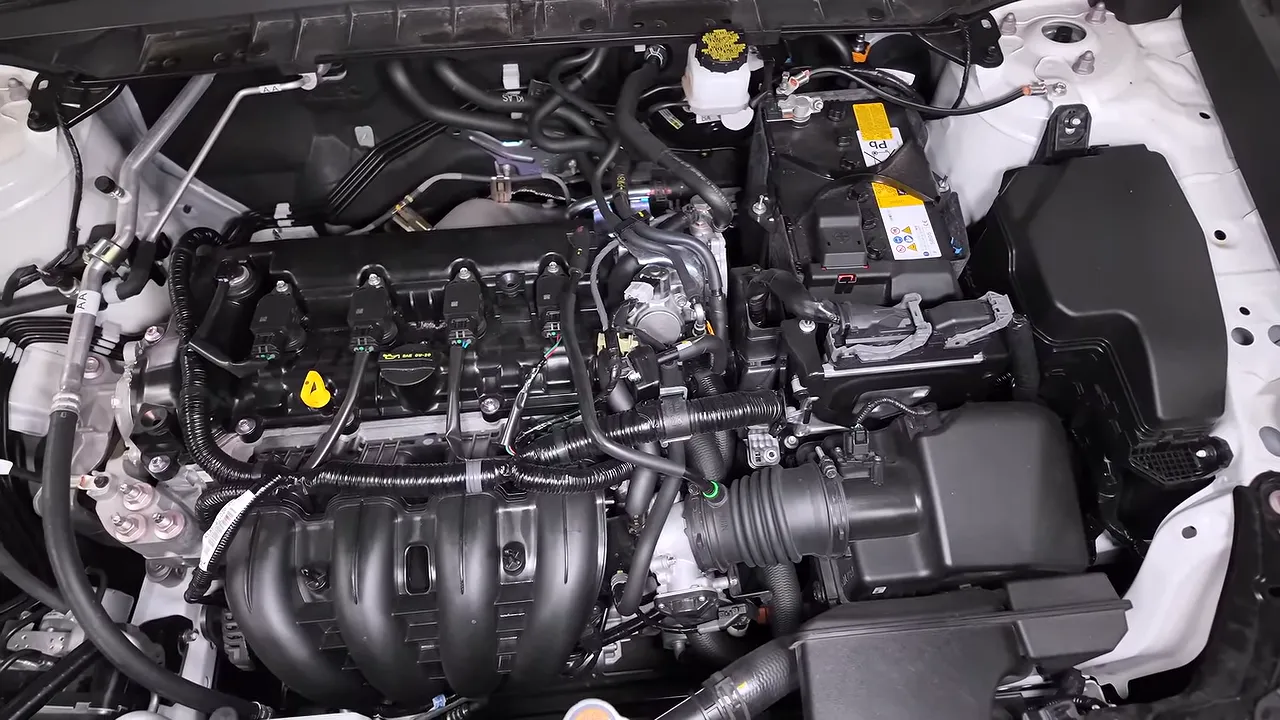
The intake camshaft uses electrically controlled variable valve timing. Inside the mechanism, gears move relative to one another. Changing the electric motor’s speed relative to the camshaft advances or retards the timing; matching the appropriate speed maintains the selected position.
It sounds elaborate, but the core arrangement is a motor and a gear mechanism. In the applications I have encountered, this type of system has held up well. The motor is also reasonably accessible if it ever needs replacement.
The exhaust camshaft uses oil-operated timing adjustment instead. Its oil control valve sits right at the top of the engine, where you can get to it. That is the kind of detail I like.
A Conventional Cooling System
The cooling system is another pleasant surprise in a new vehicle: a belt-driven mechanical water pump and a regular thermostat. No elaborate collection of coolant control valves here.
That matters beyond the repair shop. A straightforward system means fewer complications when it is time to service the coolant or repair a leak. Modern engineering does not have to mean making every ordinary job difficult.
Fuel Injection, Vacuum, and Valve Timing
The direct injectors sit beneath the intake manifold. The high-pressure fuel pump mounts on a separate housing at the side of the engine rather than on top of the valve cover. If the valve cover needs to come off, that placement keeps the fuel pump out of the job.
A separate vacuum pump supplies the conventional vacuum-operated brake booster. Again, the layout is easy to follow and sensibly packaged.
The engine also uses a Miller-cycle operating strategy. By closing the intake valve late, after the compression stroke has begun, it reduces the effective compression stroke while retaining a longer expansion stroke. That is part of the engine’s efficiency and emissions strategy.
My main wish is that Mazda had combined port and direct injection. It uses gasoline direct injection alone. Given Mazda’s relationship with Toyota, I would have liked to see something along the lines of Toyota’s D-4S approach, or Mazda’s own equivalent. Nothing is perfect, but that would improve an otherwise appealing engine package.
One detail remains unconfirmed: cylinder deactivation on the U.S. version. The information available during this review was conflicting, and I could not clearly identify its operation. If equipped with the system discussed here, cylinders one and four would shut down under suitable conditions to reduce fuel use and emissions. I would not present its presence on this particular vehicle as a confirmed specification.
Service Access That Can Save Labor
Look around this engine bay and the practical advantages become clear. The spark plugs are right at the top. The battery is accessible. The intake arrangement is simple, and there is no turbocharger crowding the rear of the engine.
One side is a little tight, although removing the engine mount appears to create useful working room. Overall, the packaging is very good.
I also like the apparent quality of the components. There is a proper metal coolant pipe at the back with conventional hoses and clamps. Some plastic remains, including a piece at the front that I would rather see executed differently, but the overall impression is not one of cheap materials.
Then there is the air-conditioning expansion valve. It sits outside the passenger compartment, accessible at the firewall behind the refrigerant lines. To a mechanic, that is a beautiful sight.
Why should an owner care? Because accessibility can mean lower repair labor. If that valve ever fails, its location avoids the kind of dashboard disassembly some vehicles require. The refrigerant still needs proper recovery and recharging, but reaching the component itself is straightforward.
Easy spark plug access, sensible fuel-pump placement, and a conventional cooling system all point in the same direction. This is an engine bay designed in a way that should make ordinary maintenance and certain repairs less involved.
The Six-Speed Automatic Is a Highlight
Mazda pairs this engine with a conventional six-speed automatic transmission. It is not a CVT or a dual-clutch transmission, and it does not need an enormous number of ratios to feel good.
There is sophistication inside it, though. Its torque converter uses a more capable lockup clutch arrangement than a basic conventional design. Lockup creates a direct mechanical connection between the engine and transmission, reducing the losses associated with transmitting power through fluid. This transmission can use that connection more frequently.
The result is excellent. Shifts are smooth, power delivery feels linear, and the transmission does not seem to pause while deciding what it wants to do.
That is what matters. Not the number of gears in a brochure, but whether the transmission works naturally with the engine. This one does.
The Trade-Off: 187 Horsepower in a Bigger CX-5
Here is where the celebration of simplicity needs some perspective. The naturally aspirated 2.5-liter produces 187 horsepower, and the CX-5 has grown. There is more vehicle for that engine to move.
It is not that the engine is constantly struggling mechanically. It is that, when you ask for acceleration, it sounds and feels like it is working hard without delivering particularly strong performance.
I wish Mazda had found a little more output while retaining the non-turbo layout. Toyota’s naturally aspirated A25A 2.5-liter, for example, makes just over 200 horsepower in relevant applications. That is not a night-and-day difference, but it shows why I would have liked a modest improvement here.
If you are coming from a non-turbo CX-5, the character should feel familiar. If you are coming from a turbocharged Mazda and expect that same effortless punch, take a proper test drive with acceleration in mind. The chassis still has some athletic character. The engine does not turn this into a fast SUV.
Underneath: Good Quality, With a Few Serviceability Compromises
The underside leaves a strong impression. The front is extensively covered, the panels feel well made, and an access opening accommodates routine service such as oil changes. Overall, this feels like a step up in underbody finish.
Front Suspension and Brakes
At the front, Mazda uses a MacPherson strut arrangement with steel lower control arms and steel steering knuckles. There is a damper mounted on the control arm, and the brakes use dual-piston front calipers.
The downside is the lower ball joint: it is part of the control-arm assembly rather than a separately replaceable component. I wish Mazda had made it serviceable on its own.
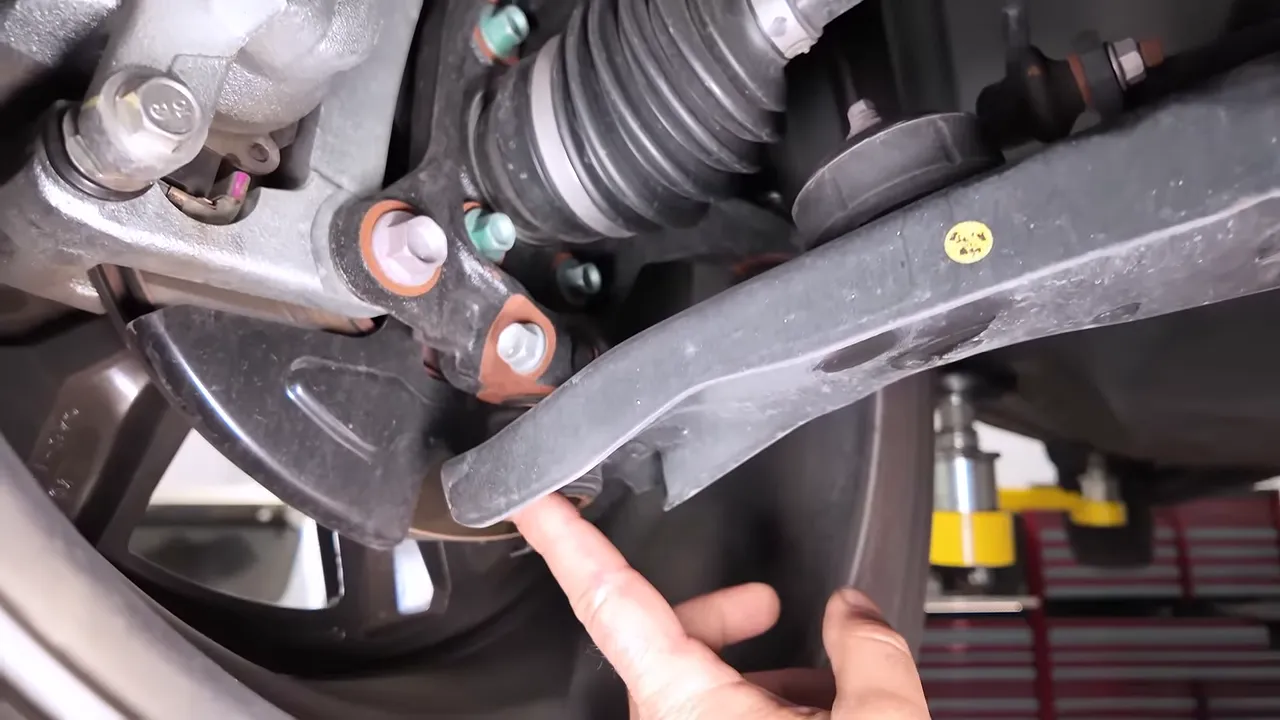
The axle shafts are painted, which is a nice finishing detail. The sway bar links, however, include plastic in their construction. That is worth noting alongside the otherwise substantial-looking hardware.
Exhaust, Bracing, and All-Wheel Drive
The exhaust looks well made, including substantial flanges that appear to be stainless steel, although I would not call the material confirmed from appearance alone. There are distinctive blue exhaust hangers, extensive shielding, and three large underbody braces.
The driveshaft runs above the exhaust area. A saddle-style fuel tank sits behind a neatly finished shield.
At the rear, the differential is quite small. The coupling or disconnect assembly looks large beside it. That is not automatically a criticism: this is an all-wheel-drive crossover intended to provide assistance, not a dedicated off-road vehicle.
The rear axle shafts are painted as well, and covers around the suspension appear intended to help airflow underneath the vehicle.
Rear Suspension and Brakes
The rear springs and shocks are separate. Steel knuckles appear here too, along with sway bar links that also incorporate plastic.
The rear brakes use single-piston calipers with the electronic parking-brake motors integrated into them. The exhaust finishes in one large muffler feeding two outlets.
There are individual choices I would change, particularly the non-separate front ball joints. But the overall construction and finish underneath are very good.
Exterior Design: Handsome, but Not Every Detail Works
The new CX-5 is still a good-looking SUV. It is also clearly moving toward the CX-90’s styling language. That is not inherently bad, because the CX-90 is handsome, but I prefer it when each Mazda has its own identity rather than looking like a different size of the same design.
The headlights are one example. The previous CX-5 had a sharper appearance to my eye. Here, the way the lamp drops toward the grille creates intersecting lines that do not look quite as clean. I do like the small red detail inside the lamp. That little touch has personality.
The paint looks excellent on the vehicle inspected, but some of the panel gaps around the hood are larger and less consistent than I would like. That is an observation about this example, not a declaration that every CX-5 will be identical.
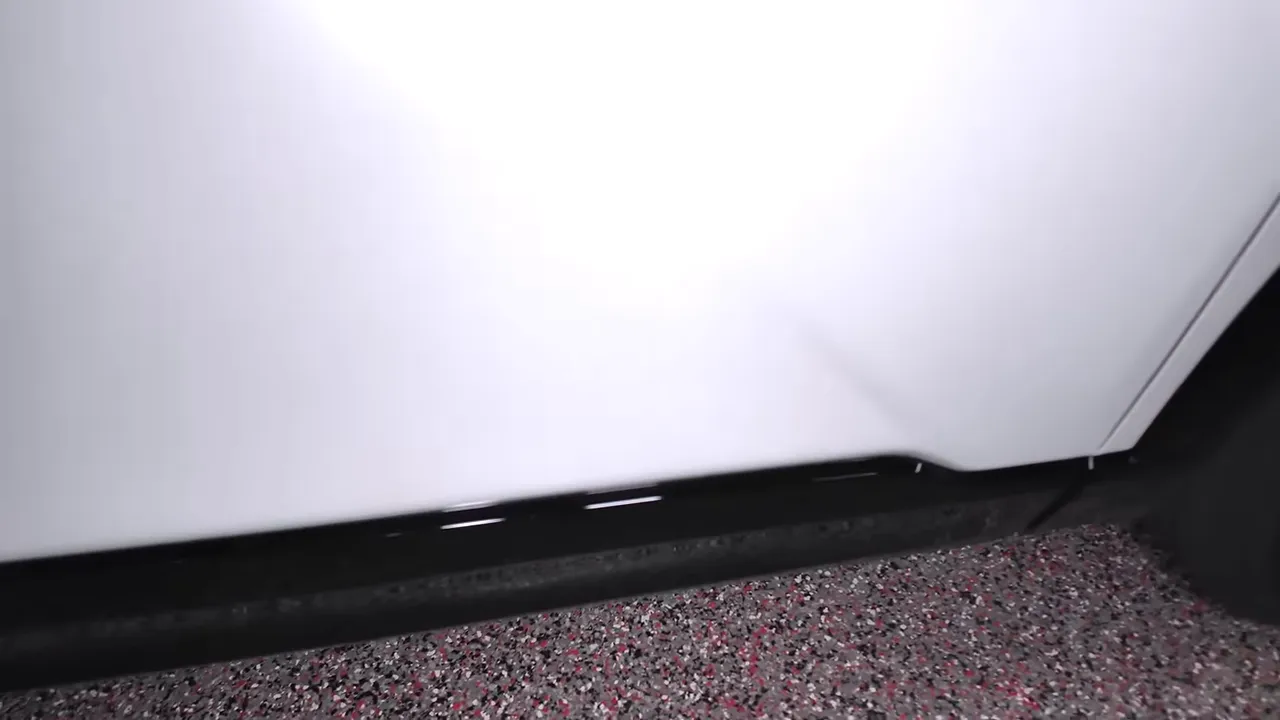
The wheel-arch trim treatment is another detail I do not understand. More distracting is the crease low in the door near the front wheel. It fades into the surrounding panel in a way that, to my eye, resembles a dent. The rest of the door is clean and sophisticated. Why interrupt it with something that initially makes you wonder whether the car has been hit?
At the rear, the CX-90 influence is especially strong. The taillights are not my favorite interpretation of Mazda’s design, although taste is personal. Mazda lettering replaces the central emblem, alongside CX-5, all-wheel-drive, and Skyactiv-G badging. There is a conventional rear wiper, too.
The Rear Doors Are a Real Improvement
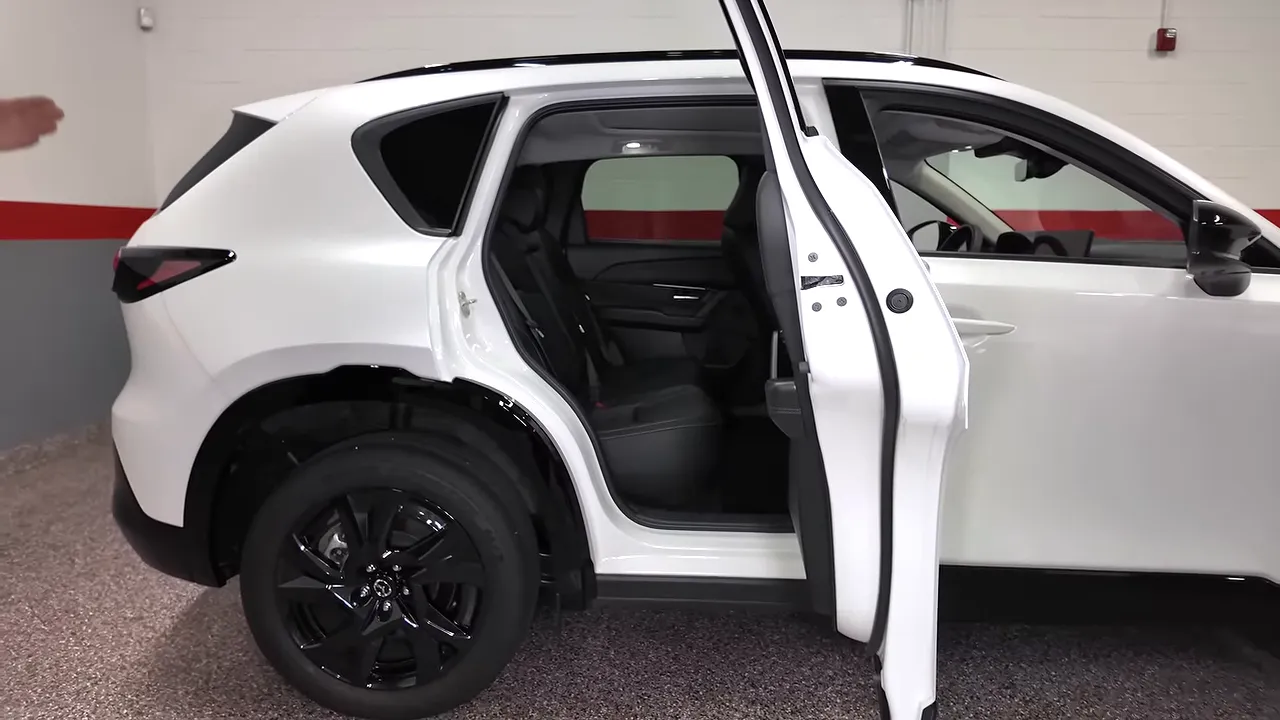
Any irritation with the styling fades quickly when you open a rear door. It swings to almost 90 degrees. That is an excellent practical decision.
The rear doors are visibly longer, and the longer wheelbase pays off in the back seat. Easy access is not a flashy feature, but it is something you appreciate repeatedly in daily use.
Cargo Area: Sensible Details and a Spare Tire
The cargo area is well finished and usefully shaped. The example reviewed has a particularly nice cargo mat with a metal-look Mazda badge. It is a small detail, but the material quality feels appropriate.
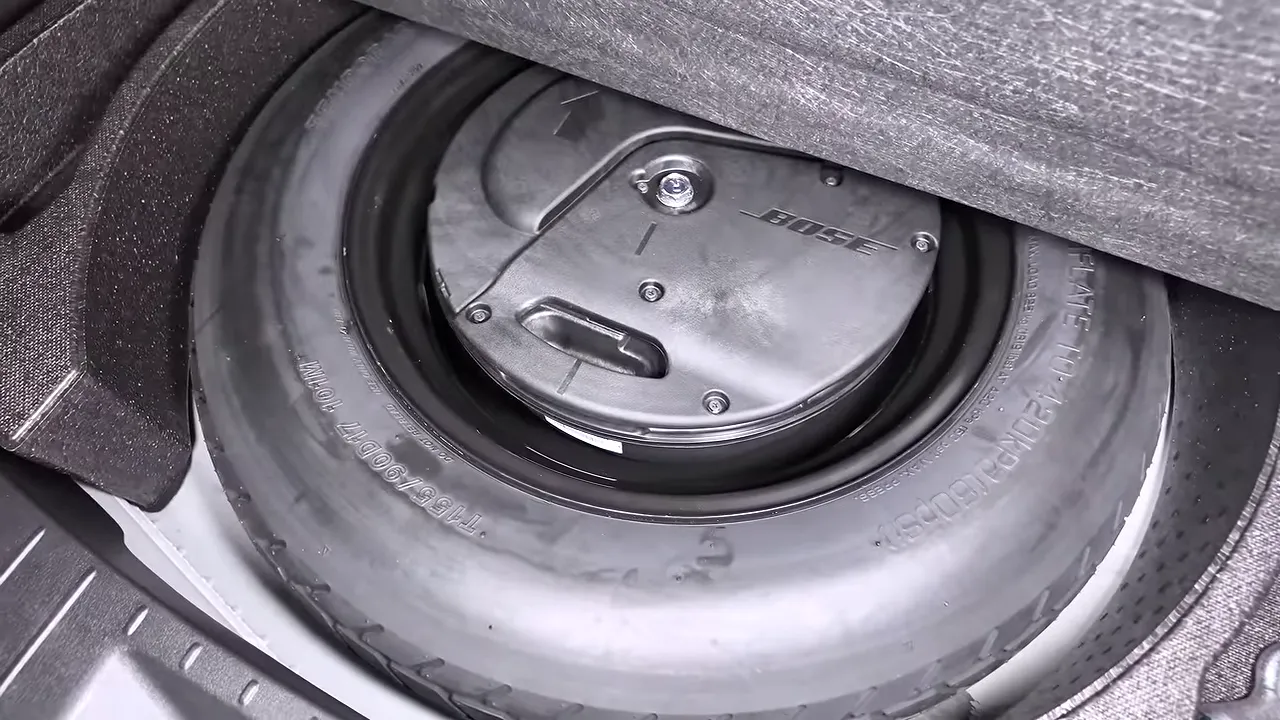
More importantly, there is a spare tire beneath the floor. On this Bose-equipped vehicle, the subwoofer fits inside the spare wheel. Good packaging, and Mazda still gives you an actual spare.
Folding the second row from the cargo area is simple: pull the release handles and the seatbacks fold forward. No unnecessary procedure, no complication. I like that.
A Power-Liftgate Compromise
The power liftgate uses one powered strut and one conventional support strut. The powered side’s wiring routes into the headliner area.
I consider the single-motor arrangement a cost-saving compromise. My concern is that repeatedly applying the opening and closing force from one side can put a twisting load into the liftgate over time. That is a design concern, not a demonstrated failure on this vehicle.
There is an upside: if the powered strut fails, there is only one powered unit to replace instead of two. Like several choices on this CX-5, it comes with a trade-off.
Interior: A Major Technology Leap, Perhaps One Step Too Far
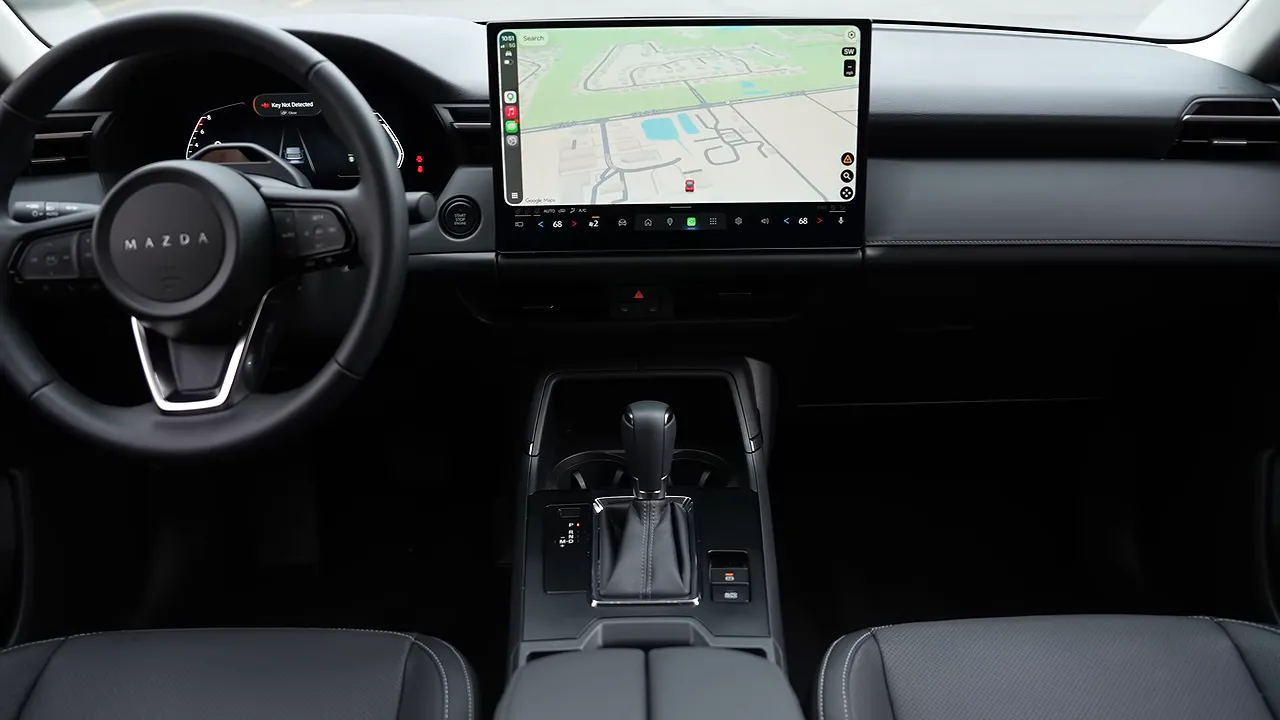
The cabin is a major departure from the old CX-5. A large digital instrument display replaces the previous gauge arrangement, and the center of the dashboard is dominated by a large touchscreen.
The steering wheel looks good. I even like the Mazda lettering instead of the familiar emblem in its center. The controls are physical switches, but their shared surface does not provide the clear tactile separation I want. Sometimes you need to look to confirm where your thumb is.
The Touchscreen Hardware Is Excellent
The infotainment display is responsive, fast, and high quality. If Mazda was going to make a dramatic move toward a screen-centered interior, at least it chose hardware that works well.
Some of the icon design feels a little generic, almost like an inexpensive tablet interface. But many settings will be adjusted during the first week of ownership and rarely touched again. The more important question is how the everyday controls work.
The Missing Volume Knob Is a Problem
The main center-control area retains very few dedicated buttons: front defrost, rear defrost, the electronic parking brake, and auto hold.
There is no physical center volume knob. Steering-wheel volume controls remain, but adjusting volume through the display requires opening the speaker control and moving an on-screen slider.
That is more work than necessary. There is room for a small knob. Put one there. A basic adjustment should not become a multistep interaction simply because the dashboard has been cleaned up.
For an existing Mazda owner moving from the previous physical controls, this will be a substantial adjustment.
Climate-Control Visibility Needs Improvement
The climate controls stay visible along the bottom of the screen, which is good. The problem is distinguishing some active and inactive states.
For certain functions, the change is essentially from one muted shade to another. You end up looking closely to determine whether automatic climate control or a seat function is on.
Then the driver-monitoring system can complain that you are looking away too long. Well, the interface is part of the reason you are looking at it.
This seems like an area Mazda could improve through software. More obvious colors and stronger contrast would make the controls easier to interpret at a glance. I am not asking for a complicated redesign. Just make “on” look clearly different from “off.”
Comfort and Cabin Quality Are Strong
Thankfully, the rest of the cabin gets a lot right. There is a wireless charging pad, useful storage, and a normal physical gear selector. Why change something that already works?
The front seats are very comfortable, and the driving position is excellent. There are no exotic materials here, mostly plastics and leather-like surfaces, but the design brings everything together beautifully. It feels classy rather than cheap.
Rear-Seat Space and Driving Refinement
The back seat is one of the biggest improvements. At 5 feet 7 inches tall, sitting behind my own driving position, I have plenty of knee room and good headroom. It is a genuinely comfortable place to sit.
This is where the longer wheelbase delivers something useful. Combine the additional room with those wide-opening doors, and the new CX-5 becomes a much easier vehicle to use.
The particular model reviewed also has heated outboard rear seats, USB-C connections, and rear air vents. Equipment will depend on the version, but the underlying space improvement is clear.
On the road, the CX-5 is quiet, refined, and composed. The steering has enough feel that it does not seem like you are guiding a large, disconnected boat. There is still a slightly athletic character, even though this is not a performance SUV.
The exception to that quietness is acceleration. Ask the engine for more, and its noise becomes prominent. You hear plenty of effort without getting a matching surge of speed. That is the main mechanical compromise in an otherwise very pleasant driving experience.
Should You Buy the 2026 Mazda CX-5?
Yes, if your priorities are refinement, practical space, and a straightforward powertrain rather than strong acceleration.
My impression is that Mazda listened closely to previous owners. More people bought the simpler engine, so Mazda kept it. The old cabin was aging technologically, so Mazda modernized it dramatically. Rear-seat room needed attention, and that received a meaningful improvement.
The technology update went a little too far in removing physical controls, and the exterior has a few details I would happily erase. But neither changes the fundamental quality of the vehicle.
Before buying, focus your test drive on three things:
- Acceleration: Make sure the 187-horsepower engine meets your expectations, especially if you currently drive a turbo model.
- Everyday controls: Try changing audio volume and climate settings, not just navigating the infotainment menus.
- Passenger access and comfort: Spend time in the back seat and use those wide-opening rear doors.
I cannot promise long-term reliability for a new generation. What I can say is that the familiar engine architecture, conventional automatic, and sensible service access give me reasons to be optimistic. The choices under the hood suggest an emphasis on keeping ownership manageable rather than adding complexity everywhere.
That is the direction I want Mazda to take more often. Keep the mechanical systems sensible. Put the effort into how the vehicle drives, how the cabin feels, and how useful it is.
The 2026 CX-5 is not perfect. I still want a volume knob, a little more power, and a different lower-door crease. But it gets the important things right. For an everyday SUV in 2026, this is very close to the right recipe.


