I never thought I would call a roughly $22,000 vehicle the cheapest new car you can buy in the United States. But here we are. With the Nissan Versa discontinued, the 2026 Hyundai Venue has ended up with that title, almost by default.
Usually, calling something the cheapest car comes with an understanding: lower your expectations. It gets you from one place to another, and that is the whole argument for buying it.
The Venue surprised me. Under the hood, underneath the body, and inside the cabin, this does not feel like a car designed simply to win a lowest-price competition. It has compromises, and a couple of them are frustrating. But the cheapest new car does not have to be a horrible car anymore. That is worth talking about.
Quick Summary
- The simple 1.6-liter engine and accessible service layout are among the Venue's strongest features.
- The CVT raises more concerns than the engine, particularly its delayed response in Normal mode.
- Interior usability and underbody finishing are surprisingly good for an entry-level economy car.
- The lower trim offers the strongest value, while front-seat comfort deserves a careful test drive.
Table of Contents
- Under the Hood: A Refreshingly Simple 1.6-Liter Engine
- The CVT Is My Biggest Mechanical Reservation
- Underneath the Venue: Better Than the Price Suggests
- Exterior Design: Normal Is Not a Bad Thing
- Cargo Space: Small, but Thoughtfully Finished
- Interior: Everything You Need, Without the Nonsense
- The Two Everyday Complaints I Would Not Ignore
- Which 2026 Hyundai Venue Trim Makes the Most Sense?
- Reliability and Warranty: More Confidence in the Engine Than the CVT
- Should You Buy One? Yes, With the Right Expectations
Under the Hood: A Refreshingly Simple 1.6-Liter Engine
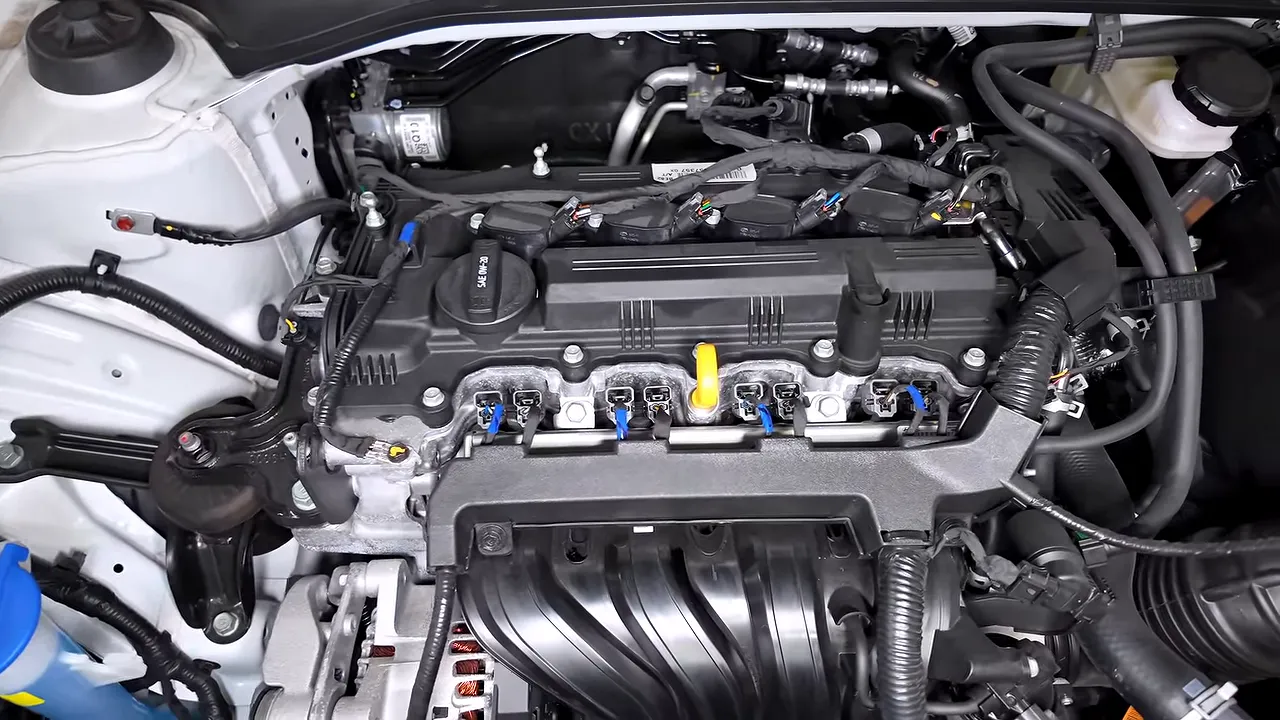
The Venue uses a 1.6-liter four-cylinder engine, and mechanically, it is one of the simpler engines you will find in a 2026 vehicle. As a mechanic, that immediately gets my attention.
There is a plastic valve cover on top, with easy access to the ignition components and spark plugs. You do not have to dig through layers of unrelated equipment to reach basic service items. The valve cover itself is also uncomplicated, without the variable valve timing oil-control hardware built into it.
Cylinder Head, Timing Chains, and Bottom End
The cylinder head uses a two-piece arrangement, with the head itself and a separate camshaft carrier assembly sealed together. It has dual overhead camshafts, hydraulic lifters, and roller rockers.
There is dual continuously variable valve timing, operated through engine oil. The oil-control valves are accessible on the engine rather than complicating the valve cover. Nothing about the arrangement looks unnecessarily difficult.
The timing system uses two chains:
- A main timing chain connects the crankshaft to the camshafts and uses an internal tensioner.
- A smaller chain drives the oil pump down at the bottom of the engine, with a spring-loaded guide.
There is an important service detail here. The front timing cover overlaps the oil pan, so removing the front cover requires removing the oil pan first. That sounds inconvenient until you see how accessible the pan is underneath the car. The oil pump is mounted low enough that removing the pan also provides access to it.
The block is aluminum, with a one-piece main-bearing cradle that ties the main caps together. Overall, this is straightforward construction, not some elaborate arrangement squeezed into an impossible space.
Port Injection, With an Unusual Twist
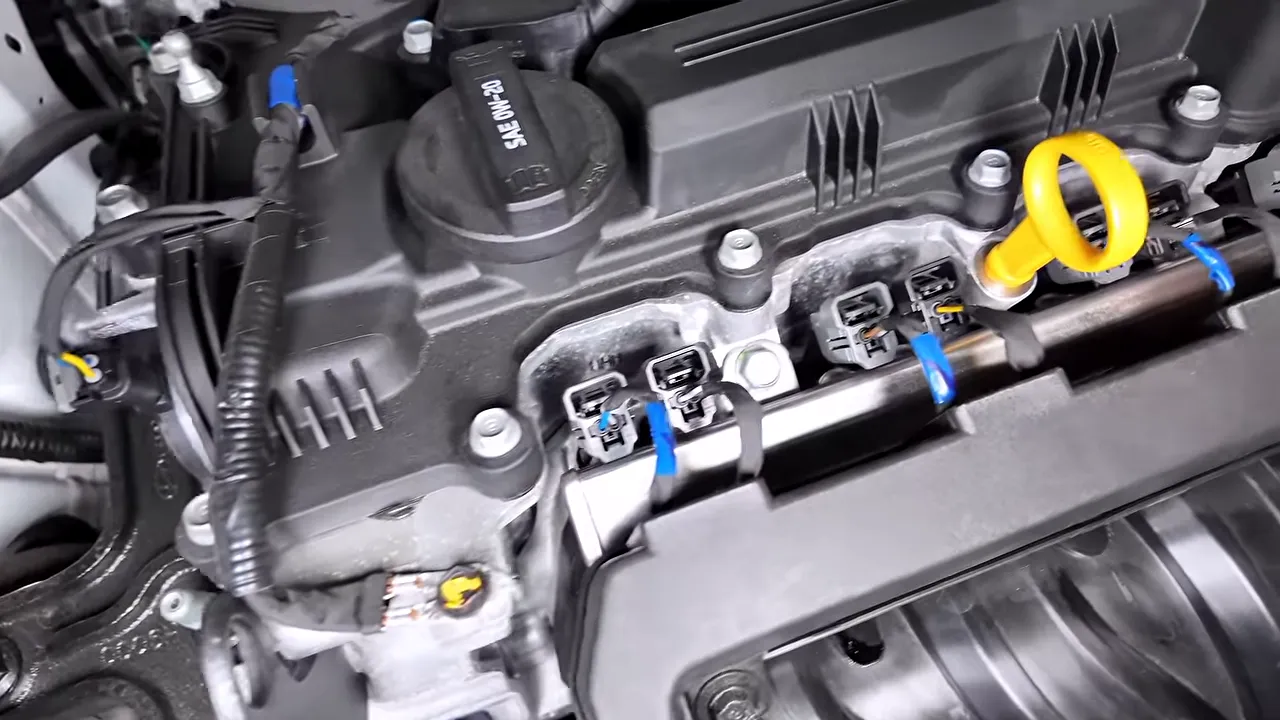
This engine does not use direct injection. It uses port injection, but there are two injectors per cylinder. That is an interesting choice on an otherwise basic engine.
I question whether we need that extra injector count here, and long-term durability still matters. But the injectors are right out in the open. From a service-access perspective, there is very little to complain about.
Cooling and Emissions Equipment
The cooling system combines a conventional external mechanical water pump with something I did not expect on such a simple engine: a modern thermal management valve. That valve directs coolant where it needs to go.
It adds complexity, certainly, but at least it is accessible. That distinction matters. A component being sophisticated is one thing. Burying it where a straightforward repair becomes a major operation is another.
The engine also has exhaust gas recirculation, or EGR. I like the location of the EGR valve, but not the cooler. The cooler extends toward the back of the engine, where access becomes much worse. With this much open room elsewhere, I wish Hyundai had packaged that differently.
Service Access Is One of Its Best Features
This is a small car, but the engine bay does not feel tightly packed. There is room in front of the engine, beside it, and behind it. Spark plugs, injectors, and much of the accessory drive are easy to get to.
Even the belt tensioner has a simple arrangement attached around the alternator, with straightforward fastener access. Those details may not sell a car on a showroom floor, but they matter when it eventually needs work.
Not every material is impressive. The plastic purge line, for example, feels inexpensive. Still, I would rather see some ordinary plastic parts in a sensible layout than expensive-looking covers hiding a service nightmare.
The CVT Is My Biggest Mechanical Reservation
I like the engine. I am less enthusiastic about the continuously variable transmission.
I wish Hyundai had paired this engine with a conventional six-speed automatic. That would have suited the Venue's simple, basic character very well. Instead, we have a CVT, and its response is my main complaint.
In Normal mode, there is a noticeable delay when taking off. Switch to Sport mode, and the car responds much more like I think it should respond in the first place.
Why does an economy car need a Sport setting to feel normal?
That does not mean the entire powertrain is unpleasant. For this type of vehicle, it is actually reasonably refined. The engine runs smoothly, and the overall driving experience is better than I expected. But the initial response needs better calibration, and the transmission leaves me with more long-term questions than the engine does.
Underneath the Venue: Better Than the Price Suggests
A lift inspection is where a cheap car can really reveal itself. With the Venue, I kept finding things that were better than expected.
At the front, there is a plastic underbody cover with openings that leave the important service areas accessible. The engine has a steel oil pan and, surprisingly at this price, an oil-level sensor. The oil filter and housing are plastic, but they are easy to reach.
The CVT also has a steel pan. A small access cover for the torque-converter bolts is another welcome detail. If the transmission ever needs to come out, that access makes a mechanic's job easier. Thank you, Hyundai.
Do Not Ignore Transmission Fluid
The transmission pan carries a warning label that includes an instruction not to replace the oil. I do not agree with treating transmission fluid as something to forget about forever.
My recommendation is to replace the CVT fluid using the correct fluid and service procedure. Do not substitute whatever transmission fluid happens to be on the shelf. There is no specific replacement interval being recommended here, but the basic point remains: I would not neglect this transmission's fluid.
Front Suspension: Basic, With a Few Questionable Choices
The front suspension uses MacPherson struts and steel lower control arms with integrated ball joints. It is a familiar, simple arrangement.
What caught my attention was the plastic visible in the ball-joint construction. The sway-bar links also have steel bodies with plastic in the joint construction. Those choices make me raise an eyebrow, although seeing them is not the same as proving they will fail.
The axles are small, which fits the vehicle, but their painted finish is quite nice. The lower powertrain mount is another detail I would keep in mind for vibration isolation, though the engine itself feels fairly smooth in use.
The Exhaust and Underbody Finishing Are Genuine Surprises
The exhaust is one of the nicest-looking systems I have seen underneath a Hyundai. The pipe finish, welds, and overall appearance are impressive, especially given the Venue's position in the lineup.
Why does the cheapest model get an exhaust that looks better finished than some more expensive models? I do not know, but I am happy to see it.
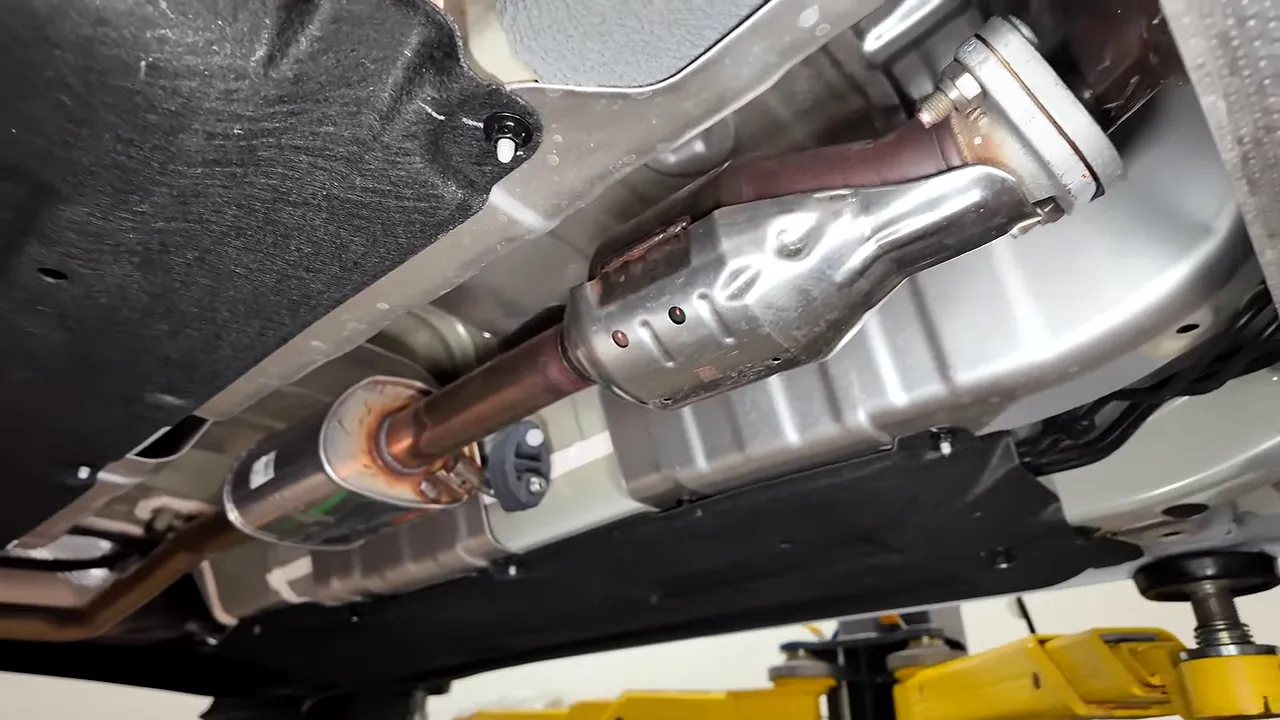
There are also substantial underbody panels extending along the floor. I expected a much barer underside. The body finishing is not perfect, but for the least expensive new car, it is respectable.
Rear Suspension and Brakes Keep Things Simple
At the rear, the Venue uses a beam suspension with separate springs and shock absorbers. It is basic, but the ride is not bad in my opinion.
The small fuel tank and charcoal canister are easy to identify underneath. The fuel-filler neck also appears to be stainless steel, although I would not call that confirmed from appearance alone.
The inspected car has rear disc brakes and a conventional cable-operated parking brake, not an electronic parking brake. The rear caliper mechanism is not my favorite style, but it works and keeps the overall arrangement simple.
My general impression underneath? This looks better in several areas than some considerably more expensive Hyundais.
Exterior Design: Normal Is Not a Bad Thing
There are two ways to judge the Venue's appearance: as a car, and as the cheapest new car in the country.
As a car, it looks normal. It is not a showstopper, but it is not trying too hard, either. As the cheapest new car, it looks quite respectable.
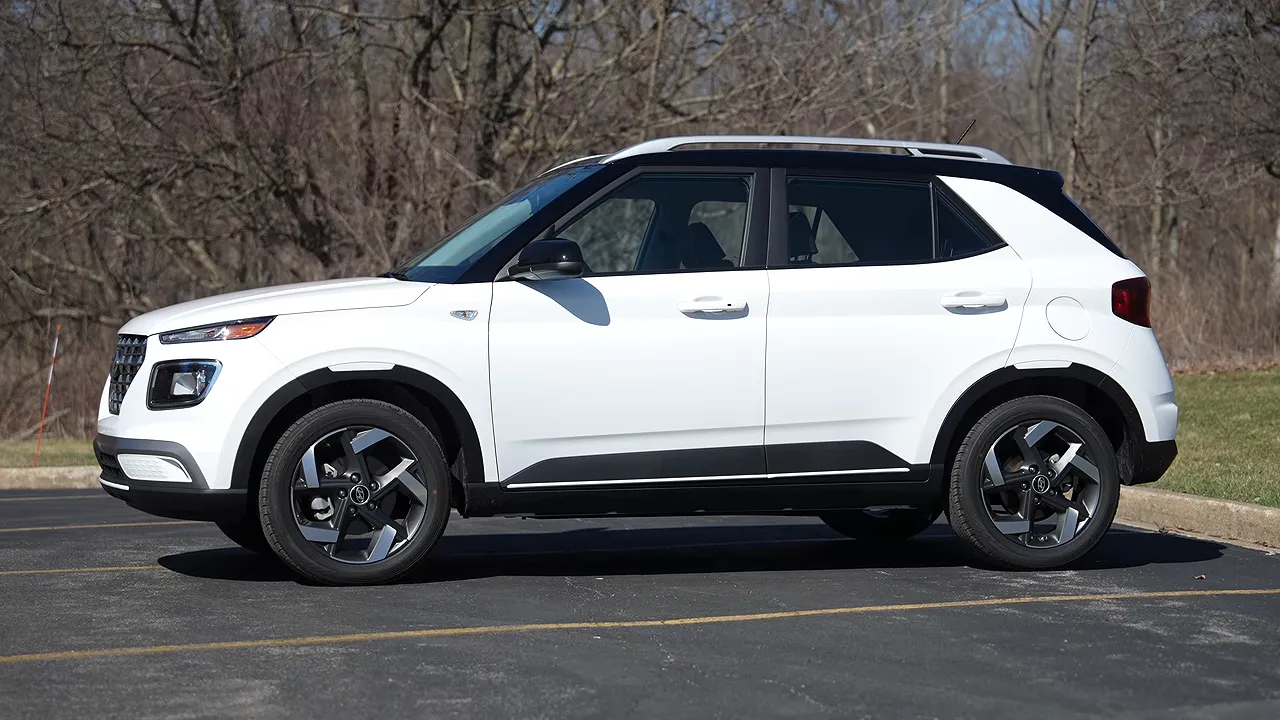
The hood is simply shaped. The sides have a crease and a slight dip, but there is no excessive styling for the sake of styling. The rear is similarly restrained, and I like the body-colored detail within the Venue lettering.
Some details, such as the fender-mounted turn signals, give it a global-market feel to me. That is an impression, not a complaint. The overall design is uncomplicated, and I think it will age well for an economy car.
The two-tone roof is less convincing. I do not think it makes the car look meaningfully better, and an entire trim built around extra appearance and convenience features seems to miss the point of affordable transportation.
Open the hatch and the black roof treatment continues into the opening in a way that looks a little strange. I would have preferred a cleaner stopping point. It is a minor detail, but one that stood out.
Cargo Space: Small, but Thoughtfully Finished
The cargo area is decent for such a small vehicle, and the rear seats fold down when more room is needed.
What impressed me more than the size was the quality of the removable panels. The cargo cover does not feel like a flimsy afterthought, and the floor panel feels substantial. These are simple parts, but they help the car feel less cheap in everyday use.
Lift the floor and there is a spare tire. That is good to see. There is very little insulation in the exposed well, which is not surprising at this price.
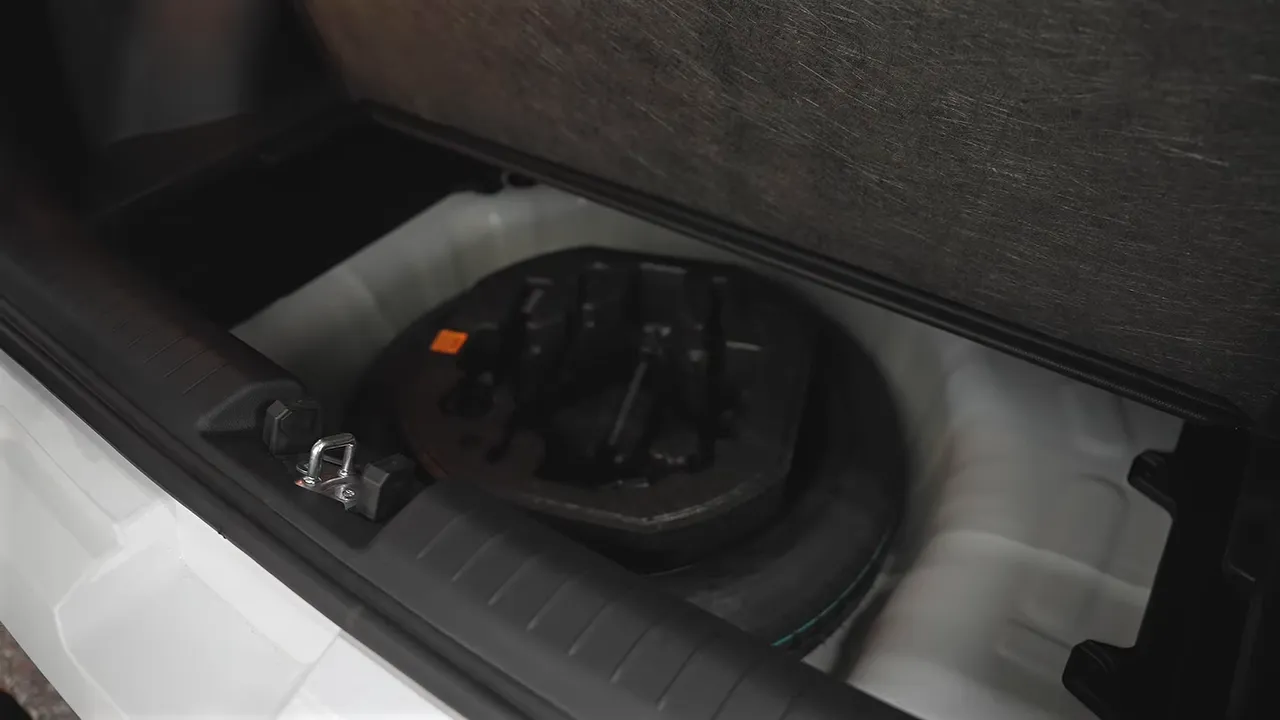
Again, the Venue does not give me the impression that every single component was chosen to be the least expensive thing available. Some of these ordinary pieces feel genuinely decent.
Interior: Everything You Need, Without the Nonsense
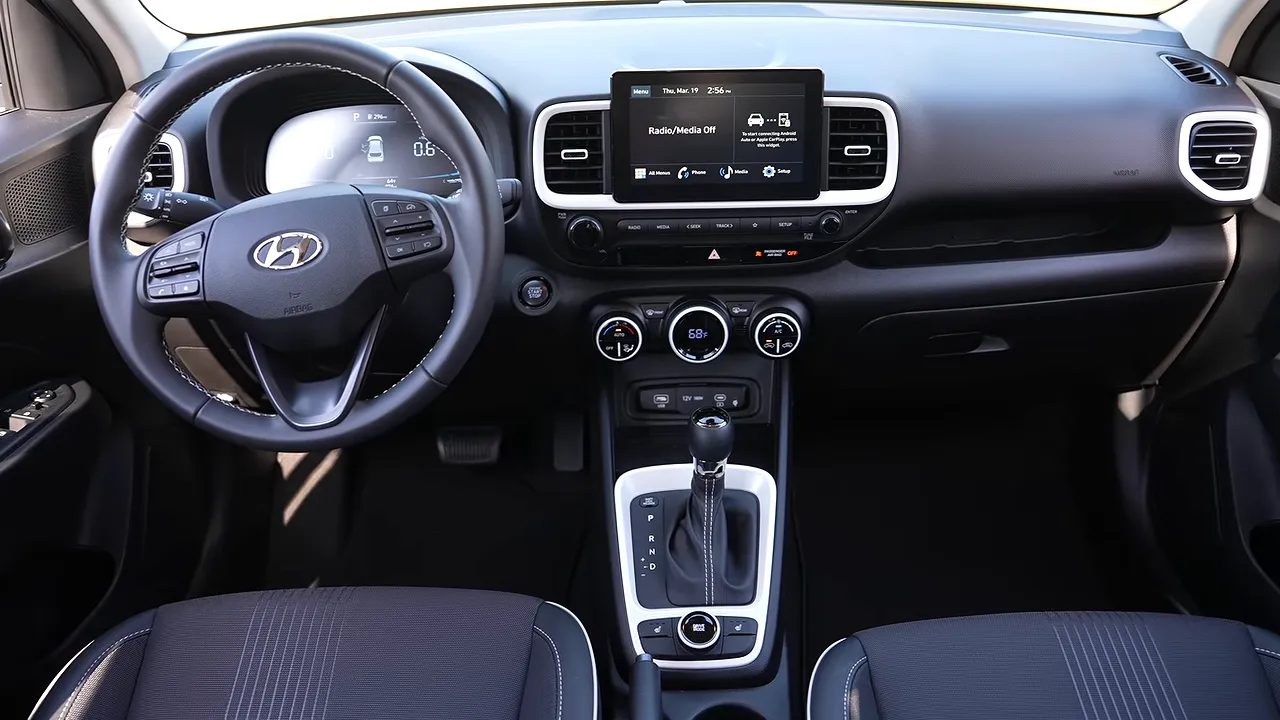
The cabin was probably my biggest surprise. I expected an aggressively cheap interior. Instead, I found a sensible layout, decent-feeling materials, and controls that are easy to understand.
There is plastic, of course. This is an economy car. But it does not feel like Hyundai assembled the dashboard from whatever scraps were left over.
Gauges, Infotainment, and Physical Controls
The instrument cluster has a screen-like appearance, though it is not the full configurable display that its styling might suggest. It does the job. The steering-wheel controls are clearly marked and straightforward to operate.
The center screen is small, and that is perfectly fine. More importantly, the infotainment system works well. Wireless Apple CarPlay and Android Auto are included, and I was impressed with the system's operation.
Below the display are real buttons and knobs for volume, track selection, and other common functions. You also get a backup camera, and the audio system is better than the poor sound I often expect from a basic economy car.
The tested higher trim has automatic climate control with physical knobs. Lower trims use manual climate controls, which are perfectly acceptable to me. There is also a proper physical gear selector. Nothing needs to be reinvented here.
Useful Storage, but Overly Bolstered Front Seats
There is a good amount of usable storage, and the front cabin feels sensible and reasonably spacious for the vehicle's size. It is also not excessively loud or obnoxious in normal use.
The front seats are a different story. Their appearance is impressive for the price, but I do not find them particularly comfortable because the bolsters are too pronounced.
This is a basic economy car. Why are we trying to give it sport-seat behavior?
That is one of the things I would pay close attention to during a test drive. A seat can look nice and still not fit you well.
Rear-Seat Space Has Clear Limits
I am 5 feet 7 inches tall. With the driver's seat set to my driving position, rear knee room is limited and headroom is acceptable rather than generous.
There is a positive: the rear cushion sits fairly high, providing good support under the thighs. That makes it a more natural seating position than a low bench that leaves your legs unsupported.
The tested trim has rear USB-C ports and power windows. There is a seatback pocket on one side, but not the other.
It is not a bad rear seat for a small car, but taller passengers are going to run into space limitations. Do not assume the upright body shape creates unlimited room.
The Two Everyday Complaints I Would Not Ignore
Beyond my preference for a conventional automatic, two things keep coming back during daily use.
- Front-seat comfort: The heavy bolstering feels unnecessary and makes the seats less comfortable for me.
- Drive-mode calibration: Normal mode has too much takeoff delay, while Sport mode feels like the normal response this car should have.
I understand Eco mode softening a car's response. That is what you expect when you select it. But why should Normal mode feel delayed enough that I want Sport mode just to drive normally?
This is what happens when sporty features get applied to everything without asking whether they improve the actual car. The Venue does not need to pretend to be exciting. Being comfortable, predictable, and simple would be more useful.
Which 2026 Hyundai Venue Trim Makes the Most Sense?
The basic Venue discussed here is approximately $22,000. The higher-trim example I tested is around $26,000, or roughly $4,000 more.
The upgrades highlighted on this car include:
- A contrasting roof treatment.
- Heated front seats.
- A wireless phone charger.
- Automatic climate control.
Those are nice conveniences, but I would buy the lower trim. To me, the base model gives up nothing essential to the purpose of this car.
The Venue's strongest argument is sensible transportation at the lowest new-car price. Spending another $4,000 on conveniences and appearance changes weakens that argument. If those features are important to you, that is your decision, but I do not think they are necessary to enjoy what the Venue does well.
Reliability and Warranty: More Confidence in the Engine Than the CVT
Long-term reliability is the obvious final question. A low purchase price is not much help if the car becomes expensive to keep running.
Based on the construction and service layout, I feel better about this engine than I do about the transmission. The engine's simplicity is encouraging. The CVT is where I have more reservations.
That is an assessment, not a guarantee that the engine will be trouble-free or a prediction that the CVT will fail. Good access and simple construction are positives, but they do not replace years of ownership experience.
The 10-year powertrain warranty is a meaningful part of the value proposition. It adds reassurance to an inexpensive new-car purchase without buying a separate extended warranty just to obtain that advertised coverage period. Still, it is not a blanket 10-year warranty on every component. Check Hyundai's warranty terms for eligibility, mileage limits, exclusions, and the coverage that applies to your purchase.
Should You Buy One? Yes, With the Right Expectations
I went into this expecting the Venue to be a car you tolerate because it is inexpensive. I came away thinking it is a genuinely nice basic car.
The engine is refreshingly simple. Service access is good. The underbody finish has some real surprises. The interior is usable, the infotainment works well, and the styling does not look like it will become embarrassing in a few years.
I still wish it had a conventional six-speed automatic. I would also want more comfortable front seats and a Normal mode that actually feels normal.
But at roughly $22,000, in a lower trim, this is not a bad deal. Not even close. If you need an inexpensive new car and can live with the seating and transmission response, the 2026 Hyundai Venue deserves serious consideration.
The best part is not simply that it is the cheapest. The best part is that being the cheapest does not make it horrible.


