The 2025 Mazda 3 is a car I like a great deal, but recommending one requires a little more explanation than you might expect. The engineering is thoughtful, the automatic transmission is excellent, and the higher-trim interior is one of the least gimmicky cabins you can buy in this segment.
Then you look at the price. A fully loaded example like this turbocharged, all-wheel-drive hatchback gets into roughly $38,000 to $39,000 territory. At that point, we need to ask a serious question: are you buying an economy car, an affordable luxury hatchback, or a performance car?
The Mazda 3 makes the most sense when your expectations match what it actually does well. And to understand that, we need to look beyond the beautiful bodywork, starting with the mechanical details.
Table of Contents
- Key Takeaways
- Under the Hood: Two 2.5-Liter Engines, With Important Differences
- The Six-Speed Automatic Is a Major Reason to Consider This Car
- Engine-Bay Build Quality: Mostly Excellent, With One Small Concern
- Underneath the Mazda 3: Good Protection and Simple Suspension
- Exterior Design: Less Really Is More
- Cargo Space: Useful, but Not Class-Leading Practicality
- Interior Review: Elegant, Comfortable, and Refreshingly Normal
- The Back Seat Is the Practical Weak Point
- The Biggest Problem Is the Price
- Should You Buy a 2025 Mazda 3?
Key Takeaways
- The six-speed automatic delivers smooth, direct responses without using a CVT.
- Thoughtful mechanical packaging impresses, while cylinder deactivation makes clean oil especially important.
- High-trim cabin quality is excellent, but rear space and amenities are limited.
- The Mazda 3 works best as an upscale hatchback, rather than a dedicated performance bargain.
Under the Hood: Two 2.5-Liter Engines, With Important Differences
The 2025 Mazda 3 offers a naturally aspirated 2.5-liter four-cylinder and a turbocharged 2.5-liter four-cylinder. They share quite a bit of basic construction, but there is more separating them than simply adding a turbocharger.
Conventional construction where it matters
Both versions use a plastic valve cover, dual overhead camshafts, roller rockers, and hydraulic lifters. The cylinder head arrangement is refreshingly conventional. Remove the valve cover and you find camshaft caps bolted to the cylinder head, rather than an unusual upper assembly that complicates access.
That might not sound exciting, but from a mechanic’s perspective, normal is often a very good thing.
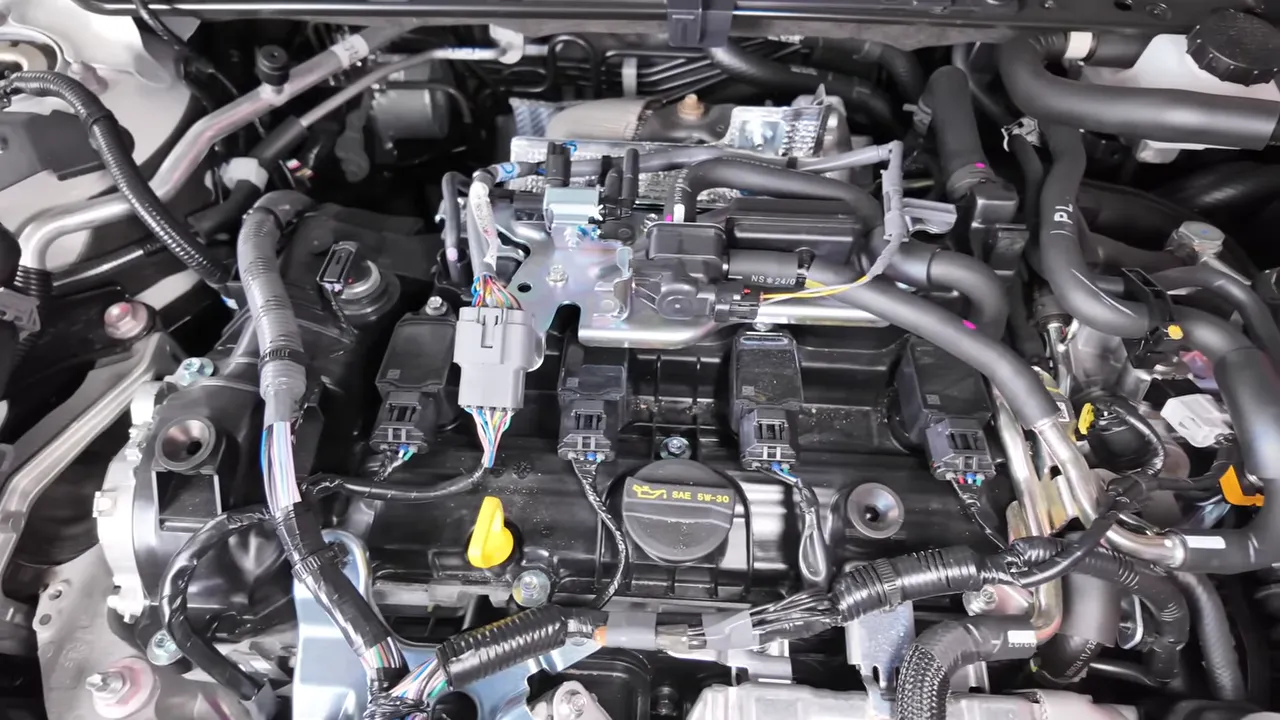
The variable valve timing system is more interesting. On the intake side, Mazda uses an electric motor to adjust the timing gear. By changing the motor’s speed relative to the camshaft, the mechanism advances or retards cam timing.
It sounds complicated when you describe it, but the actual arrangement is fairly simple: a motor and a gear mechanism. This technology has been around long enough that I do not consider it an automatic cause for concern. On the exhaust side, the variable valve timing is oil-controlled, with a small, straightforward oil circuit and an actuator at the front.
Cylinder deactivation makes clean oil especially important
The non-turbo engine’s cylinder-deactivation system uses collapsible hydraulic lifters to allow operation on either two or four cylinders.
I am generally not a fan of cylinder deactivation. However, this is a relatively uncomplicated way to implement it. The important ownership point is that the lifters depend on clean oil. Contamination is not something you want in a mechanism that must repeatedly collapse and return to normal operation.
Stay on top of oil changes and maintenance. That is sensible advice for any engine, but there is a direct mechanical reason for it here.
The turbo model adds a compact intercooler system
On the turbocharged engine, the turbo sits at the back of the engine bay and uses an electronic wastegate. Mazda also uses a liquid-to-air intercooler, which keeps the intake plumbing compact.
The intercooler has its own coolant circuit, including an electric water pump and a reservoir. The front radiator assembly incorporates both the engine radiator and the intercooler heat exchanger, but the circuits remain separate internally.
Meanwhile, the turbo engine’s main cooling system is pleasingly straightforward: a mechanical water pump and a thermostat, without an elaborate collection of coolant-control valves. I like seeing simplicity where it is still practical.
Because the engine can operate on a Miller-cycle strategy, intake vacuum can be low under certain conditions. A vacuum pump handles that requirement, and Mazda has placed it somewhere accessible. The coolant-cooled EGR system is also positioned well, with reasonable access to the valve and cooler.
Those are the kinds of details that matter after the new-car excitement wears off.
Direct injection and carbon buildup
Both engines use direct injection only. Carbon buildup is therefore something to keep in mind, and there have been cases of harmful deposits in Skyactiv-G engines.
My advice is to take maintenance and driving habits seriously rather than assume this will never be an issue. At the same time, I would not turn that concern into a prediction that every one of these engines will develop a chronic problem. Good care is important, but it is not a guarantee against deposits.
The Six-Speed Automatic Is a Major Reason to Consider This Car
There are two transmission choices in the Mazda 3 range: a six-speed manual and a six-speed automatic. The manual is limited to certain configurations, and all-wheel drive is also trim-dependent. Do not assume every engine, transmission, and drivetrain combination is available.
The automatic deserves particular attention because this is not a CVT. In a segment where many competitors use continuously variable transmissions, Mazda has stayed with a conventional torque-converter automatic, but has given it a very distinctive character.
Why it feels so direct
A torque converter transfers power through fluid, which allows smooth takeoffs but also introduces some slip. A lockup clutch can bypass that fluid connection and create a more direct mechanical connection.
Mazda uses a substantial lockup clutch and engages it early after takeoff across a broad operating range. The result is less of the loose, slipping sensation people associate with an old-fashioned automatic.
What impresses me is how well Mazda has calibrated it. The transmission feels direct and engaging without sacrificing smoothness. It does not feel like Mazda simply installed a generic six-speed automatic and called the job done. They did it their way, and it works very well.
If you dislike the feel of a CVT, this transmission alone is a good reason to put the Mazda 3 on your shopping list.
Engine-Bay Build Quality: Mostly Excellent, With One Small Concern
The turbo engine bay is busy. There is a large intake assembly at the front, a turbocharger at the rear, and plenty of plumbing in between. Still, the overall construction feels solid and well thought out.
I do not see an engine bay dominated by flimsy plastic components or strange, improvised-looking arrangements. Hoses have proper clamps, components feel secure, and the installation looks deliberate.
One detail does make me pause: the engine cover attaches to a plastic coolant filler-neck assembly near the radiator cap.
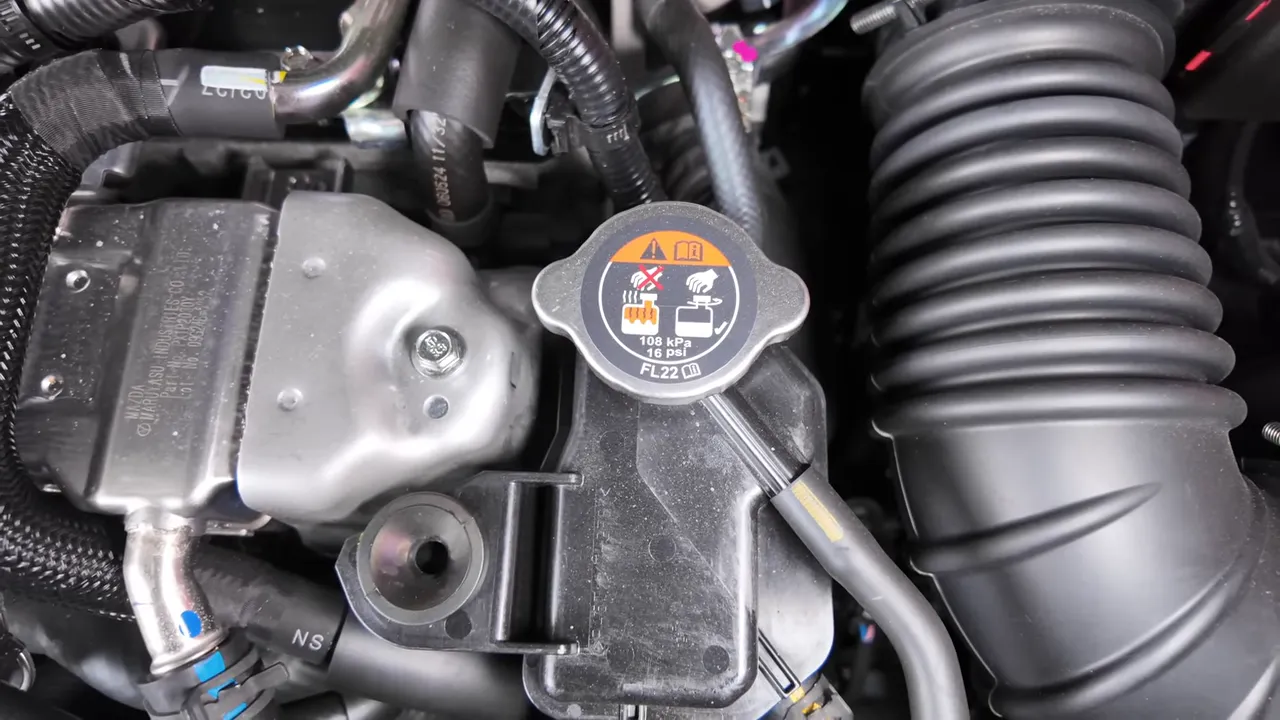
It feels sturdy now. My question is what happens years down the road, after heat and age have worked on that plastic, when somebody pulls a little too enthusiastically on the engine cover. Could the mounting arrangement damage the coolant component?
That is a long-term concern, not an observed failure on this car. It is also a small criticism in an otherwise impressive engine compartment.
Underneath the Mazda 3: Good Protection and Simple Suspension
The underside is extensively covered, particularly at the front and along the floor. Mazda provides access openings for the oil filter and drain plug, so routine oil service does not require removing the entire lower cover.
There is a mixture of plastic and fabric-like underbody material, along with a small cooling vent. That combination is common on newer cars, and I do not see a problem with it here.
Front suspension: conventional, but not ideal for every repair
The front suspension uses MacPherson struts, steel steering knuckles, and steel lower control arms. There are a few details I would change:
- Integrated ball joints: I would prefer a separately serviceable ball joint rather than one built into the control arm.
- Clamp-style strut attachment: The knuckle clamps around the strut. I prefer a straightforward bolted flange connection for service work.
- Sway-bar-link construction: The links use plastic internally, which would not be my first choice for maximum robustness.
None of these observations means the suspension is bad. They are the differences between looking at a car as a new purchase and looking at it as something that will eventually need repairs.
Exhaust quality and structural bracing
The exhaust system looks very well made. The catalytic converter is relatively exposed through an opening in the heat shielding, but the overall quality of the exhaust is impressive.
Farther back, a substantial structural brace spans the underside. The exhaust even bends around it. Most of the surrounding floor remains covered, which is good to see on a design that has already been around for a while.
A torsion beam that handles better than you might expect
This all-wheel-drive example has a compact rear differential and a coupling that controls rear-drive engagement. The bigger surprise is the rear suspension: a torsion-beam arrangement rather than a multi-link setup.
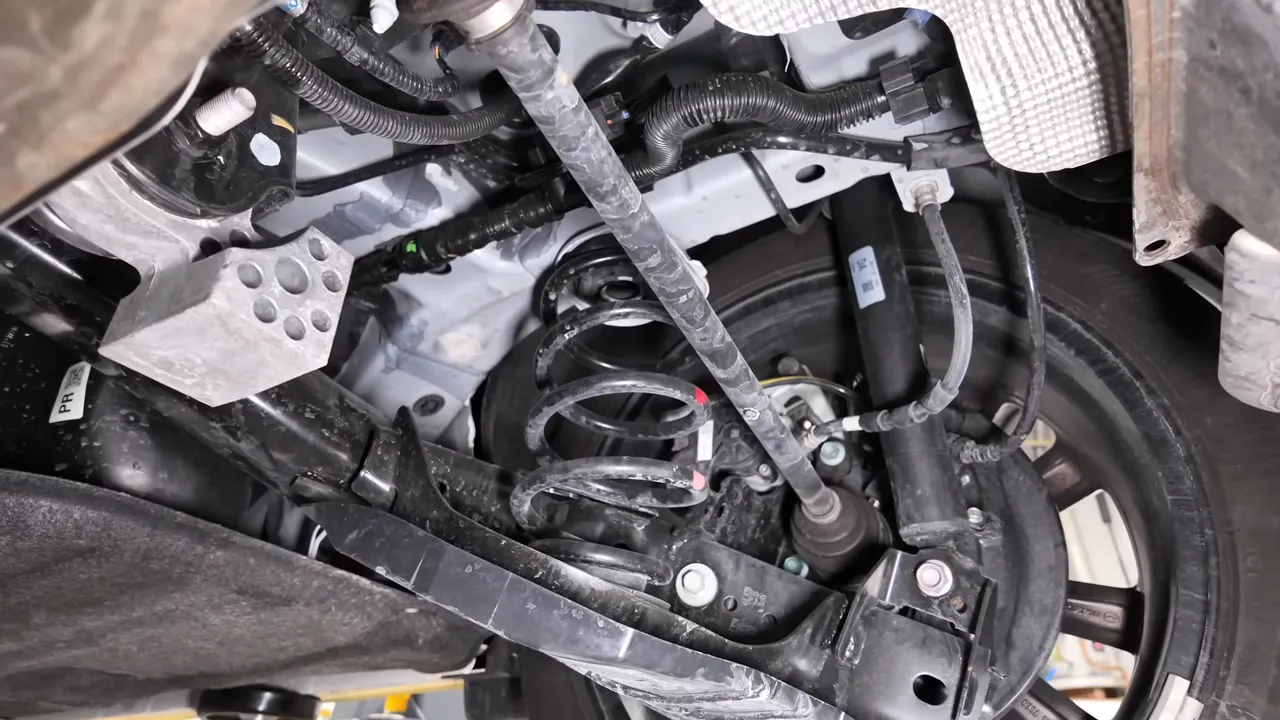
Given how well the Mazda 3 handles, that simplicity is impressive. There are fewer separate arms and joints than in a multi-link arrangement, which gives it an appealingly straightforward construction.
This is a useful reminder not to judge a car entirely by its suspension layout on a specification sheet. Execution matters.
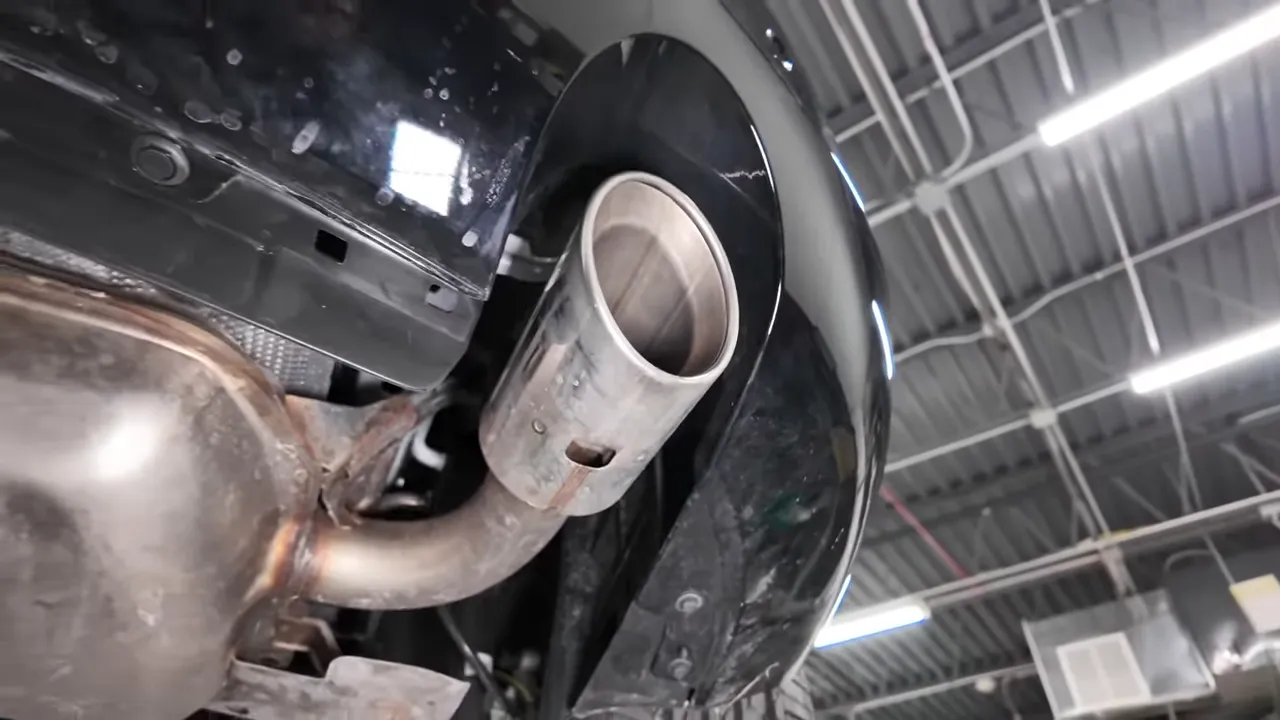
At the rear brakes, the electric parking-brake motors are integrated into the calipers, an increasingly common arrangement. A large rear muffler feeds two exhaust tips, and rear underbody coverage is decent, even if it is not complete.
Exterior Design: Less Really Is More
The Mazda 3 hatchback is a beautiful little car. Styling is personal, of course, but I think this design has aged exceptionally well.
The recipe is simple. The front has slim headlights, a large grille, and a lower extension on this example. The hood has a couple of restrained lines that blend into the surrounding surfaces. The doors and fenders are smooth rather than covered in competing creases.
There are not seventeen different shapes trying to get your attention. That restraint is what makes it work.
The black wheels contrast nicely with the white body. At the rear, the individual round-element taillights look elegant without relying on a full-width light bar.
The styling has a visibility tradeoff
The side windows are short, especially toward the rear. The rising bodywork leaves a very small rear side window, and the doors look tall relative to the glass.
It gives the hatchback some of its character, but visibility is the compromise. If you like an airy cabin and generous glass area, pay close attention to this during a test drive.
A little too much badging, and perhaps one wing too many
For such a clean design, the rear carries quite a collection of labels: the Mazda emblem, Mazda 3, AWD, Skyactiv-G, and Turbo. Maybe there was a sale on badges.
The upper rear spoiler treatment is also a little busy for my taste. It creates a double-wing appearance on a car whose greatest styling strength is restraint. Neither detail ruins the design, but both stand out because the rest is so clean.
Cargo Space: Useful, but Not Class-Leading Practicality
The hatch opens manually rather than electrically. Interestingly, Mazda still includes a lock button on the hatch, allowing you to request locking before closing it. A slightly unexpected feature, but a useful one.
The cargo area is a decent size, although the side intrusions make it somewhat narrow. Folding the rear seats creates room for larger items, but the rigid parcel shelf can get in the way. For bulky loads, you will probably want to remove it.
There are some very nice details under the floor. This example has a spare tire, with the Bose subwoofer packaged inside the wheel’s center cavity. There is also insulation beneath it, a welcome touch in this class.
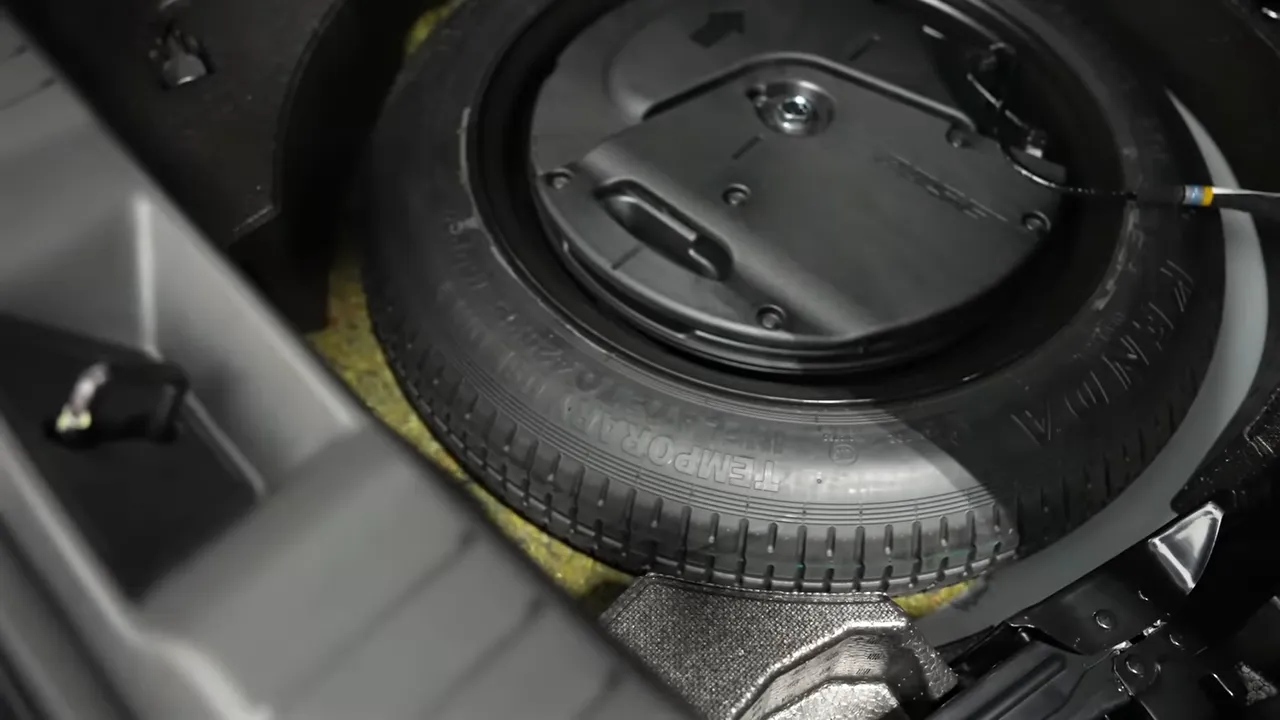
The aluminum cargo-sill protector on this car is an accessory, but it suits the vehicle nicely. Small touches like that reinforce the sense that Mazda paid attention to more than the obvious surfaces.
Interior Review: Elegant, Comfortable, and Refreshingly Normal
At this high trim level, the cabin is genuinely impressive. The design is not new, but it was executed well enough that it still feels appropriate in 2025.
More importantly, it does not need gimmicks to create that impression. The materials, fit, finish, and control feel do the work.
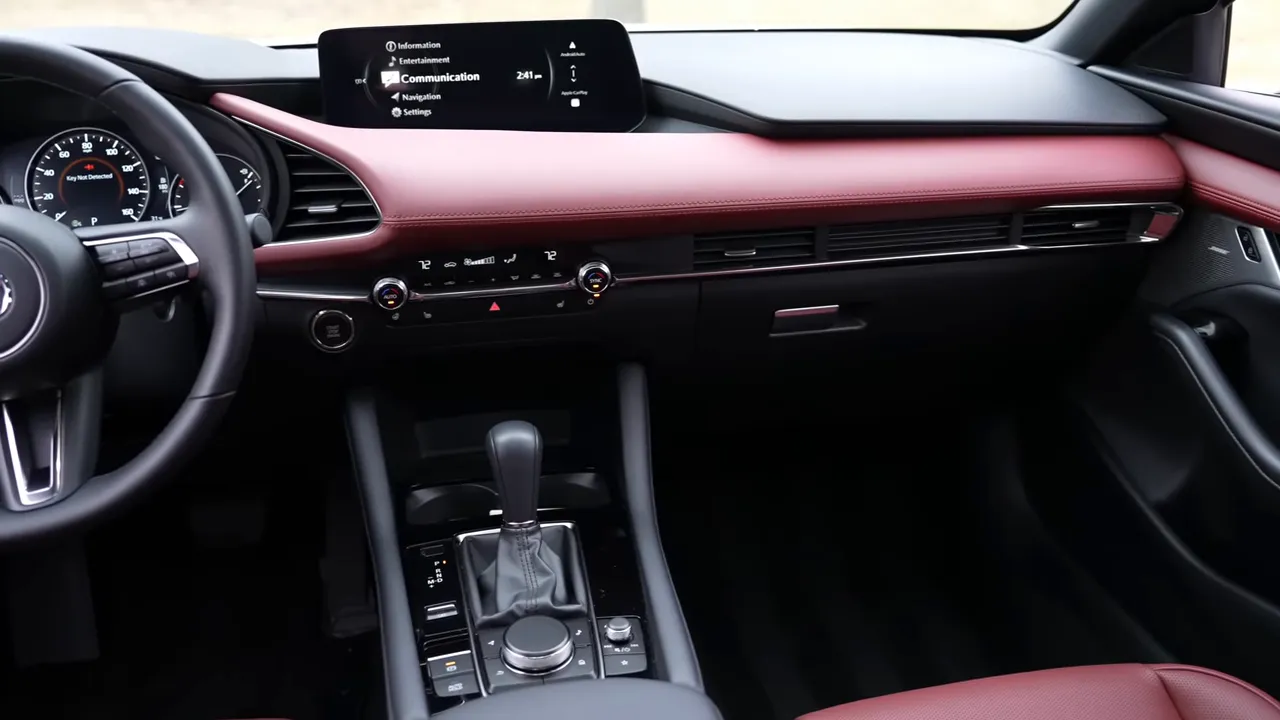
Infotainment: a good rotary controller, with limited touch operation
The updated infotainment system supports touchscreen operation within wireless Apple CarPlay and Android Auto, but Mazda’s native interface is operated through the rotary controller.
That distinction matters. If you expect to tap every factory menu, this is not that kind of system.
After spending a week driving the car, I hardly felt any need to touch the screen. It sits far enough forward that reaching for it feels unnatural, while the rotary controller is conveniently placed and works very well.
I know rotary controllers are not everybody’s favorite. This is one of the better implementations, but if you strongly prefer touch controls, make sure you are comfortable with Mazda’s approach before buying.
Physical controls done properly
The conventional gear selector feels good to use. The center console is logically arranged. The steering-wheel controls are clear, simple, and easy to understand.
And the drive modes? Normal operation or Sport. That is it.
No enormous menu of settings that turns a compact hatchback into an imaginary off-road expedition vehicle. Just keep it simple. I like that.
The instruments combine physical gauges with a central screen styled to resemble a traditional gauge. It looks elegant and does what it needs to do without turning the entire instrument panel into a display searching for a purpose.
The climate controls are physical, too. There is a small display for the settings, but actual buttons and knobs handle the operation. Even the feel and sound of the switches contribute to the impression of quality.
Comfort and refinement are real strengths
The front seats are very comfortable, the materials are attractive, and the fit and finish are excellent. The cabin also feels well insulated and quieter than I expect from this segment.
But there is an important qualification: this is the high-trim experience. As you move down the range, the basic design remains, along with much of the car’s underlying driving character, but many of the nicer materials and finishing touches go away.
That distinction becomes central when we talk about value.
The Back Seat Is the Practical Weak Point
I am 5 feet 7 inches tall. Sitting behind my own driving position, I do not have much knee room. The recess in the front seatback makes a meaningful difference, but this is still a tight rear seat.
The cushion itself is comfortable. Headroom is usable for me, although the sunroof in this example takes up some space. Without it, there would be a little more room overhead.
The rear accommodations are usable if the passengers are not especially tall, but the lack of amenities is disappointing:
- No rear USB-C ports.
- No rear USB-A ports.
- No rear air vents.
At least the leather upholstery wraps around the front seatbacks in this higher trim, so the space looks nicely finished. Still, attractive upholstery does not create knee room or charge a phone.
If you regularly carry adults in the back, this needs to be part of your buying decision, not something you discover after delivery.
The Biggest Problem Is the Price
I like almost everything about this Mazda 3. My biggest objection is what the higher trims cost.
The fully equipped turbo AWD hatchback tested here is roughly a $38,000 to $39,000 car. At that price, yes, it should have a beautiful interior and feel well assembled.
The entry point discussed for the range is around $24,000 before destination and other charges, but the base car does not deliver all the premium details that make this particular example feel special. You retain the fundamental styling and driving appeal, but not the complete upscale package.
So the Mazda 3 has a bit of an identity problem. It spans economy-car territory, reaches toward luxury, and occasionally gives the impression that it wants to be a performance hatchback. It succeeds differently depending on which role you expect it to play.
Should You Buy a 2025 Mazda 3?
Yes, if you want an upscale small hatchback
This is where the higher-trim Mazda 3 makes its strongest argument. If you want a compact hatchback with a refined cabin, comfortable seats, straightforward controls, and an engaging conventional automatic, there is a lot to like.
Compare it with similarly sized luxury hatchbacks or small premium crossovers, and its price starts to look more reasonable. It does not match every aspect of much more expensive alternatives, but it delivers a very nice experience without reaching their prices.
Be more cautious if you want an economy car
A lower-trim Mazda 3 can be an attractive, good-driving compact. The question is whether you are happy with that specification.
If you start with the idea of buying an economy hatchback, then keep adding equipment until you reach the price of this car, you have changed the entire value equation.
For operating-cost research, the EPA’s vehicle comparison tool is a useful place to compare the exact configurations on your shortlist. Keep the engine and drivetrain choices consistent rather than treating every Mazda 3 as the same car.
Look elsewhere if you want a serious hot hatch
The turbo model is enjoyable, but I do not see it as a substitute for a dedicated performance hatchback.
A Toyota GR Corolla starts in roughly the same price neighborhood as this fully loaded Mazda, comparing MSRP with MSRP and assuming you can actually find the Toyota at sticker price. It is a much more serious performance machine.
What I think Mazda is missing in the U.S. is a true halo version of the Mazda 3: something distinctly special, rather than simply a regular model with every option. The turbo is the top of this range, but that alone does not make it a dedicated hot hatch.
Consider a CX-5 if family usefulness matters more
If your budget reaches this fully loaded Mazda 3 and you need a practical family vehicle, I would also consider the CX-5. It offers much of the Mazda design, quality, and driving appeal in a larger, more functional package.
That does not make the hatchback the wrong choice. Some people specifically want a small car, and there is nothing wrong with that. But do not pay this much for a compact hatchback if what you actually need is more passenger and cargo space.
My verdict: the 2025 Mazda 3 is a very good car for the right buyer, not an automatic recommendation for everybody. Its thoughtful engineering, excellent automatic transmission, handsome styling, and high-trim refinement are real strengths. Its small back seat, limited rear amenities, visibility compromises, and upper-trim pricing are equally real.
Decide what this car is supposed to be for you. As an attainable upscale hatchback, it can make a lot of sense. As the cheapest practical compact or the most serious performance car for the money, its case is much harder to make.


