The 2025 Honda Prologue is a decent electric SUV. It has a sophisticated thermal management system, comfortable seats, useful cargo space, and an exterior design I genuinely like. But there is one thing you need to understand before spending your money: underneath the Honda body, this is a GM electric vehicle closely related to the Chevrolet Blazer EV.
That matters more than the badge on the steering wheel. The engineering, component choices, interior feel, and potential service experience are not what a longtime Honda owner might expect.
The example inspected here is a Prologue Elite AWD, priced at approximately $56,000 as tested. There is good engineering in this car, and it deserves credit. There are also details that leave me scratching my head. The biggest question is not whether GM built a reasonable electric SUV. It is whether buying Honda’s version makes sense.
Key Takeaways
- The Prologue’s GM-developed thermal management system is one of its strongest engineering features.
- Plastic coolant plumbing and several routing choices raise long-term serviceability concerns.
- Passenger comfort and cargo practicality are stronger than the inspected vehicle’s fit and finish.
- The related Chevrolet Blazer EV makes the Prologue’s price premium difficult to justify.
Table of Contents
- Under the Hood: The Thermal Management System Is the Highlight
- Battery, Motors, and Charging Explained
- Under-Hood Concerns: Plastic Plumbing and a Missing Frunk
- Under the Car: Substantial Hardware, Questionable Details
- Exterior Design: Honda’s Strongest Contribution
- Cargo Space: Practical, with a Few Rough Edges
- Interior: Comfortable, but Not the Honda Experience You May Expect
- The Bigger Problem: What Are You Paying Honda For?
- Should You Buy a 2025 Honda Prologue?
Under the Hood: The Thermal Management System Is the Highlight
When I evaluate an electric car, thermal management is one of the first things I care about. A gasoline engine produces plenty of waste heat. An EV does not have that same readily available heat source, yet it still needs to warm the cabin and bring the battery to a suitable operating temperature.
In hot weather, it has to cool those systems, too. Simply adding electric heaters can consume energy that otherwise would move the car. Good EV engineering is about moving and recovering heat intelligently rather than creating all of it from scratch.
The Prologue uses GM’s BEV Heat 2.0 system, and this is one area where I am impressed.
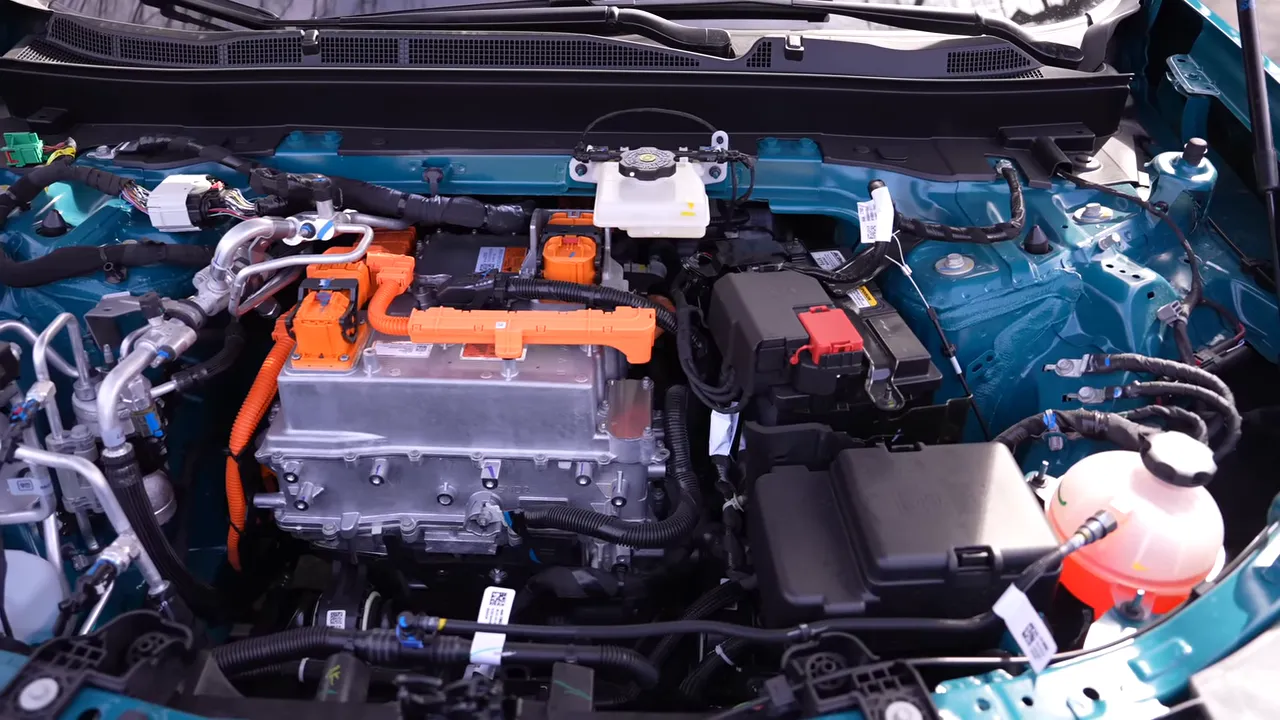
How the Six-Way Coolant Valve Works
There are two main coolant circuits: one serving the drive motors and inverters, and another dedicated to the battery. A six-way valve allows those circuits to operate separately or work together.
When the battery is cold, the system can recover heat from the motors and inverters as those components warm up. It routes coolant to collect that heat and carry it to where it is useful. Once temperatures are where they need to be, the circuits can separate again.
That is a much more thoughtful approach than treating every component as an isolated heating or cooling problem. It also consolidates plumbing that otherwise might require multiple smaller valves and many connecting hoses.
The Refrigerant System Helps Heat and Cool the Battery
The coolant and air-conditioning refrigerant systems exchange heat in both directions. Refrigerant can help warm the coolant for battery heating, or it can remove heat from the coolant when the battery needs additional cooling.
The cabin also uses a heat pump. In simple terms, a heat pump uses the refrigeration cycle to move heat into the cabin rather than only removing heat from it.
Inside, there is an evaporator for air conditioning and a separate interior condenser for heating. Hot refrigerant flows through that interior condenser to warm the cabin. An electric compressor runs the system, while electronically controlled expansion valves help manage refrigerant flow through its different operating modes.
There is still a high-voltage coolant heater for extreme conditions. If recovering and transferring heat cannot warm the battery quickly enough, that heater can add heat directly to the coolant.
One detail I could not completely confirm through the Honda and GM information available during my research: this car does not appear to have a separate PTC resistance heater inside the cabin. It appears to rely on the heat-pump arrangement for cabin heating. That distinction is worth keeping separate from the high-voltage coolant heater, which it does have.
Accessible Components Are Good News for Repairs
The refrigerant side looks busy, but a busy-looking heat-pump system is not automatically a badly designed one. What I like here is that many components are visible and accessible.
I can see the dryer, expansion valves, and several temperature and pressure sensors. If one develops a problem, access should be more straightforward than on a design that buries everything deep inside the vehicle.
Sophisticated engineering is welcome. Sophisticated engineering that remains accessible is even better.
Battery, Motors, and Charging Explained
The basic propulsion layout is familiar EV territory. An electric motor drives the wheels through a single-speed reduction gear. This AWD model adds a rear motor and inverter.
During regenerative braking, the wheels drive the motor, which acts as a generator and sends energy back toward the battery. The inverter manages electrical power between the battery and motor during propulsion and regeneration.
The key battery and charging figures discussed for this vehicle are:
- Battery capacity: 85 kWh.
- Onboard AC charger: 11.5 kW.
- Maximum DC fast-charging power: up to 150 kW.
Those are two different charging paths. At home, the incoming electricity is AC, while the battery stores DC energy. The onboard charger converts that AC electricity to DC. Its 11.5 kW rating describes charging power, not battery capacity.
At a DC fast charger, the station supplies DC electricity, bypassing the onboard AC charger and charging the battery through the vehicle’s DC charging system.
I consider these charging power ratings roughly average for this size and price class, rather than a major selling point. For more background on those distinctions, the U.S. Department of Energy explains EV charging equipment and charging levels.
Under-Hood Concerns: Plastic Plumbing and a Missing Frunk
The compact coolant layout is excellent. The material choices are where my enthusiasm drops.
Extensive Plastic Coolant Lines
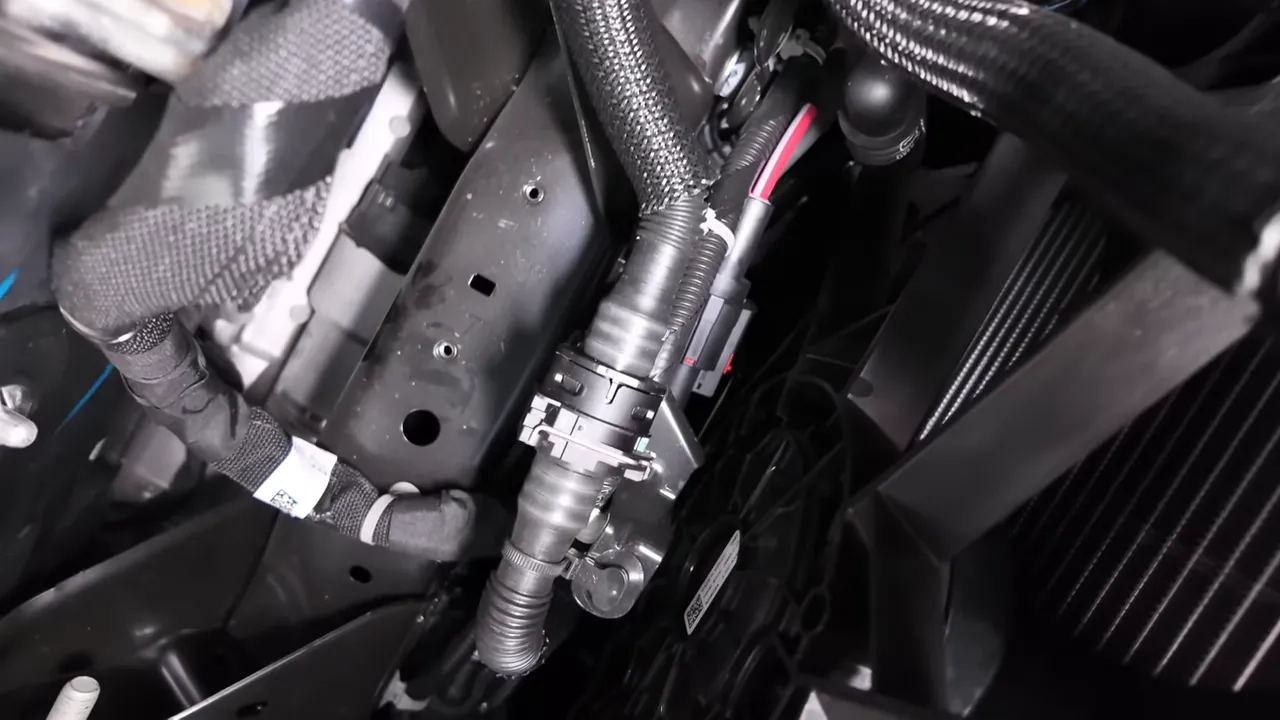
Every coolant line I could see connected to the six-way valve appeared to be plastic. There may be rubber hoses elsewhere, but the visible plumbing relies heavily on plastic.
From a mechanic’s perspective, that raises long-term concerns. Plastic cooling-system components can become brittle with age. A repair that starts with one leaking connection can become a larger job when neighboring parts break during handling.
That is a durability concern based on construction, not proof that this particular car already has a leak. Still, I would much rather see conventional hose-and-clamp connections where practical.
A Normal 12-Volt Battery Location, but Odd Cable Routing
The 12-volt battery sits under the hood in a conventional, accessible location. That is a positive. It is an ACDelco battery with the familiar GM-style electrical block above it.
The ground cable takes an unusual loop before attaching at a painted body area. I do not understand the routing choice. That observation alone does not establish an electrical fault, but it is one of several small details that deserve closer scrutiny.
Good Hood Hardware, No Front Storage
The hood opens by pulling the interior release twice, so there is no separate secondary catch to reach for at the front. Two hood struts hold it up. Those are nice touches.
What is missing is a front trunk. There is visible space ahead of the power electronics, and the relatively tidy coolant layout makes the lack of storage feel like a missed opportunity.
Of course, visible empty space does not tell us everything about crash requirements or packaging constraints. But from a practical standpoint, it would have been nice to get some usable storage here.
Under the Car: Substantial Hardware, Questionable Details
The first issue I found underneath was not complicated engineering. It was a loose underbody-panel fastener.
One loose fastener does not tell us how every Prologue is assembled. It does, however, belong on the inspection report for this particular vehicle.
Most of the underside is covered, and many of the panels feel reasonably substantial. The front cover, especially, is not the flimsy material found on some vehicles. One rear panel looks less carefully finished than the others, but overall coverage is good.
The Front Suspension Is More Complicated Than I Would Like
The front suspension uses extensive aluminum construction, including control arms and the steering knuckle. It has multiple links, an upper control arm, an unusually shaped strut arrangement, and two-piston front brake calipers.
One of the lower ball joints is incorporated into the knuckle, while another belongs to its control arm. It is a substantial assembly, but I question whether this much complexity is necessary for the job.
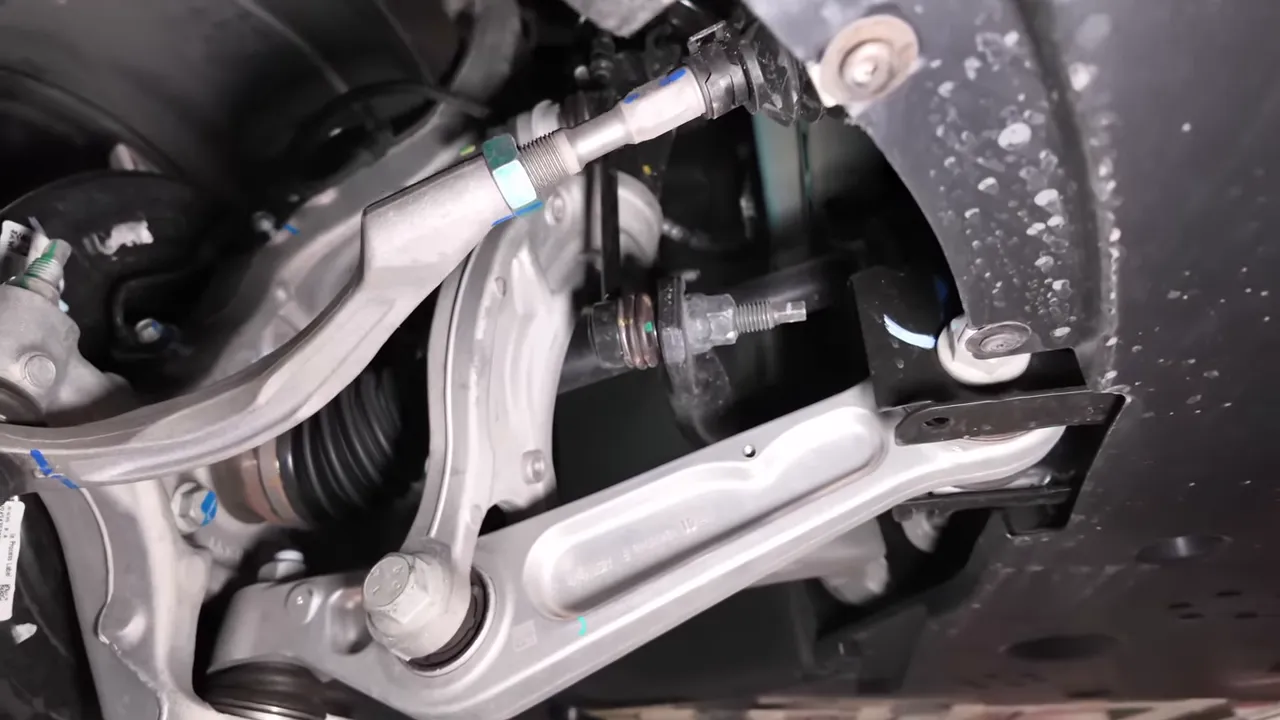
The front brake hose also uses several sections and crimped connections. I would prefer a simpler arrangement if the same routing and movement requirements could be met.
The front axle looks substantial, with paint on its center section but not all of its ends. The sway-bar links use plastic construction in portions of their design. The suspension fasteners inspected use self-locking nuts rather than cotter pins, so the applicable replacement instructions matter during service.
Battery Cover and Lift Points
The visible underside of the battery enclosure has a sheet-metal appearance similar to the body. I would expect reinforcement behind it, but an exterior inspection cannot establish the internal construction or its impact resistance.
The seam-sealer application also raises questions. Some seams are neatly sealed, while nearby areas remain open. Without the design intent in front of me, I cannot tell you what every sealed section is meant to accomplish.
What I do like is the accessibility of the designated lifting points. Cutouts around the battery frame provide access to relatively conventional pinch-weld locations without removing panels.
Do not assume that an adjacent section of the battery frame is a lifting point. Using the wrong area could crush or damage it. Follow the vehicle’s specified lifting locations.
Rear Suspension, Tight Lines, and Parking-Brake Wiring
At the rear, there are steel control arms, aluminum knuckles, and the additional drive unit for AWD, with its inverter mounted above it. The rear axles are smaller than I expected compared with some other electric vehicles, though size alone does not establish a problem.
What concerns me more is how tight certain flexible lines become with the suspension fully extended. They are tight enough that I jokingly called them guitar strings.
Full suspension droop is not the normal driving position. Nevertheless, the vehicle can move through a wide range of suspension travel, and I would prefer to see routing with a more relaxed appearance at extension. This is an inspection concern, not a demonstrated failure.
The parking-brake actuator wiring also takes a long route along a moving control arm. I question why it could not follow a shorter, more consolidated path near the brake plumbing.
There are pedestrian-alert speakers at the front and rear. Their purpose is to make an otherwise quiet EV audible at low speeds. That function makes sense, but I find this particular sound too loud and rather unpleasant.
Exterior Design: Honda’s Strongest Contribution
I like the way the Prologue looks, especially in this color. It has a little bit of futuristic styling without abandoning the basic shape of a useful SUV.
The front is restrained. There is a camera near the Honda emblem, radar equipment lower down, fog lights, and only modest sculpting in the hood. It does not look like the designers were trying to fill every available surface with another crease.
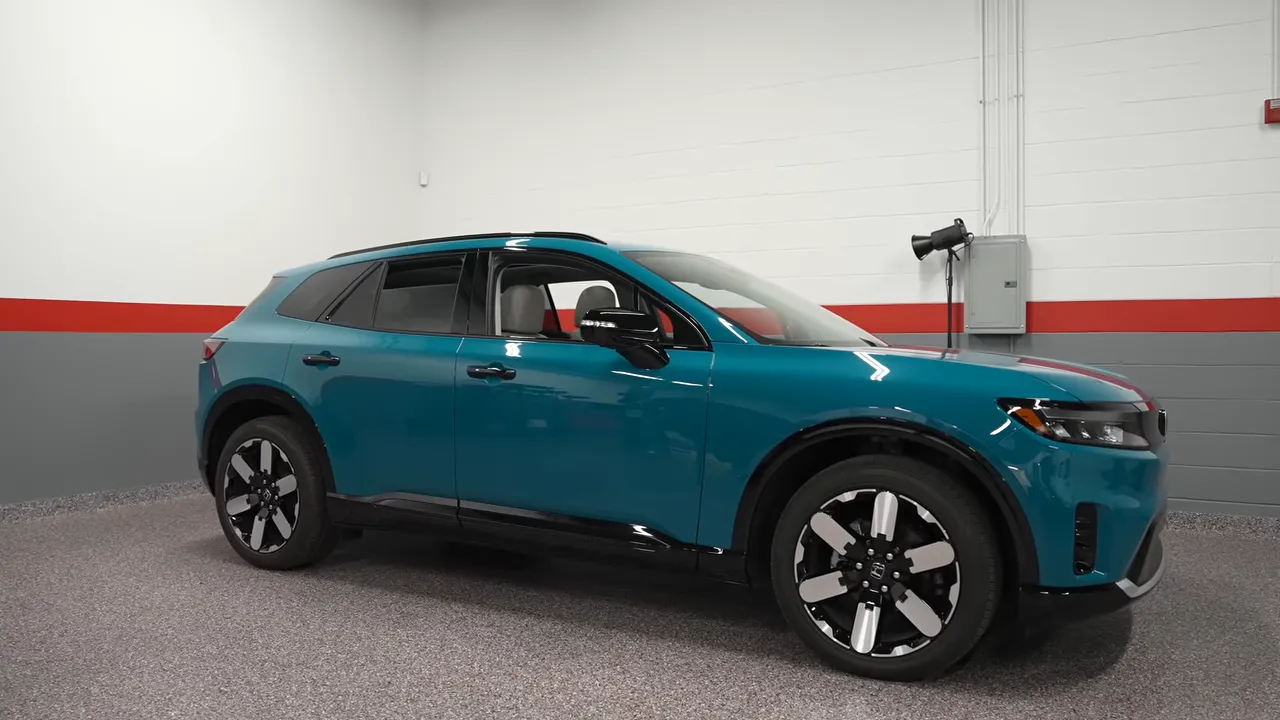
The wheel design looks good, and the six-lug layout is another reminder of the GM hardware underneath. I also appreciate the painted exterior trim rather than an excessive amount of unfinished black plastic.
The side profile stays simple, with a faint character line and generously sized windows. The small front quarter glass helps visibility, and the rear side glass has not been cut down into an impractical styling exercise.
Another genuinely useful touch: the rear doors have lock-and-unlock buttons, not just the front doors. That is something I would like to see more often in this segment.
At the back, the lighting looks normal and the spaced Honda lettering has some character. The small rear wiper, on the other hand, will look familiar to anyone who knows GM products.
Fit and Finish Needs More Attention
The overall shape is good. The execution on this particular example is less convincing.
Wheel-arch trim did not sit evenly from one panel to the next. Some gaps changed width along their length, and portions of the lower trim could have been finished more neatly.
These details are not all functional problems. But at approximately $56,000 as tested, I expect more consistency.
Door Access and the Charging Flap
There is a mechanical key for emergency entry, but the lock cylinder sits behind a handle cover. I dislike this arrangement. When the 12-volt battery is dead, removing a cover is an extra complication, and aging plastic can make that process less pleasant.
The charging flap also feels flimsy. Inside, there are connections for regular AC charging and DC fast charging, but no useful light illuminating the charging area. That is a small omission you may notice repeatedly when plugging in after dark.
Cargo Space: Practical, with a Few Rough Edges
The cargo area is a good, usable size. The curved sides and wheel-well intrusions consume some space, but the overall layout works. Two bright LED lights help illuminate it.
The rear seats fold easily from the cargo area. They also latch into two different upright positions, using two locations in the body-mounted latch arrangement. That gives the seatbacks a useful degree of adjustment without making the mechanism complicated to operate.
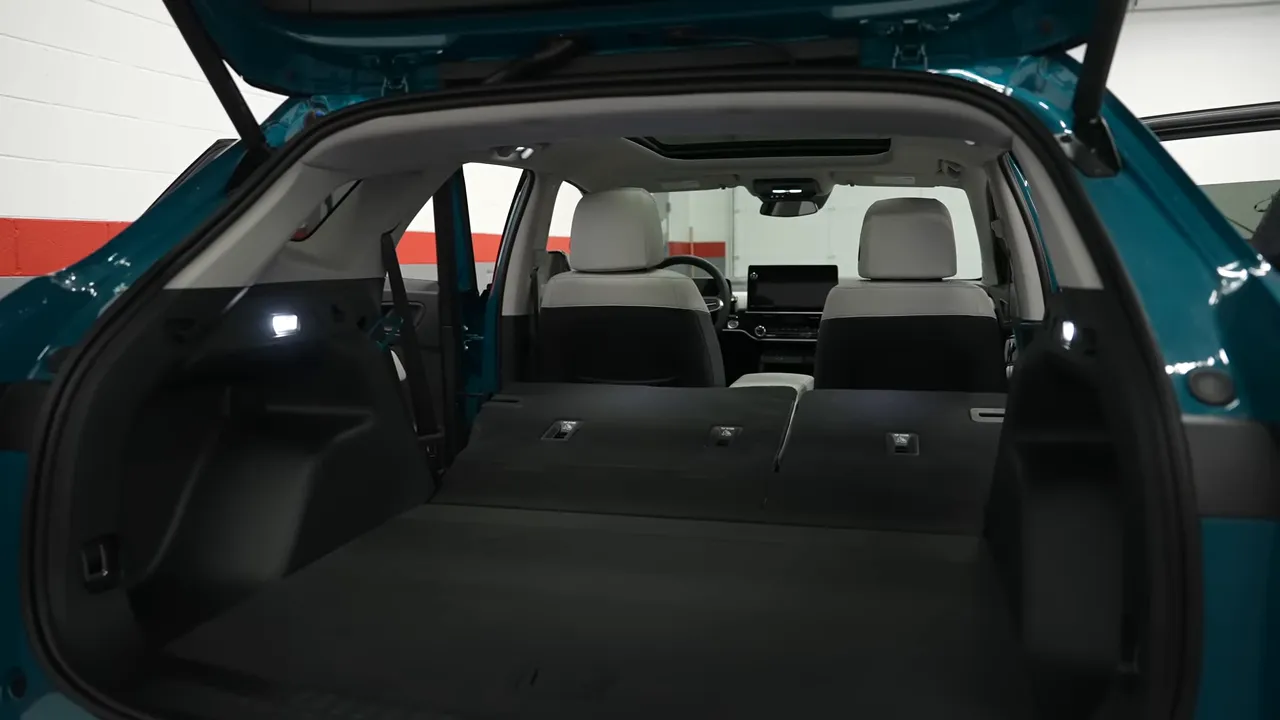
Below the load floor, there is additional storage and a fairly deep well. There is no spare tire. The absence of exhaust hardware helps create room underneath.
The power liftgate uses one powered actuator and a support strut on the other side. The actuator installation extends through the headliner area, which is not my favorite arrangement. The washer hose is also visibly routed near the top of the opening rather than being more neatly concealed.
There is a single close button, and the latch makes a surprisingly loud noise when the liftgate shuts. It works, but it lacks the refinement I would like at this price.
Interior: Comfortable, but Not the Honda Experience You May Expect
If you own a Honda and step into a Prologue expecting familiar controls and that familiar solid cabin feel, prepare for something different. This interior feels like a GM product because that is fundamentally what it is.
That does not mean it is an unpleasant place to spend time. The front seats are very comfortable, and the cabin is reasonably quiet. Those are important strengths.
Screens, Physical Controls, and Storage
The instrument display can show a map. Beyond that, I do not find its functionality especially remarkable, but it is perfectly livable.
The center infotainment display is less successful visually. It sticks out from the dashboard at an awkward angle and feels more like an attached generic screen than an integrated part of the design.
Thankfully, the climate controls are physical buttons and knobs. I like that very much. The wide center-console area is another highlight, with useful storage underneath and an open, practical layout.
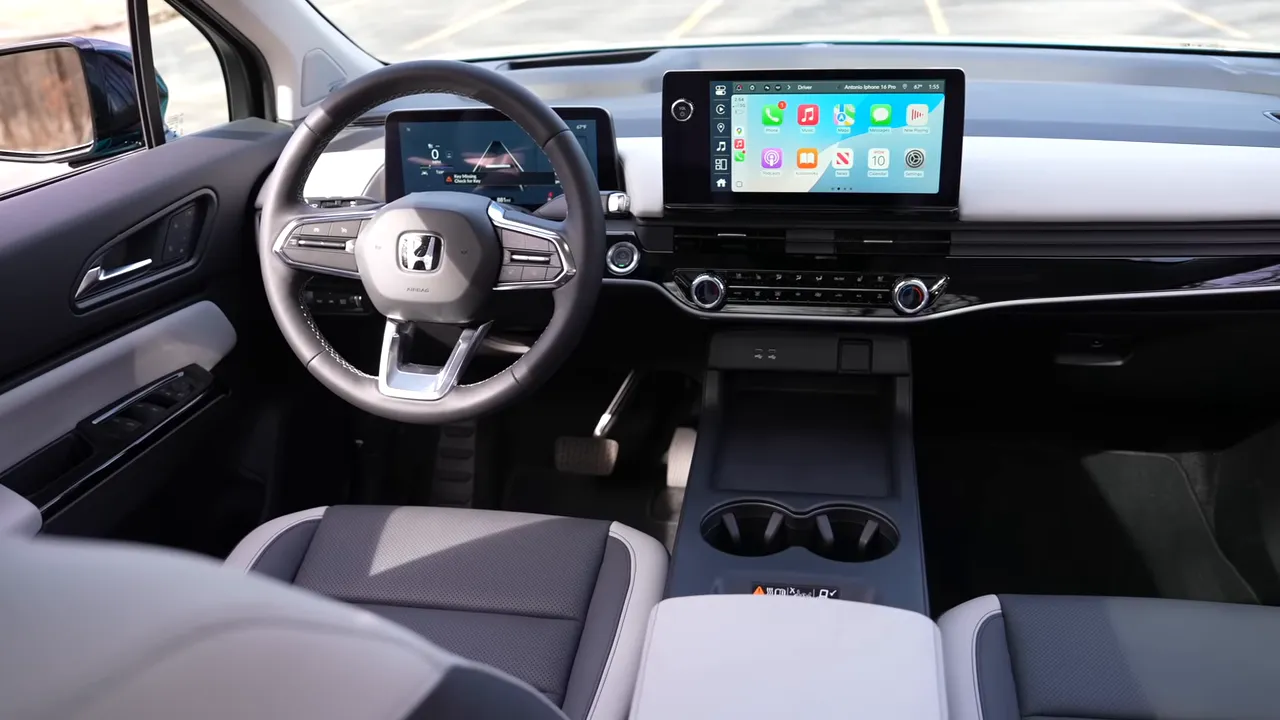
The steering wheel has nice leather, but the control arrangement is busy. There are buttons across the spokes and additional controls behind the wheel. I would prefer better consolidation.
One-Pedal Driving Has a Useful On-Demand Function
You can select normal regeneration, stronger regeneration, or turn one-pedal driving off. There is also a steering-wheel control that calls up stronger regenerative braking on demand.
That is a useful option. You do not have to commit to the strongest setting all the time to use additional regeneration when you want it.
Materials Are Acceptable, Not Exceptional
The interior materials are all right. The fit and finish are also all right. Functionally, the cabin works, but it does not deliver the precision or solidity I associate with Honda’s better interiors.
The related Blazer EV has a more attractive dashboard in my opinion, with a more cohesive screen presentation. The Prologue’s advantage is keeping the climate interface physical, rather than placing some functions in the screen.
That is a real advantage, but not enough by itself to make this interior feel worth a premium.
The Back Seat Is Excellent for Comfort
GM knows how to make a comfortable vehicle, and the rear seat demonstrates that clearly.
At 5 feet 7 inches tall, sitting behind my own driving position, I have plenty of room. The floor is flat, the seat is comfortable, and headroom remains decent even with the panoramic sunroof.
Rear passengers also get USB-C connections and a household-style power outlet. For carrying people comfortably, this is one of the Prologue’s strongest areas.
Again, the reservation is finish quality, not basic accommodation. It is a comfortable place to sit, even if some of the details could be better.
The Bigger Problem: What Are You Paying Honda For?
My strongest criticism of the Prologue is not that it is a bad electric car. It is not. The platform is decent, the thermal system is genuinely thoughtful, and the cabin is comfortable.
My problem is that Honda appears to have taken a shortcut into this segment. It borrowed an existing GM electric vehicle, gave it Honda-designed bodywork and some suspension-tuning changes, and put it into Honda showrooms.
For a Honda enthusiast who wants an electric car engineered with Honda’s own priorities, that is disappointing. It feels more like checking the EV box than delivering the electric Honda people may have been waiting for.
I have similar frustrations with Toyota’s bZ4X, which I regard very poorly among the EV choices available in 2025. But my criticism of the Prologue is different: its underlying EV engineering is respectable. The question is why I should choose this version over the company’s version that supplied that engineering.
The Blazer EV Comparison Is Unavoidable
At the pricing and configurations considered in this review, the Prologue costs more than the comparable Blazer EV at both the lower and upper ends of the lineup. It also offers less rated range in the comparisons discussed, despite the close mechanical relationship.
I call that a badge tax: paying more for the Honda name without getting the Honda-developed vehicle you might assume comes with it.
Range comparisons need to match the actual trim and drivetrain, not just the model name. Before deciding, check the specific vehicles using the EPA’s vehicle comparison tool, and compare the actual transaction prices available to you.
Then there is service. Taking GM-developed hardware to a Honda dealership raises a reasonable question about familiarity and diagnostic experience. I would rather buy this technology from the manufacturer that developed it and has its own version in its service network. That is a concern about the ownership proposition, not a claim that every Honda dealer will handle the car poorly.
Should You Buy a 2025 Honda Prologue?
If you judge it strictly as an electric SUV, the Prologue has a lot going for it:
- A sophisticated heat-pump and coolant-management system.
- Accessible thermal-system components.
- Comfortable front and rear seats.
- Useful cargo space and simple seat-folding operation.
- Restrained exterior styling and physical climate controls.
But the concerns are meaningful, too: extensive plastic coolant plumbing, some questionable line and wiring routes, inconsistent fit and finish on the inspected vehicle, and an interior that does not feel special enough for the price.
For me, this is one of the most disappointing vehicles to wear a Honda badge, not because it is a terrible car, but because it does not deliver the Honda-developed EV experience its name suggests.
If you like the underlying vehicle, compare it directly with the Chevrolet Blazer EV before committing. I prefer the Prologue’s exterior, and I appreciate its physical climate controls. But with the pricing, range, and interior comparisons considered here, I would rather buy the GM version.
The Prologue is a decent electric car. That is not the same thing as being the Honda I would recommend buying.


