The 2023 Honda Pilot is a full redesign, not a refresh with different headlights. Honda changed the engine, transmission, body, and interior. But the most important thing about this SUV is not how much changed. It is how clearly Honda understood what this vehicle needed to be.
This is a family SUV. It should be comfortable, straightforward to operate, well built, and practical. It does not need to pretend to be a sports car or an extreme off-road truck.
After looking under the hood, inspecting the underside, and spending time using the interior, I think Honda did a very good job. There are concerns, especially with some engine design choices, and the TrailSport has a compromise you will hear every day. But there is a lot here to appreciate beyond what you notice on a test drive.
Quick Summary
- The redesigned Pilot prioritizes family comfort, straightforward controls, useful cargo space, and solid construction.
- The revised V6 and 10-speed automatic are smooth, but acceleration can feel modest under load.
- Cylinder deactivation and more involved valve-cover service are the main mechanical concerns.
- The TrailSport adds useful protection and traction features, but its aggressive tires create noticeable road noise.
Table of Contents
- Under the Hood: A Familiar V6 With Major Changes
- The 10-Speed Transmission and All-Wheel Drive
- Underneath the Pilot: Serviceability and Build Quality
- Exterior Design and the Safety Work You Cannot See
- Is the TrailSport Worth the Compromise?
- Cargo Space and Third-Row Operation: No Unnecessary Complication
- The Interior: Better to Use Than to Show Off
- Second- and Third-Row Comfort
- The Main Reasons to Think Twice
- Should You Buy a 2023 Honda Pilot?
Under the Hood: A Familiar V6 With Major Changes
While many SUVs in this segment are moving toward turbocharged four-cylinder engines, Honda kept a naturally aspirated 3.5-liter V6. No turbocharger, no supercharger. That alone will appeal to quite a few families.
The engine is the J35Y8, and although the J35 name is familiar, this is a substantial revision.
Dual overhead cams, but more complicated valve-cover service
The biggest mechanical change is the move from a single overhead camshaft per cylinder head to dual overhead camshafts. That means four camshafts across the engine.
Honda also retained aluminum valve covers, which I like. What I do not like as much is that the camshaft caps are integrated into those covers. These are no longer simple lids that you remove independently of the components holding the camshafts in place.
The covers are sealed with liquid sealant rather than conventional valve-cover gaskets. Between that sealing arrangement and their structural role in retaining the camshafts, removing and resealing them becomes more involved. More involved generally means more labor and a higher repair bill.
There is an important improvement that helps offset this: routine valve-clearance adjustments are gone. This engine uses hydraulic lash adjustment, so one familiar reason for opening up an older Honda V6 no longer applies.
Yes, it still has a timing belt
Even with this extensive redesign, Honda kept the timing belt. It now runs across the four camshaft sprockets and continues to drive the mechanical water pump.
The tensioning procedure has changed. Rather than relying on the previous automatic tensioner arrangement, the new setup requires the belt tension to be set using a specific procedure. There is also a camshaft-locking tool that acts at the sprockets, without requiring valve-cover removal.
If you have replaced timing belts on earlier J35 engines, do not assume this one is exactly the same. Familiar layout, different procedure.
From a service-access standpoint, the good news is that there is room to work. The timing-belt side is relatively open, and there is no hydraulic power-steering pump crowding the area. Keeping the belt also contributes to the engine's quiet character, something I appreciate in a family vehicle.
Cylinder deactivation remains my biggest concern
The engine retains cylinder deactivation. Its hydraulically controlled valvetrain can stop opening the valves on selected cylinders when those cylinders are not needed.
I understand why manufacturers do this. Efficiency and emissions requirements influence these decisions, and Honda achieved a strong emissions result with this naturally aspirated V6.
But as a mechanic, I am not enthusiastic about cylinder deactivation. Honda and other manufacturers have had problems with these systems in the past. That history is a reason for caution, not proof that this particular engine will fail.
I would prefer a simpler arrangement, or at least a factory switch that allowed the driver to turn the feature off. The fuel economy is not impressive enough to make me forget the added complexity.
Direct injection only, with sensible component placement
This engine uses direct fuel injection without supplemental port injection. That leaves intake-valve carbon buildup as a possibility, especially under certain driving conditions.
Honda has not stood out to me as one of the worst offenders for severe carbon buildup, so I would not call this an established problem on the new engine. Long-term experience will tell us more. Still, I would have preferred both port and direct injection.
The component layout is sensible. The injectors sit in the valley of the V, going into the cylinder heads rather than creating additional complications above the valve covers. A single high-pressure fuel pump sits at the rear cylinder bank.
A simple cooling system and accessible maintenance items
The cooling system is refreshingly basic: a belt-driven mechanical water pump, a conventional thermostat, and no elaborate thermal-management valve arrangement. Coolant continues to circulate through the heater core in a conventional way.
The oil pump is driven from the nose of the crankshaft behind the timing-belt area. The oil filter remains in a familiar Honda location.
The air-filter arrangement is less familiar. The housing toward the front of the engine compartment is a resonator, not the air-filter box. The actual filter is above the engine, under a housing secured by three bolts.
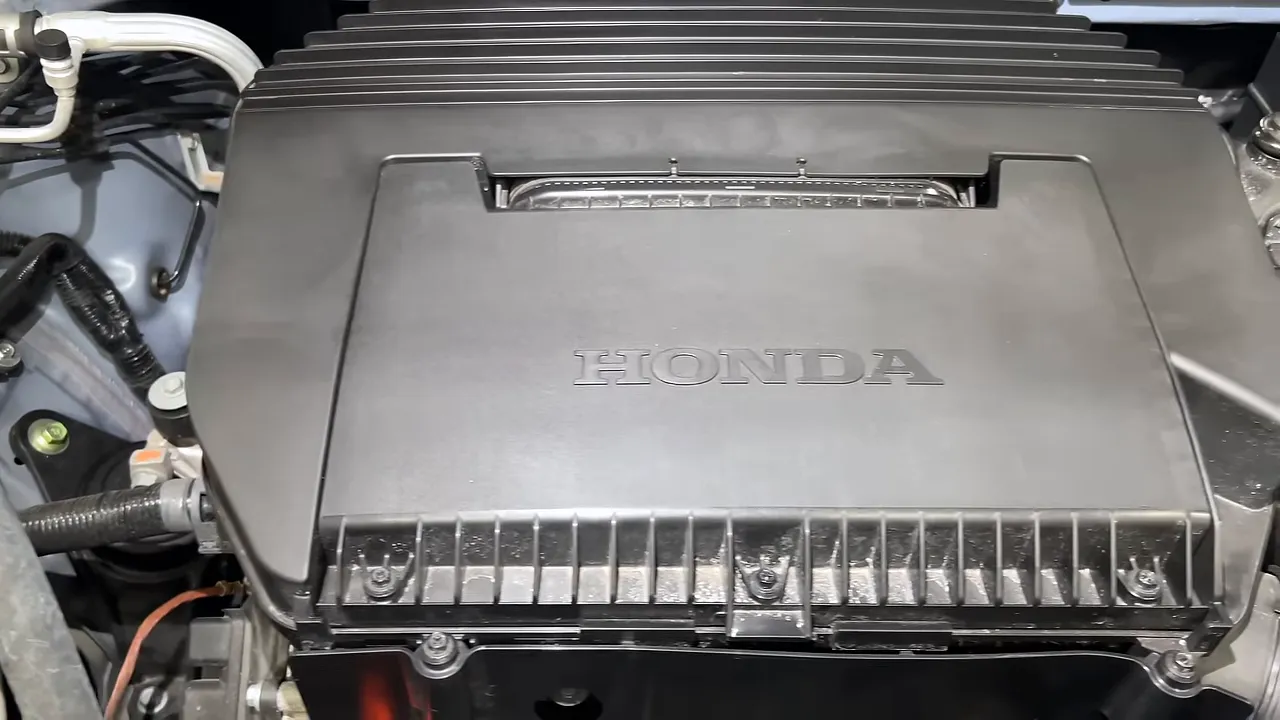
Spark-plug access is still good. The front three are easy to reach. The rear plugs require removing the upper air-filter housing, but the intake plenum does not extend over them in a way that makes the job unnecessarily difficult.
Overall, the engine bay makes a good impression. There is room around a fairly large V6, and the hoses, clamps, and other materials feel substantial. This is the kind of thoughtful construction I expect from Honda.
The 10-Speed Transmission and All-Wheel Drive
The transmission's best feature is how little you notice it
The Pilot receives a 10-speed automatic, using a revised version of the transmission found in the Odyssey. It is a conventional torque-converter automatic, and it is very smooth.
That matters more than the number of gears. Some transmissions make you constantly aware of their shifting. This one may be changing gears frequently, but the shifts are so well managed that you hardly notice.
The engine and transmission work together with excellent refinement. The engine is quiet, the transmission is unobtrusive, and the combination suits the Pilot's purpose.
What it does not deliver is especially strong performance. The V6 makes 285 horsepower, only five more than the previous version. Most of the time it is adequate, but fill the seats, add everyone's luggage, and ask for hard acceleration, and it can feel a little underpowered for a V6 SUV.
A revised front drive unit and torque-vectoring rear axle
Honda's i-VTM4 all-wheel-drive system can distribute drive torque between the two rear wheels individually.
The front power-transfer arrangement is also interesting. Honda moved the transfer unit rearward and inward, allowing it to take drive directly from the final-drive assembly. Compared with the sleeve or shaft arrangements commonly used in transverse-engine all-wheel-drive vehicles, this is a more direct mechanical layout.
Underneath, the unit also appears reasonably accessible rather than buried tightly against everything around it.
TrailSport traction logic adds capability without another differential
The TrailSport combines rear torque vectoring with brake-based traction management at the front.
The front differential is open. When one front wheel lacks traction, the system can apply that wheel's brake, helping the opposite wheel put available drive torque to use. It is a clever way to improve traction without installing a mechanically locking front differential.
The TrailSport-specific calibration makes sense for families who leave paved roads. But it does not transform this SUV into a heavy-duty off-road truck.
Underneath the Pilot: Serviceability and Build Quality
A vehicle can look beautiful inside and still disappoint underneath. The Pilot generally does the opposite: the more closely I inspect it, the more I appreciate how it is put together.
Routine service access is thoughtfully arranged
The TrailSport has a substantial metal front underbody protector. Despite that coverage, Honda left the radiator drain accessible. That is a small detail that makes a mechanic happy.
The oil drain plug is also easy to reach. It uses the familiar 17-millimeter head, threaded into a single-piece aluminum oil pan. Be careful here: overtightening the plug can damage the aluminum threads, just as it can on older Hondas.
The oil filter is in its usual area, but that includes an old annoyance. Oil can spill onto the subframe during removal and then find its way toward hot exhaust components. Honda has a dedicated funnel tool to direct the draining oil away from that mess.
Another nice bit of Honda consistency is the widespread use of the same oil-filter fitment across many models. There are exceptions, including the S2000, but that level of commonality is useful.
Suspension and brakes: mostly sensible hardware
At the front, the Pilot uses aluminum lower control arms with integrated ball joints, cast-iron steering knuckles, and dual-piston brake calipers. The front stabilizer links are aluminum rather than the plastic-style links used in some applications.
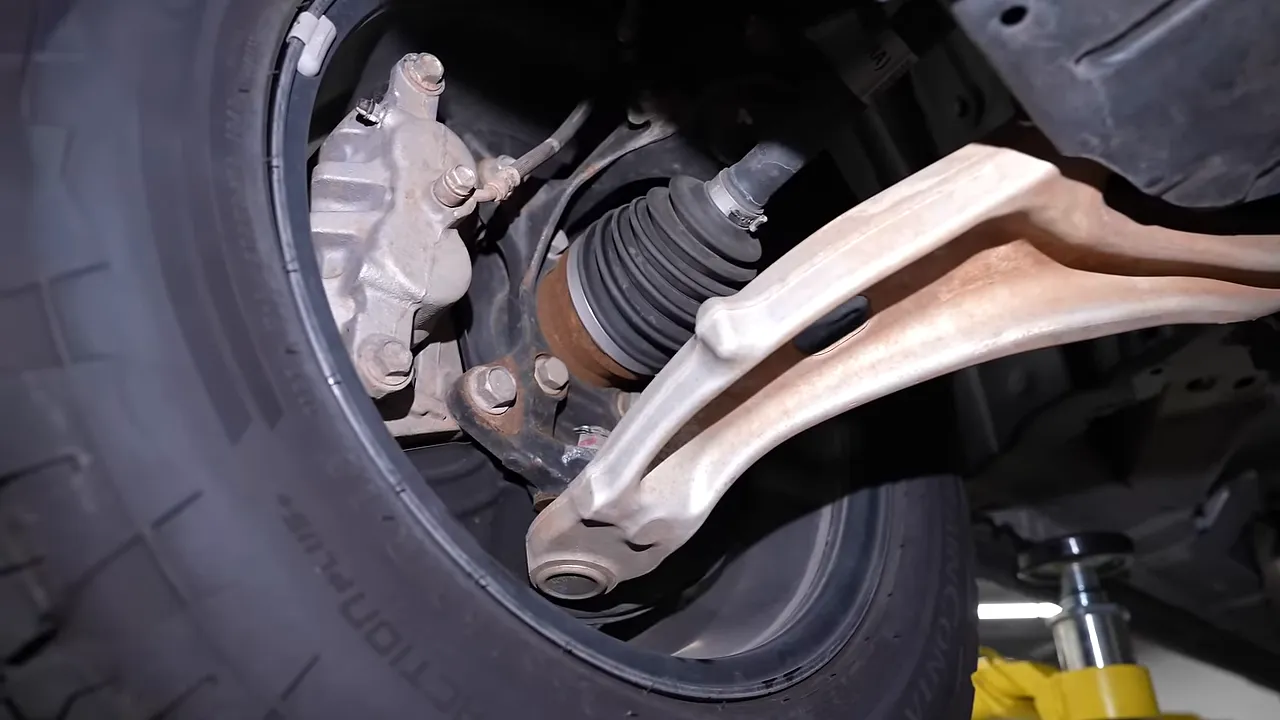
At the rear, there are aluminum knuckles, single-piston brake calipers, and integrated parking-brake mechanisms. The rear stabilizer links retain a plastic-style construction.
The TrailSport gains its one-inch lift through the springs. The basic suspension layout remains familiar, and the rear axle shafts are not the sort of heavy-duty hardware I would associate with severe off-roading. Again, understand what this vehicle is designed to do.
A flat floor and unusual exhaust routing
The underside has a notably flat floor, with the driveshaft running below it rather than inside a large central tunnel. The finish on the exposed floor panels is also very good. These are areas most owners will never inspect, yet Honda still appears to have taken care with them.
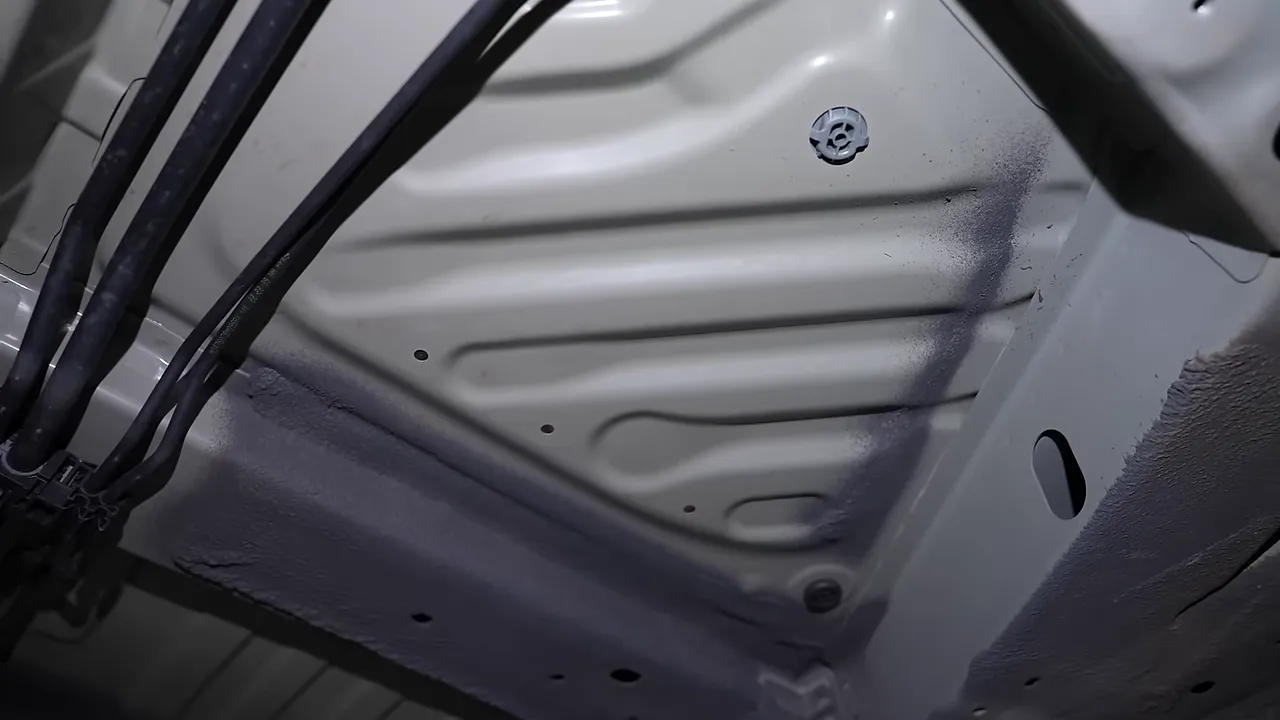
Packaging the exhaust around that floor produces an interesting route. One side-mounted muffler has its inlet and outlet on the same side. Farther back, a very large muffler occupies its own recess before the exhaust splits into two outlets.
The exhaust itself is one of the weaker points of the underbody inspection. The welds and visible surface corrosion on this nearly new example do not give me the same quality impression as the surrounding construction. Honda exhaust systems have historically not been my favorite in this respect.
There are also two air-conditioning condensate drains, an interesting packaging detail that suggests a large HVAC housing requiring drainage at more than one point.
TrailSport protection and a proper spare tire
The TrailSport includes metal protection around the fuel tank as well as the front underbody. The press vehicle's protective panels already showed evidence of contact, so those parts had clearly been doing some work.
At the back is something I am always pleased to find: a full-size spare tire. Not a sealant kit, and not merely a small temporary spare.
I am less impressed by the open spaces behind parts of the rear bumper. Many manufacturers close these areas with panels, and Honda left them exposed here. It stands out against an otherwise thoughtfully finished underside.
Even with those criticisms, the overall impression is very positive. Most components look solid, properly assembled, and designed with some consideration for future service.
Exterior Design and the Safety Work You Cannot See
I think this Pilot looks much better than the previous generation. It has a more traditional SUV shape without excessive creases, dramatic lighting, or styling that seems to be trying too hard.
The headlights are restrained, and the grille detailing flows neatly into them. The hood is simple. At the rear, the separate taillights and large Pilot lettering continue that understated approach instead of following every current design trend.
Practical exterior details, with a few complaints
- Radar location: The cruise-control radar sits behind the large Honda emblem, relatively high in the grille.
- Camera washers: Front and rear cameras have washer nozzles, although I found their cleaning effect disappointing. They seem better at making a wet mess than thoroughly cleaning the lens.
- Functional front openings: The lower front openings are real passages into the wheel-well area, not simply decorative blanks.
- Mirror size: The mirrors strike a sensible balance between useful visibility and excessive bulk.
- Smart-entry access: The front handles have the smart-entry locking provision, but the rear handles do not.
The rear bumper barely projects beyond the liftgate. That is not unique to Honda, but it means even a relatively minor contact with a post could involve the liftgate rather than just the bumper cover.
The power liftgate uses motors integrated into its support struts, an arrangement that has become common across the industry.
There is also an ownership detail under the hood: this Pilot has two hood latches operated by a split cable. Follow the proper closing method rather than lowering the hood and pressing one corner down. You want both latches to engage together, not one side latched while you push on the other.
The side-impact structure deserves attention
One of the most meaningful parts of the redesign is hidden behind the finished body panels.
The visible outer panels around the door opening are not the whole side-impact structure. Behind them, Honda uses ultra-high-strength steel in key areas around the passenger compartment, including the pillar and lower side structure.
Side impacts are difficult to manage because there is relatively little distance between the striking vehicle and the occupants. Strengthening that structure is meaningful work for a family SUV.
I had an opportunity to examine an exposed example of this construction, and it left a strong impression. It is not a feature that makes the dashboard more exciting, but it is exactly the kind of engineering I want manufacturers to prioritize.
For independent crash-test details, consult the IIHS ratings for the 2023 Honda Pilot, including the test applicability notes.
Is the TrailSport Worth the Compromise?
The TrailSport makes sense as a family SUV for camping trips, unpaved access roads, and moderate adventures. It adds a one-inch lift, protective metal panels, more aggressive tires, and useful traction-system programming.
What it is not is a vehicle I would choose for severe off-roading.
That brings me to its biggest everyday compromise: the tires are noisy. Their hum is obvious because the rest of the Pilot is so quiet.
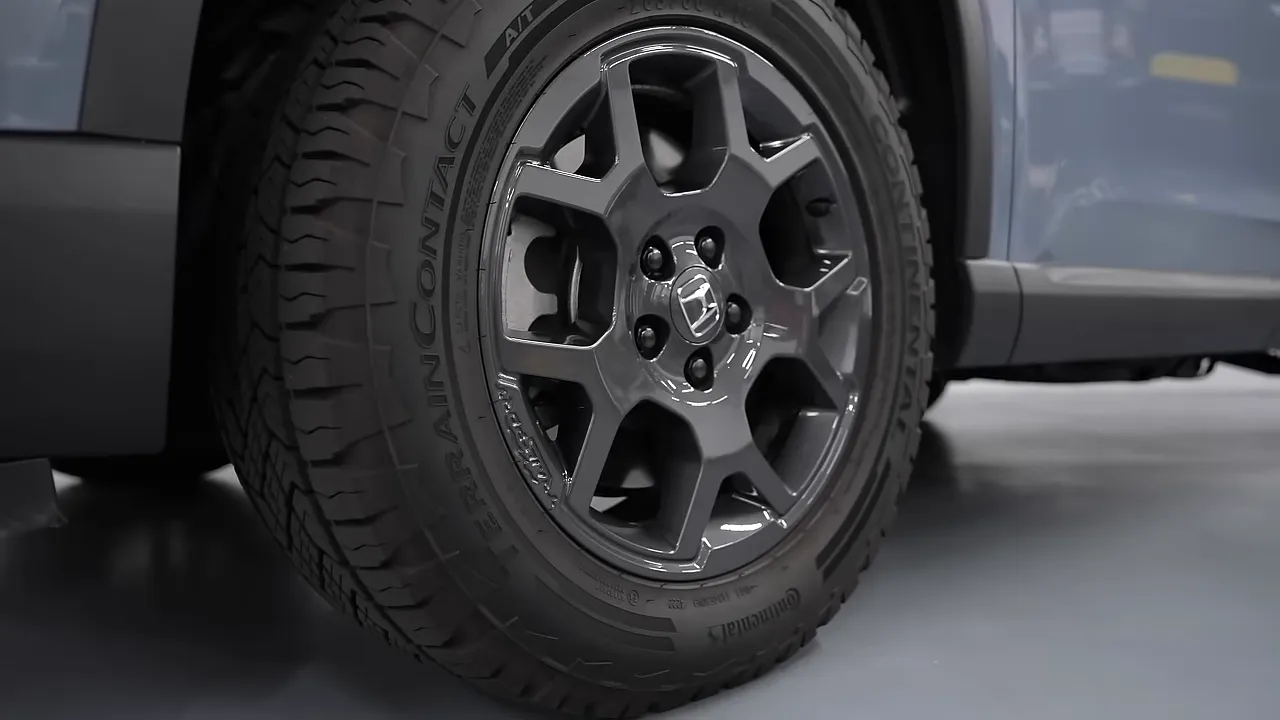
I wish Honda offered a less aggressive tire option while allowing buyers to retain the lift and the other TrailSport equipment. Not every family interested in extra ground clearance wants that tire noise on every paved-road trip.
The wheel design itself looks good, and there are multiple wheel choices across the Pilot range. But choose the TrailSport because its particular equipment fits your use, not simply because it looks more rugged.
Cargo Space and Third-Row Operation: No Unnecessary Complication
Open the liftgate, and the Pilot makes another good argument for itself. There is useful cargo room even with the third row upright. You often need a considerably larger SUV to get this combination of passenger space and remaining storage.
There is additional storage below the cargo floor. That area also provides access to the spare-tire lowering mechanism beneath a small rubber cover.
The third-row folding mechanism is especially good. Pull the handle, fold the seat. Use the same handle to raise it again. No elaborate sequence or collection of unrelated controls.
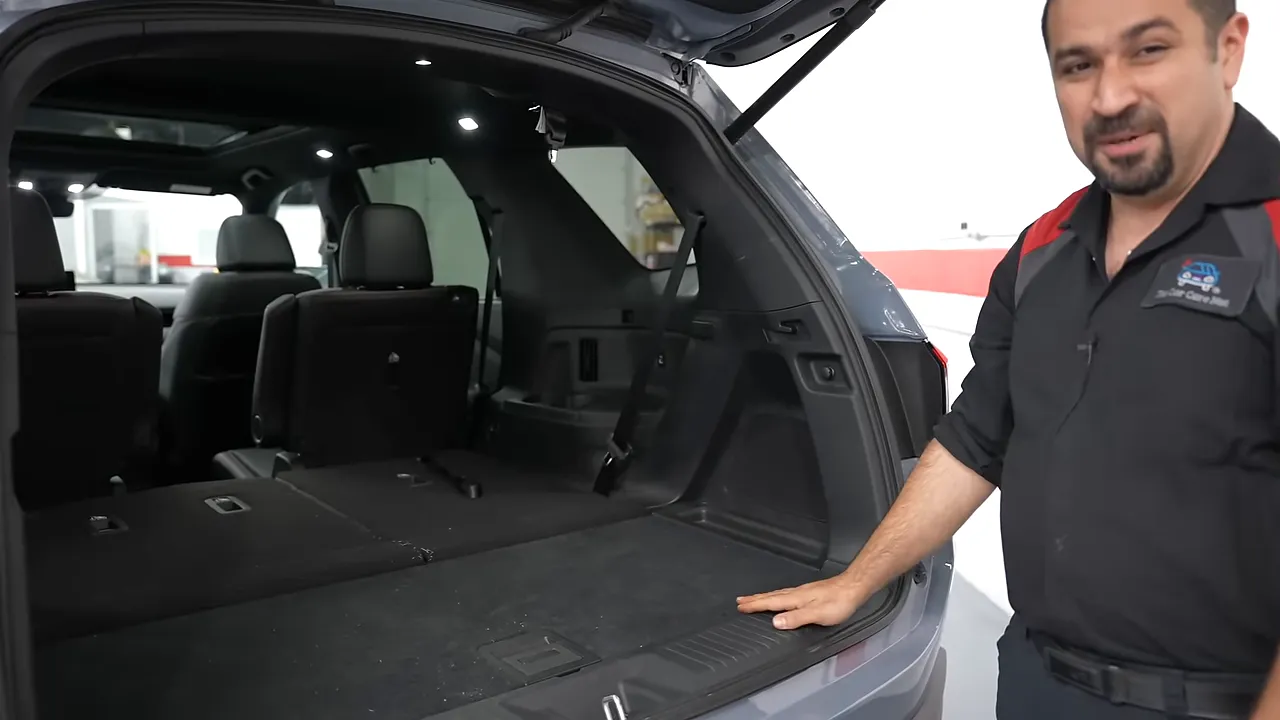
This is the theme throughout the vehicle: make the things families actually use simple and functional.
The Interior: Better to Use Than to Show Off
Your first impression of the interior might be that it is fairly plain. Spend a few days with it, and that simplicity becomes one of its strongest qualities.
The front seats are comfortable. The controls are logical. You do not need a long orientation before you can operate the vehicle confidently.
Physical controls where they belong
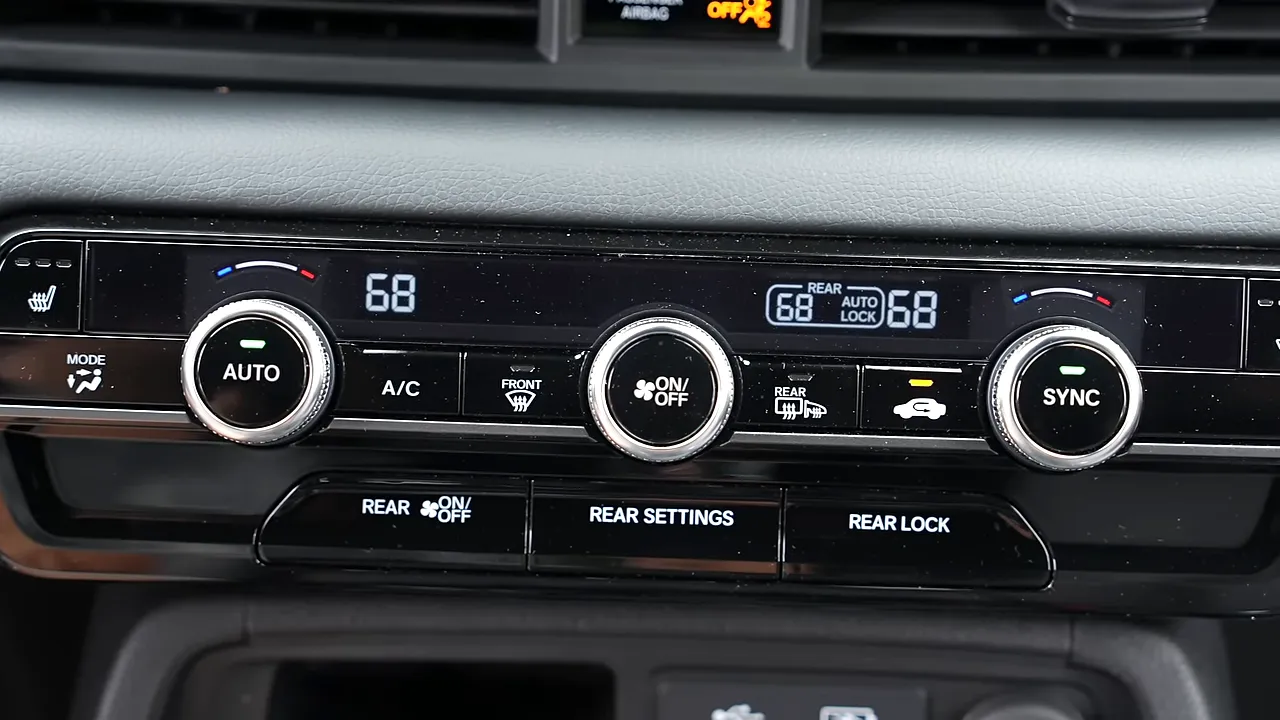
The climate controls use proper knobs and buttons, with a reassuring feel when operated. Seat-heating and ventilation controls, where equipped, are also physically accessible rather than hidden in a touchscreen menu.
One particularly good family feature is the clearly marked button that locks the rear climate controls. Parents will use that. Honda made it easy to find.
The center console is spacious, with a conveniently located wireless charging pad and a large storage compartment under the lid.
Honda's push-button gear selector is here as well. Personally, I prefer this arrangement to a rotary dial. Nearby vehicle controls are easy to reach without turning the console into a confusing wall of switches.
Conservative technology that does its job
The infotainment system is similar to the one in the 2022 Civic. It is not exceptionally advanced, but it works well enough and does not feel outdated. The physical back button takes a little familiarity, but the overall system is straightforward.
Wireless Apple CarPlay and Android Auto are reserved for higher trims. I would have liked wireless connectivity throughout the range, though it is not a deal-breaker.
The TrailSport's instrument cluster combines a screen with a physical gauge. Higher trims get a fully digital display, but it does not fundamentally transform the experience. The simpler cluster is already useful and allows some customization.
The heated-steering-wheel button is on the steering wheel itself, which is a sensible location. The paddle shifters feel less necessary. This is very far from a sports car, and I do not think paddles improve its central mission.
The materials are not exotic, but everything you touch feels solid. Nothing in this example felt loose, flimsy, or ready to break. For a busy family, that matters more than sweeping decorative lines.
Second- and Third-Row Comfort
Good space, but check thigh support
At five feet seven inches tall, sitting behind my own driving position, I have plenty of knee room and headroom in the second row.
The floor is relatively high, however, leaving a gap between the seat cushion and part of my thighs. I am seeing this in more modern vehicles, including SUVs. It can make an otherwise spacious seat less comfortable for adults over a long trip.
That is worth checking personally. Interior dimensions alone do not tell you whether a seat supports your body properly.
There are thoughtful details back here. The seatbacks are fully upholstered, and zippered access helps make seat service easier. A smaller phone pocket sits inside the larger seatback pocket, so a phone does not disappear into the bottom.
Rear passengers also get their own climate zone and controls, which can be locked from the front.
Seven- and eight-passenger configurations
The TrailSport reviewed here has two second-row captain's chairs, making it a seven-passenger SUV. Other configurations accommodate eight.
On the eight-passenger versions discussed here, the second-row middle seat is designed to be removable. Its seat-belt reminder connection is an interesting technical detail:
- One arrangement uses a wired connector that must be unplugged before removing the seat.
- A higher-trim arrangement communicates wirelessly, using a small replaceable battery in the seat's transmitter.
The wireless arrangement avoids an electrical plug during removal, but both versions allow the seat to come out. It is a useful approach to making the seating layout more flexible.
A genuinely usable third row
The third row has three seating positions. Adults can fit, although I think two adults are a more realistic comfortable load than three.
There are dedicated vents and USB-C charging provisions in the back. A side intrusion takes away some leg space, but overall the third row is useful for an SUV of this size.
I would not describe it as ideal adult seating for a very long journey. But it is more than a token third row, and it still leaves cargo room behind it.
The Main Reasons to Think Twice
I really like this Pilot, but nothing is perfect. These are the issues I would weigh before buying:
- Performance under load: The 285-horsepower V6 is refined and generally adequate, but it can feel short on power with a full family and luggage.
- Long-term engine complexity: Cylinder deactivation is my primary concern. Direct injection alone and the integrated camshaft-cap covers are additional considerations, not established failures.
- Fuel economy: It is not especially impressive, even with the cylinder-deactivation system.
- TrailSport road noise: The aggressive tires compromise an otherwise quiet vehicle.
- Trim-based equipment packaging: Getting one desired feature may require moving to a substantially more expensive trim.
That last point is frustrating. Honda largely bundles equipment by trim rather than letting you add individual features. It may simplify production and help control costs, but it can leave a buyer paying for a whole collection of equipment just to get one item.
Should You Buy a 2023 Honda Pilot?
Yes, if your priorities are a comfortable, practical, thoughtfully built family SUV. This is one of the more convincing vehicles I have examined for that purpose.
Its strength is focus. The interior is easy to understand. The seats and cargo arrangements are useful. The powertrain is quiet and smooth. Under the hood and underneath the body, much of the construction gives me confidence that Honda still cares about details owners may never see.
That does not guarantee long-term reliability. This is a substantially revised engine, and the cylinder-deactivation system deserves scrutiny as miles accumulate. But the basic materials, accessibility, and largely conventional mechanical layout give me reasons for optimism.
If you want strong acceleration, exceptional fuel economy, or serious off-road capability, the Pilot may not match your priorities. And unless you genuinely need the TrailSport equipment, pay close attention to its tire noise before choosing it.
But if you want to move your family in comfort, with simple controls, usable space, and a reassuring sense of build quality, Honda got the important things right. The Pilot does not try to make every trip an event. It makes everyday family transportation easier, and that is exactly what a vehicle like this should do.


